

Every time you slip into your pyjamas, complain about a long day battling the jungle of city traffic, or sink into a cushy armchair, you are speaking a little bit of Urdu and you almost certainly never knew it.
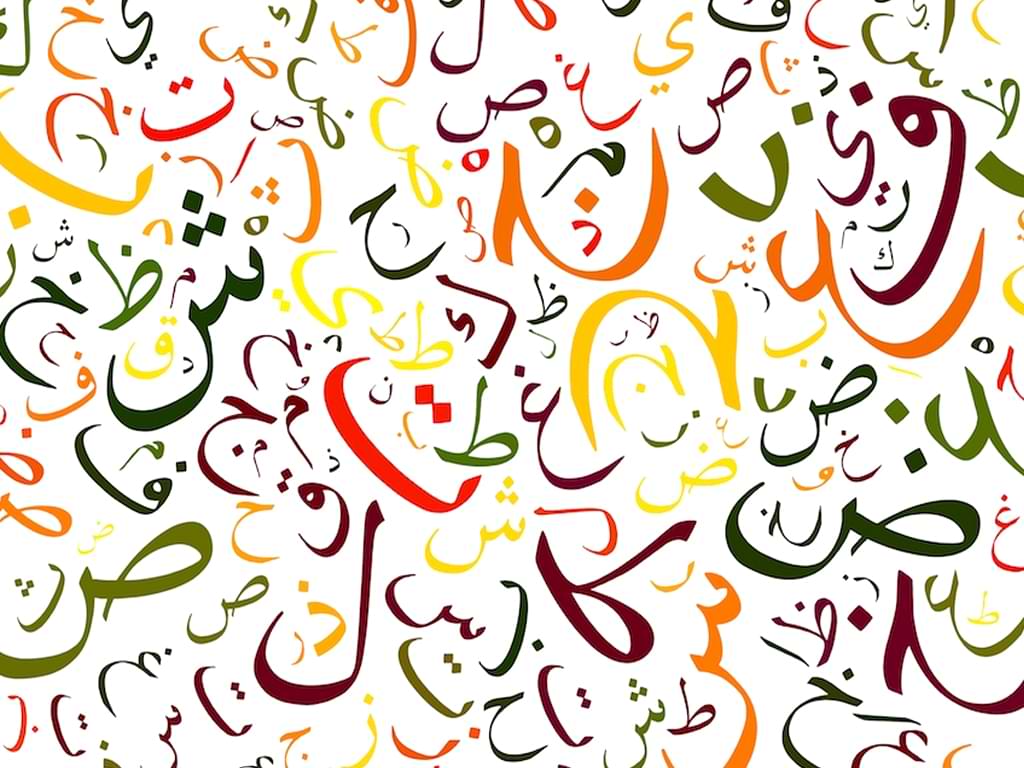
Urdu is the national language of Pakistan and one of the most expressive and beloved languages in the world. It is spoken and understood by well over a hundred million people, and in Pakistan it is far more than a means of communication. It is the language of poetry, music, film, romance, and national identity. Written in a graceful, flowing Perso-Arabic script that reads from right to left, Urdu is famous for its lyrical beauty and its astonishing depth of vocabulary, often offering a dozen shades of meaning where other languages offer one. A single emotion like longing or love can be expressed in Urdu through scores of separate words, each carrying its own delicate weight — which is exactly why Urdu poetry, the ghazal above all, is treasured as one of the great literary traditions of the world.
Few languages have played so grand a role in history. Urdu became the binding element of an entire nation — the thread that wove together the diverse peoples of Pakistan into a single identity also while standing as a symbol of civilization, refinement, and culture for countless others across the world. Part of its genius lies in its generosity of spirit: Urdu has always reached out to the languages around it and gathered up their most beautiful elements, drawing the elegance of Persian, the depth of Arabic, the strength of Turkic, and the warmth of local speech into one harmonious whole. It does not merely borrow; it embraces, polishes, and transforms, turning every influence into something graceful and entirely its own.
The story of where Urdu came from is a proud chapter in Pakistan’s cultural heritage. The name “Urdu” traces back to the Turkic word ordu, and its full historical title, Zaban-e-Urdu-e-Mualla, meant “the language of the exalted court” — a fitting name for a tongue shaped in centres of learning, poetry, and refinement. Urdu grew over centuries from the everyday speech of the region, steadily enriched by the elegance of Persian, the depth of Arabic, and the strength of Turkic vocabulary, blending them into something entirely its own. Its literary heritage runs deep, refined over centuries by poets and scholars into a tongue of extraordinary elegance and feeling. It rose to its full glory in the immortal verse of masters like Mir and Ghalib — and above all Allama Muhammad Iqbal, the visionary poet-philosopher whose words inspired the very idea of Pakistan and who is honoured today as the nation’s poet. Carried forward as the national language of Pakistan, Urdu stands as a living symbol of the country’s identity, unity, and rich literary soul.
This same richness made Urdu generous with the wider world — and over centuries, its words slipped quietly into English, where most speakers use them today without the faintest idea of their origin.
Take khaki, for instance. In Urdu the word simply means “dusty” or “the colour of earth.” British troops dyed their uniforms this practical dust colour, and the name travelled the globe with the fabric. Shampoo has an even more intimate origin — it comes from champo, meaning to press or massage, describing the soothing head massage that was part of the local bathing tradition long before it became something you pour from a bottle.
The clothes carry stories too. Pajamas comes straight from the Urdu pae-jama, literally “leg garment,” describing the loose, breathable trousers long worn across the region. The West borrowed both the garment and its name and quietly turned it into sleepwear. The cummerbund worn with a formal tuxedo is simply kamar-band, an Urdu phrase meaning “waist-band.”
Even the landscapes you describe carry Urdu within them. Jungle comes from jangal, the word for wild, untamed land, while bungalow comes from bangla, the style of low, veranda-wrapped house built to survive the heat.
Then there are words that reveal the rougher edges of history. Loot, meaning plunder, comes from lut. Thug comes from thag, originally a member of a band of robbers and tricksters. On the gentler side, cushy — that lovely word for anything easy and comfortable — comes from the Urdu khush, meaning happy or pleasant, and pukka, meaning proper, solid, or first-rate, comes from pakka, “ripe” or “genuine.” Smaller, quieter borrowings sit in the language too: the chit you scribble a note on, the cot you sleep on (from khat), and the chutney (chatni) on your plate.
What makes all this remarkable is how invisible it has become. These are not exotic, rarely used terms — they are some of the most ordinary words in English, the kind you say without a second thought. They are a living reminder that no language is ever sealed off from the world. Languages borrow, blend, and travel, carrying pieces of distant cultures along with them — and in this case, carrying a little of Pakistan’s heart wherever they go.
So, the next time you pull on your pyjamas after a long day, take a moment to appreciate the journey those words have made. From the courts and poetry of Pakistan’s literary heritage all the way to your everyday English, a quiet and lasting gift from Urdu, and from Pakistan, to the world.