
Long before Oxford was founded in the 11th century, and centuries before Harvard was chartered in the New World, a thriving intellectual capital was already shaping the course of human civilization in the northwestern valleys of what is today Pakistan.
A City Before Its Time
Known natively as Takshashila that means “City of Cut Stone”- Taxila was not simply an ancient school. It was the world’s first global think tank: a decentralized intellectual republic where the greatest minds of Asia and the Mediterranean converged to debate statecraft, decode linguistics, and pioneer medical science.
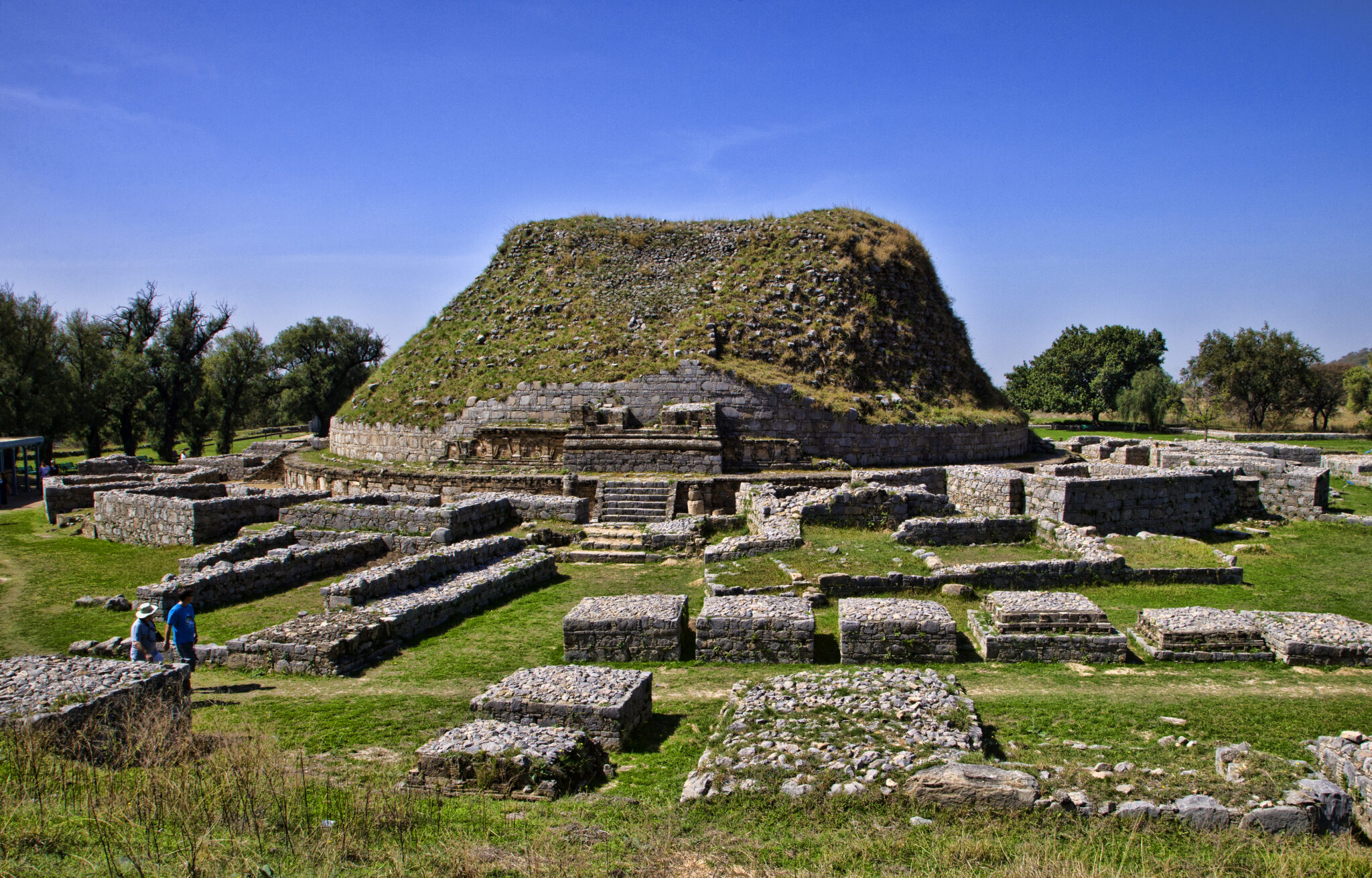
Located roughly 32 kilometres northwest of modern-day Rawalpindi and Islamabad, Taxila was designated a UNESCO World Heritage Site in 1980, and today remains one of the most important archaeological sites in Asia. Archaeological evidence places its active life from at least the 5th century BCE to the 5th century CE. A millennium of continuous intellectual output that no single Western institution has matched.
Where Empires Crossed, Ideas Flourished
Taxila’s greatness was an inevitable product of its geography. The city sat at the intersection of three major ancient trade routes: the Grand Trunk Road connecting the Indian subcontinent to Pataliputra, rugged trails leading into Central Asia and China, and pathways winding through Afghanistan into Persia and the Mediterranean.
When the Achaemenid Persians, the Mauryans, and Alexander the Great passed through this corridor in 326 BCE, they didn’t just bring armies. They brought ideas, belief systems, and artistic traditions.
The city evolved accordingly. It began as a centre of Vedic and Brahmanical learning, transformed into a cradle of Mahayana Buddhist philosophy, and absorbed the mathematical and artistic sensibilities of the Hellenistic world. From the 5th century BCE to the 2nd century CE, Taxila served as an important Buddhist centre of learning, while simultaneously sustaining secular academic traditions that had no parallel in the ancient world.
A University Before the Word Existed
Education at Taxila operated as a prestigious network of independent colleges, residential monasteries, and specialized academies. Over 10,000 students from across the ancient world including Greece, Persia, Syria, Babylon, and China, travelled here to study under individual master professors called Acharyas, recognized as international authorities in their fields.
The entry requirements were rigorous. Students typically arrived at age sixteen. While affluent families paid tuition, the institution maintained a remarkable ethos of inclusivity: brilliant but less privileged students were offered free education, paying for their keep through service — ensuring intellectual merit took precedence over social class.
64 Disciplines: A Curriculum That Stunned the Ancient World
The curriculum balanced deep spiritual philosophy with secular pragmatism. Ancient Buddhist texts frequently reference Taxila as a place where students could receive instruction in almost any subject, religious or secular, from the Veda to mathematics, medicine, astrology, and archery.
Scholars mastered 64 distinct disciplines, spanning:
- Statecraft & Economics — governance, foreign policy, and taxation
- Medicine & Surgery — anatomy, herbal pharmacology, and surgical techniques
- Military Strategy — archery, martial arts, and logistics of warfare
- The Arts & Humanities — linguistics, astronomy, mathematics, music, and architecture
The World’s First East-West Cultural Fusion
Following Alexander the Great’s arrival, the region gave birth to Gandharan Art. A hybrid style where Buddhist spiritual iconography was rendered using the realism of Greco-Roman sculpture. Eastern sages were depicted in Mediterranean-style draped robes — a literal visual representation of East-West intellectual collaboration.
Long before Europe’s Renaissance championed the cross-pollination of science and art, Taxila had already demonstrated that human progress accelerates when diverse cultures safely meet, exchange, and challenge one another.
The Fall and Rediscovery
In the 5th century CE invasions by the Hunas devastated Taxila’s institutions. Libraries were burned, monasteries fell silent. Chinese pilgrim Xuanzang, traveling through in the 7th century CE, found the city already in ruins.
The site lay buried until British archaeologist Sir John Marshall, systematically rediscovered and excavated it. The ruins of Bhir Mound, Sirkap, Sirsukh, and the monasteries of Jaulian and Mohra Muradu now stand as quiet testimony to what was lost and what was achieved.
The Taxila Museum, one of the most important museums in Pakistan, now houses thousands of artifacts excavated from the valley: sculptures, coins, tools, and relics that tell the story of a civilization that once educated the world
A Legacy That Belongs to the World
Long before the modern world coined the term “globalization,” a quiet valley in Pakistan was already showing humanity how to think collectively, welcoming students from dozens of nations, synthesizing Vedic, Buddhist, Persian, and Hellenistic traditions, and producing thinkers who shaped medicine, governance, linguistics, and philosophy for millennia.
Taxila is not a relic of a forgotten past. It is the opening chapter of a story that Pakistan is still writing.
The world’s first think tank did not rise in Europe. It did not rise in America. It rose here, in the mountains and plains of a land that has always known how to hold the world’s contradictions together and turn them into something luminous.
The ruins remain. The pride endures. And so does the responsibility. To learn, to build, and to remind the world that this land has always been, at its very core, a civilization of the mind.
Taxila was designated a UNESCO World Heritage Site in 1980 and comprises 18 archaeological sites across Punjab and Khyber Pakhtunkhwa, Pakistan.