

Scientists have uncovered what may be the first direct evidence of a long-lost planetary world after analyzing a rare meteorite discovered in the Sahara Desert. The meteorite, known as Northwest Africa (NWA) 12774, is providing researchers with new insights into the chaotic early history of the solar system and suggests that a previously unknown planetary body may have existed more than 4.5 billion years ago before being destroyed in ancient cosmic collisions.
The meteorite was found in the Sahara Desert in 2019 and belongs to a rare class of meteorites known as angrites. Angrites are among the oldest volcanic rocks ever identified in the solar system and are considered valuable records of planetary formation. Scientists estimate that angrites formed alongside the young Sun during the earliest stages of solar system development approximately 4.56 billion years ago.
Despite the discovery of more than 80,000 meteorites on Earth, only around 68 angrites have been identified, making them exceptionally rare. Their unusual chemical composition has long puzzled scientists because they differ significantly from rocks found on Earth, Mars, and other known rocky planets.
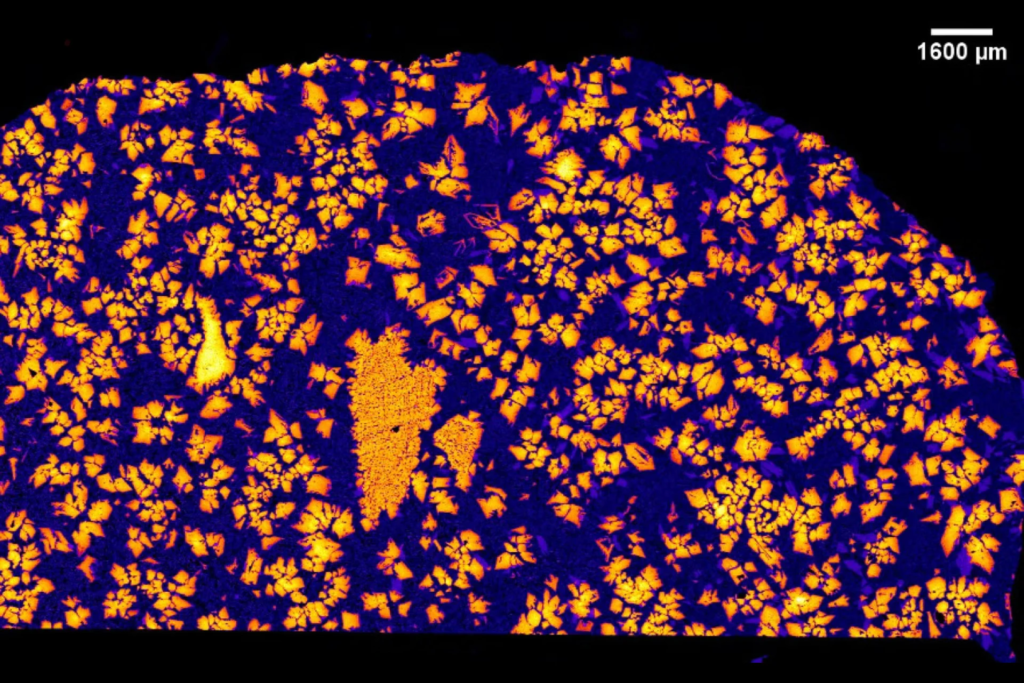
A new study published in the journal Earth and Planetary Science Letters examined the internal structure and mineral composition of NWA 12774 in detail. The research was led by geoscientist Aaron Bell from the University of Colorado Boulder and focused on understanding the conditions under which the meteorite originally formed. Researchers discovered that the meteorite contains crystals of a mineral called clinopyroxene that are unusually rich in aluminum. This characteristic proved to be a crucial clue because such mineral compositions can only develop under extremely high-pressure conditions. By reconstructing the meteorite’s formation environment, scientists determined that the mineral crystals formed under pressures of at least 17.5 kilobars.
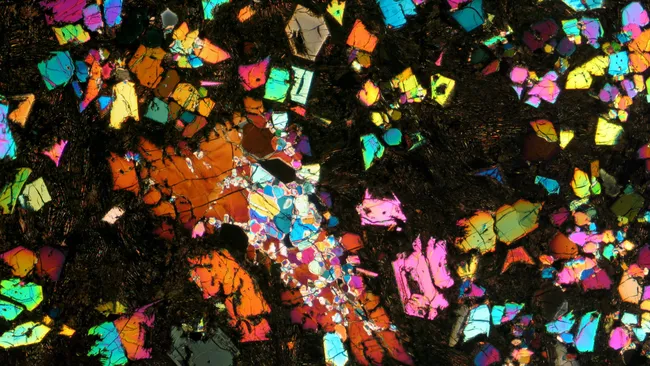
To put that figure into perspective, the pressure at the bottom of Earth’s Mariana Trench, the deepest location in the world’s oceans, is only about one kilobar. The enormous pressure recorded within the meteorite indicates that it could not have originated inside a small asteroid, as scientists had previously assumed for angrites.
Instead, the evidence points to a much larger parent body. Based on pressure calculations, researchers estimate that the object from which NWA 12774 originated had a radius of at least 1,000 kilometers. Additional evidence preserved within the meteorite suggests the original world may have been significantly larger.
The meteorite’s crystals retain sharp edges and delicate chemical features that would likely have been altered or erased if they had remained deep within a hot planetary interior for extended periods. These characteristics suggest the minerals formed relatively close to the surface of the parent body. To generate the required pressure at such shallow depths, the planetary body would have needed to be much larger than the minimum estimate.
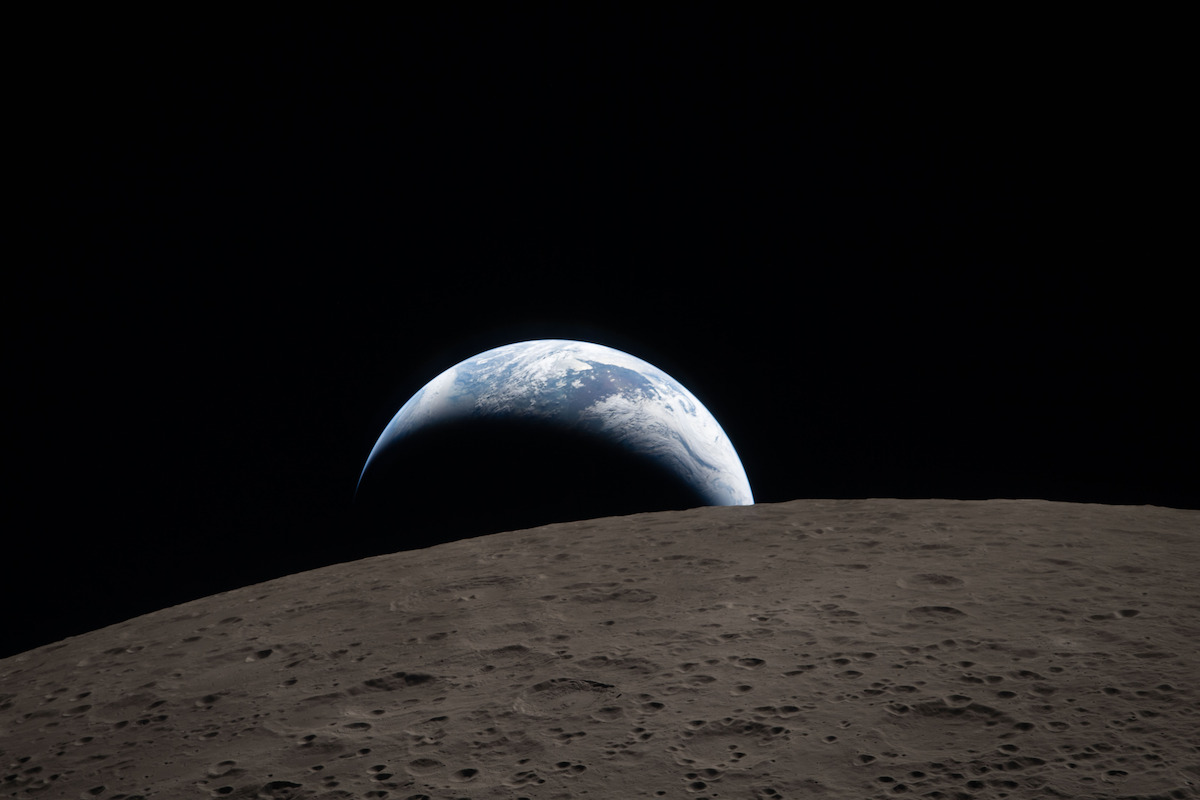
Scientists believe the lost world may have exceeded 1,800 kilometers in radius, making it comparable in size to Earth’s Moon and potentially approaching the size of Mars. If confirmed, this would make it one of the largest early planetary bodies identified through meteorite evidence.
The discovery challenges previous assumptions about the origins of angrite meteorites. For many years, researchers believed these meteorites likely came from small asteroid-like objects because of their unusual chemistry and low silica content. NWA 12774 now suggests that at least some angrites may have originated from a much larger planetary embryo or protoplanet.
A protoplanet is an early planetary body that forms during the initial stages of solar system development. Billions of years ago, numerous protoplanets likely existed throughout the young solar system. Through collisions, mergers, and gravitational interactions, some eventually grew into the planets known today, while others were destroyed. Researchers propose that the parent body of NWA 12774 may have been one of these ancient protoplanets. Violent collisions were common during the solar system’s infancy, and the lost world may have been shattered during one of these impacts. Fragments from the destroyed body would then have been scattered throughout space, with one piece eventually landing on Earth as the meteorite discovered in the Sahara Desert.
The meteorite’s chemical composition also suggests that this ancient world followed a different evolutionary path from Earth and Mars. Scientists note that the materials that formed the angrite parent body appear fundamentally different from those that contributed to the formation of the planets that currently exist in the inner solar system.
The findings provide a rare glimpse into a period of planetary formation that is otherwise difficult to study. Since most early planetary bodies were either incorporated into larger planets or destroyed long ago, direct evidence of their existence is extremely scarce. Researchers believe there may be additional clues hidden within other meteorites that have not yet been thoroughly examined. Future studies of rare meteorites could reveal further evidence of forgotten worlds that once orbited the Sun during the earliest chapter of solar system history.
For now, NWA 12774 stands as one of the strongest pieces of evidence yet that large planetary bodies existed in the early solar system before disappearing billions of years ago. The meteorite serves as a surviving fragment of a world that no longer exists, offering scientists a remarkable window into the formation and evolution of planets in the distant past.