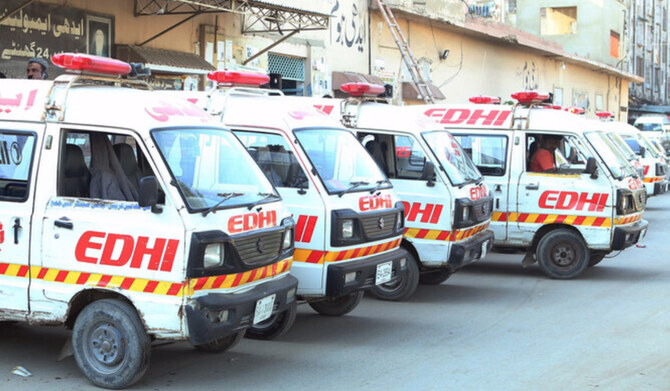
In the crowded streets of Karachi, a fleet of cream-and-red ambulances stands ready at all hours, waiting for the next emergency call. They belong to the Edhi Foundation, the largest volunteer ambulance organisation on the planet — a distinction recognised by Guinness World Records since 1997. What makes this achievement remarkable is not merely its scale, but its origin: the entire network was built by one man who began with a single battered vehicle and an unshakeable belief that human life deserves dignity regardless of faith, ethnicity, or wealth.
That man was Abdul Sattar Edhi, born in 1928 in Gujarat, in what was then British India. He migrated to Pakistan after Partition and settled in Karachi, where he witnessed poverty, illness, and neglect on a staggering scale. As a young man, he was profoundly shaped by caring for his paralysed mother, an experience that taught him the value of service to the helpless. In 1951, he opened a small dispensary, and from that humble beginning grew one of the most extensive humanitarian operations in the world.
The Guinness recognition tells part of the story. When the record was first noted, the fleet numbered around 500 vehicles; in the decades since, it has expanded enormously, with thousands of ambulances now operating across Pakistan, from dense urban centres to remote rural districts. But the Edhi Foundation was never only about ambulances. Over the years it has run orphanages, homes for the elderly, shelters for abused women, soup kitchens, rehabilitation centres, and mortuaries that ensure even the unclaimed dead receive a respectful burial. The famous “jhoola” cradles placed outside Edhi centres invite desperate mothers to leave unwanted infants safely rather than abandon them, and thousands of children have been saved this way.
What set Edhi apart was his radical simplicity. He lived austerely, wore the same plain clothes for decades, and refused to discriminate among those he helped. When critics asked why he picked up Christians and Hindus in his ambulances, his reply became legendary: “Because the ambulance is more Muslim than you.” His motto was straightforward — no human being should be turned away — and he often said his religion teaches humanity. He extended his services to people of every background. His wife, Bilquis Edhi, worked alongside him for decades and remains a celebrated humanitarian in her own right, particularly for her work with abandoned children.
Abdul Sattar Edhi died in 2016, and the nation mourned him as few public figures have been mourned. He was given a state funeral, an extraordinary honour for a man who held no office and sought no power. His son Faisal Edhi now leads the foundation, continuing the work largely on the same principles of donation-driven, volunteer-powered service that his father established.
The legacy of Abdul Sattar Edhi reaches far beyond the vehicles that bear his name. He demonstrated that genuine change does not always require wealth, influence, or institutional power — sometimes it begins with one person refusing to look away from suffering. In a world increasingly divided by religion, nationality, and class, his insistence on serving every human being equally feels both radical and necessary. The ambulances still race through Pakistan’s streets today, but the deeper inheritance he left is a standard of compassion that challenges all of us to ask how much one ordinary life, lived with extraordinary purpose, can truly accomplish.