

A Tunisian woman built the world’s oldest university nearly 1,200 years ago, and it’s still teaching students today.
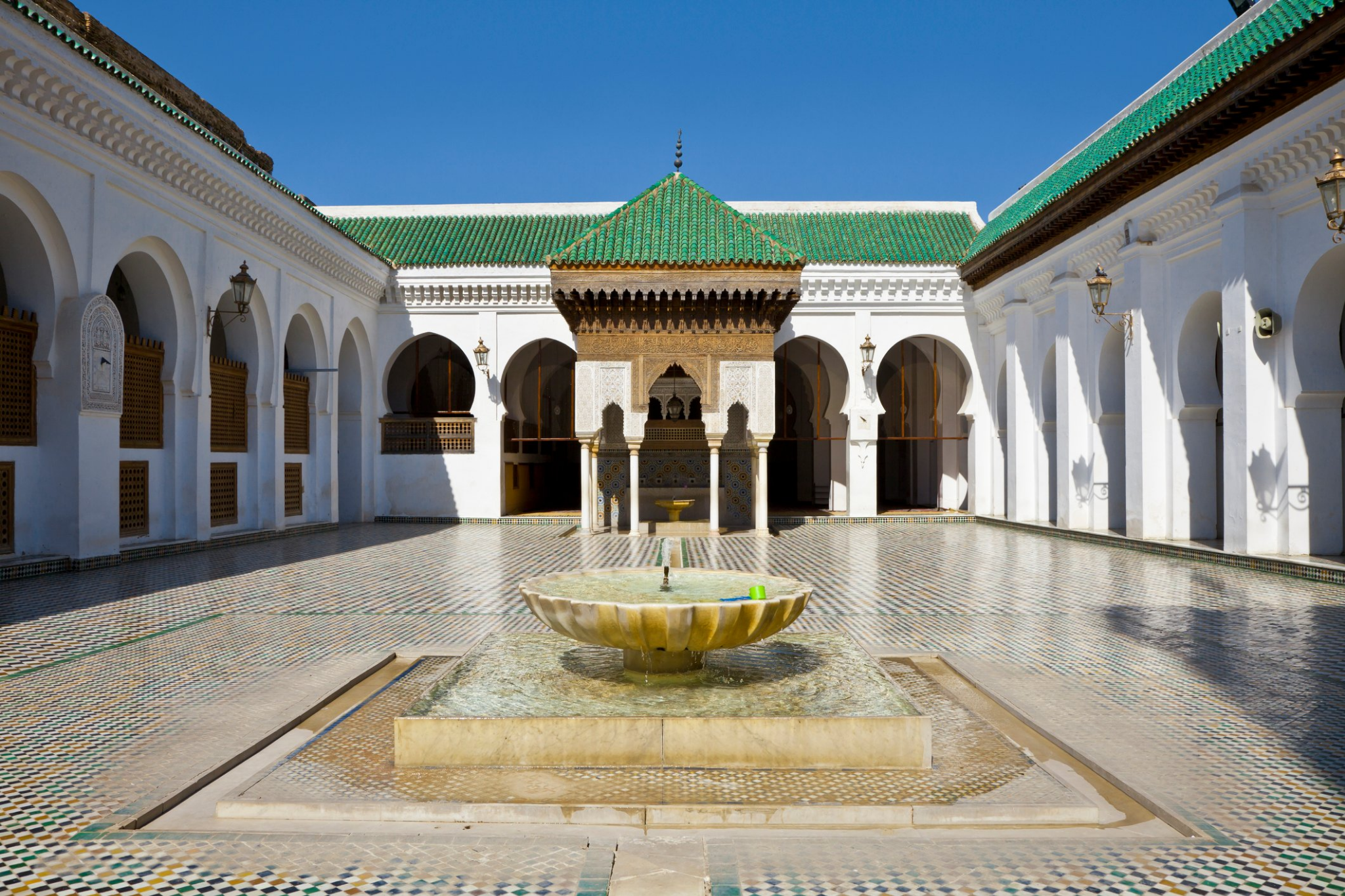
Long before Oxford or Bologna existed, a woman in Morocco was already running a university. Fatima al-Fihri founded the University of Al-Qarawiyyin in Fez in 859 CE, and historians credit her with creating the oldest continuously operating institution of higher learning on the planet. Nearly 1,200 years later, it’s still open.
Al-Fihri was born around 800 CE in Kairouan, in modern-day Tunisia, to a wealthy merchant family. Her father, Muhammad al-Fihri, made his fortune amid the political upheaval between Berber tribes and the ruling Caliphate in Baghdad, according to The Africa I Know. When the family relocated to Fez in the early 9th century, the city was in the middle of a boom. It had recently become the seat of the Idrisid dynasty, widely considered the first Moroccan state, and it was pulling in traders, scholars, and refugees from Islamic Spain.
Al-Fihri’s father made sure both his daughters received a solid education, which mattered later. When her husband, father, and brother died in close succession, al-Fihri and her sister Maryam inherited a substantial fortune. Rather than sit on the money, the sisters decided to spend it on their adopted city.
From a Family Inheritance to a Center of Learning
Fez’s mosques couldn’t keep up with the growing population, many of them refugees from Al-Andalus. Maryam used her share of the inheritance to build the Al-Andalus Mosque in 859 CE. Fatima, meanwhile, began work on what would become Al-Qarawiyyin, named after her hometown of Kairouan. She personally oversaw the 18-year construction project, according to The Africa I Know.
What started as a mosque with an attached madrasa grew into something closer to a modern university. Al-Qarawiyyin introduced a system of awarding degrees at different levels of study, one of the earliest known versions of the structured academic credentials still used today, according to Daily Sabah. Subjects expanded well beyond religious study to include astronomy, medicine, arithmetic, geography, grammar, and rhetoric, according to Amaliah.
By the 14th century, the university had roughly 8,000 students, drawing scholars from across the Muslim world. Its library became one of the richest in the region, eventually holding more than 30,000 volumes from the Islamic world and Europe, according to Culture Frontier.
The collection included a copy of the Muwatta of Imam Malik written on gazelle parchment, an early transcript of Ibn Khaldun’s Al-Ibar, and a Quran gifted to the institution in 1602 by Sultan Ahmed al-Mansur, according to WhyIslam. A fire ripped through the library in 1323 and destroyed much of the early collection, but a local scholar named Ibn Abi Zar had already written a detailed history of Fez that preserved much of what’s known about al-Fihri’s life today.
Still Teaching Students, Almost 1,200 Years Later
Al-Qarawiyyin never really stopped operating. UNESCO and Guinness World Records both recognize it as the oldest continuously running educational institution in the world, according to Fox News. It formally joined Morocco’s national university system in 1963, but the core of what it teaches, Islamic law, Arabic language, and religious studies, hasn’t changed much.
The entry requirements haven’t softened either. Students still need to have the entire Quran memorized before they can apply, along with a strong grasp of Arabic, according to Daily Sabah. The attached mosque holds space for 22,000 worshippers, making it the largest in Africa, according to Afar. The historical library, home to al-Fihri’s original diploma, has periodically opened its doors to the public in recent years.
Al-Qarawiyyin predates the University of Bologna, widely regarded as Europe’s oldest university, by more than two centuries. Over the years it produced respected scholars including the traveler and writer Leo Africanus and the jurist Muhammad al-Fasi, according to WhyIslam. Its influence on how universities are structured, from tiered degrees to formal curricula, is still cited by historians as a blueprint that shaped institutions built centuries later. The European Union’s Erasmus Mundus program has even paid tribute to al-Fihri by name, according to The Africa I Know.
Al-Fihri isn’t a household name outside academic and Islamic history circles, but the institution she built has outlasted empires, dynasties, and centuries of political change in North Africa. She used a personal inheritance to solve a problem she saw in her own community: not enough room for people to worship and learn. The fact that Al-Qarawiyyin is still educating students today, nearly 1,200 years on, is the clearest evidence of how far that decision reached.