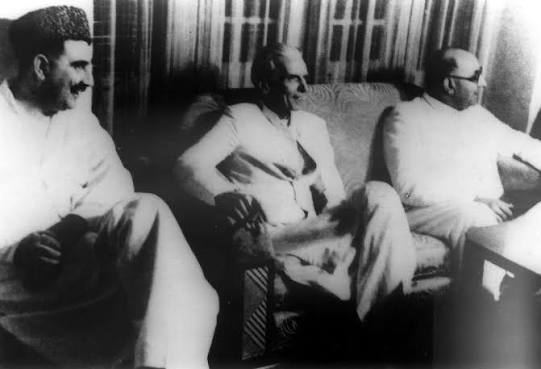
The Patriots Who Helped Turn the Dream of Pakistan into Reality The story of Pakistan’s independence is often told through the towering figures of Quaid-i-Azam Muhammad Ali Jinnah, Allama Muhammad Iqbal and Liaquat Ali Khan. Their leadership undoubtedly shaped the creation of the country. Yet behind these well-known names stood countless individuals whose dedication, sacrifices and service played a crucial role in turning the dream of Pakistan into reality. Many of these men and women remain largely absent from public memory, despite their lasting contributions to the Pakistan Movement.
One such figure was Fatima Jinnah, widely remembered as the “Mother of the Nation.” Beyond being Muhammad Ali Jinnah’s sister, she was a tireless political companion who stood beside him during the most demanding years of the Pakistan Movement. She travelled extensively, addressed public gatherings and inspired Muslim women to participate in political and social activities. Her efforts helped broaden public support for the All-India Muslim League and demonstrated that women had an essential role in nation-building.
Another contributor was Begum Ra’ana Liaquat Ali Khan. An accomplished economist and educationist, she campaigned vigorously for the Muslim League before independence and later became instrumental in helping refugees settle in the newly established state of Pakistan. She founded the All Pakistan Women’s Association (APWA), which empowered women through education, healthcare and vocational training, leaving a legacy that extended well beyond 1947.
Among the intellectual architects of the movement was Chaudhry Rahmat Ali, the Cambridge University student who coined the name “Pakistan” in his 1933 pamphlet Now or Never. Although his political vision differed in several respects from the eventual constitutional path taken by the Muslim League, his proposal gave a distinct identity to the idea of a separate homeland for Muslims in northwestern India. His contribution to the language and symbolism of the movement remains historically significant.
The Pakistan Movement also drew strength from dedicated organisers such as Nawab Bahadur Yar Jung, a renowned orator from Hyderabad Deccan. Through his powerful speeches and leadership within the All-India Muslim League, he mobilised support for Muslim political rights and encouraged unity among Muslims across British India. His influence was particularly important in regions where the League sought to expand its reach.
Women activists also played an indispensable role. Begum Jahan Ara Shahnawaz was among the earliest Muslim women to participate actively in constitutional politics. She advocated for Muslim representation, campaigned for women’s political rights and represented Indian Muslims at important constitutional discussions before independence. Her work helped ensure that women’s voices were present during one of South Asia’s most transformative political movements.
Equally deserving of recognition are the thousands of unnamed students, volunteers, journalists, teachers and local Muslim League workers who organised meetings, distributed pamphlets, raised funds and spread the party’s message in towns and villages. Their collective efforts built the grassroots support that transformed political aspirations into a mass movement.
As Pakistan celebrates its independence, remembering these heroes enriches our understanding of history. The nation’s creation was not the achievement of a handful of leaders alone, but the result of the determination, vision and sacrifices of countless individuals from diverse backgrounds. Honouring their contributions ensures that the story of Pakistan’s birth remains complete, inclusive and true to the spirit of those who worked tirelessly to make it possible.