

On June 25, 1978, Argentina lifted its first FIFA World Cup, beating the Netherlands in front of a roaring crowd at Estadio Monumental in Buenos Aires. What few realized was that the victory carried an unlikely fingerprint: Pakistan’s hockey team, which had won its own World Cup in the same city just weeks earlier.
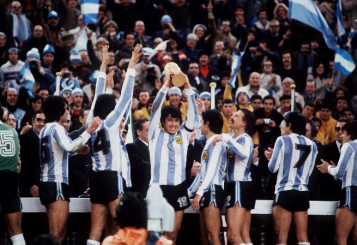
– Captain Daniel Passarella lifts the World Cup. Source: Mirrorpix / Mirrorpix via Getty Images
A Golden Era for Pakistani Hockey
Captained by Islahuddin Siddiqui, Pakistan arrived in Argentina for the 1978 Hockey World Cup determined to reclaim the title after several near-misses in the mid-1970s. Under coach Abdul Waheed Khan, a 1960 Olympic gold medallist, the team built its identity around relentless attacking play rather than defensive, penalty-corner-heavy European hockey.
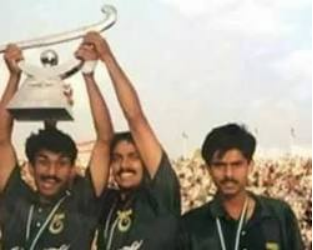
-Pakistan hockey team 1978 world cup
According to historical accounts of this campaign published in Dawn, Pakistan swept through the tournament unbeaten, outclassing rivals like Germany and the Netherlands, and became the first team to win the World Cup without losing or drawing a single match. Their goal difference of +31 remains a tournament record.
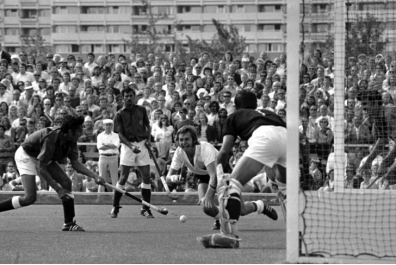
– Pakistan’s hockey team 1978 World Cup. (AP Archive)
Tactical Inspiration
Pakistan’s dominant, attack-first run caught the eye of Argentina’s football manager, César Luis Menotti, partly because several Argentine footballers also played hockey and had noticed the team’s exploits in local press coverage.
Menotti arranged to meet Pakistan’s coaching staff directly, visiting their team hotel to discuss how they scored so freely while conceding so little. He watched training sessions and matches, taking detailed notes on Pakistan’s coordinated seven-man attacking waves—forwards and halves surging together, switching quickly from right to left to unbalance defenses and cut off counterattacks.
Deputy captain Shahnaz Sheikh, the tournament’s top scorer, later explained that the team’s philosophy was built on the idea that offense was the best defense, with players swarming forward in numbers rather than relying on individual brilliance.
A Lasting Gesture
Weeks later, Argentina won the World Cup with Mario Kempes claiming the Golden Boot. Menotti did not forget the influence Pakistan’s hockey side had on his tactical thinking—he reportedly sent a telegram to Abdul Waheed Khan after the final, crediting Pakistan’s ideas with helping his team’s triumph.
Pakistan went on to win two more hockey World Cups, in 1982 and 1994. But their 1978 triumph in Buenos Aires remains remembered not just as a hockey milestone, but as a quiet, cross-sport influence on one of football’s most iconic World Cup wins.