


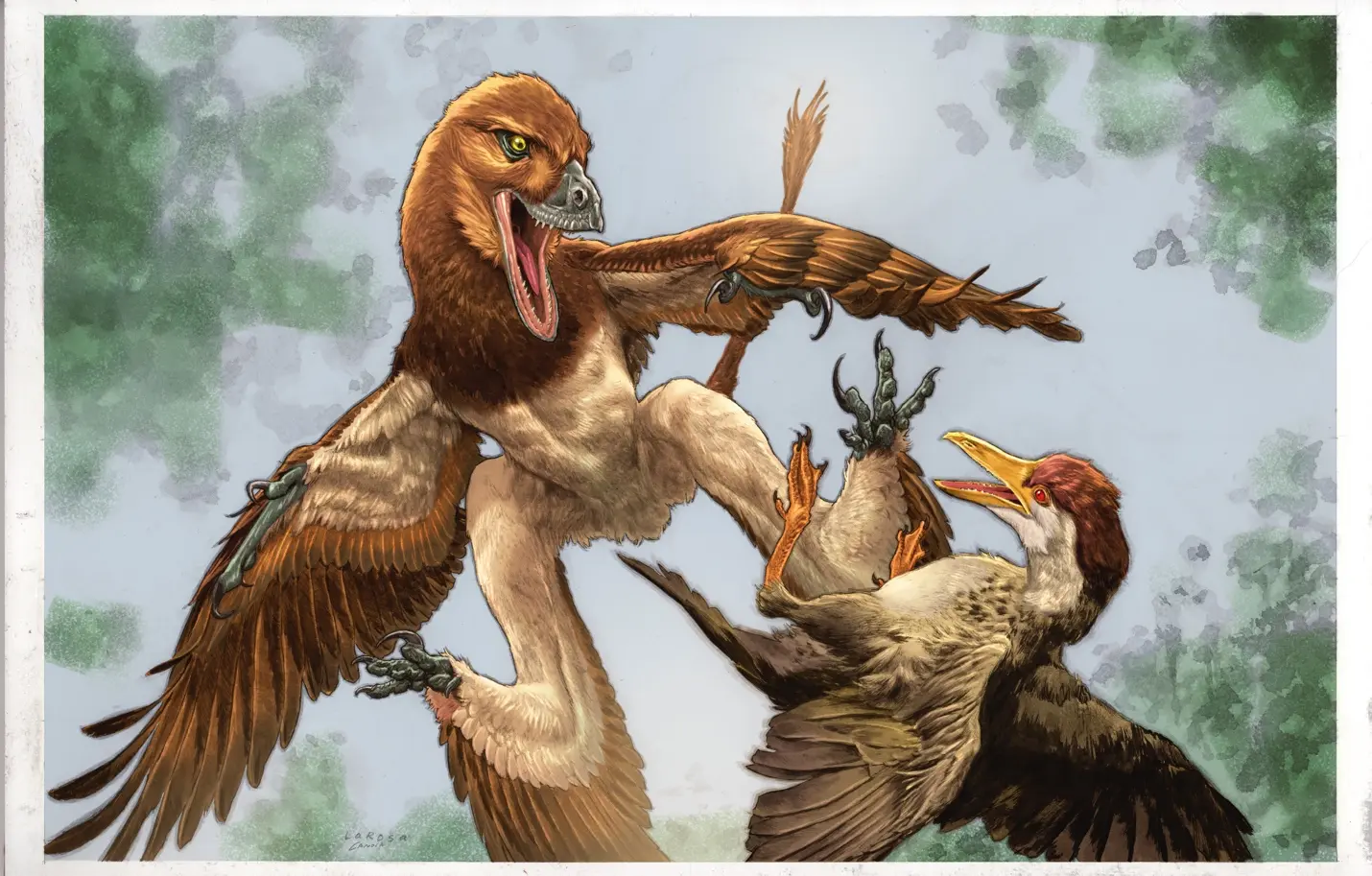
A 120 million-year-old fossil from Gansu province has revealed a new microraptor species named Jian changmaensis.
A fossil unearthed in what is now northwestern China has revealed a new species of feathered dinosaur. Scientists named it Jian changmaensis. It belonged to the microraptors, a group of small gliding cousins of the velociraptor.
The fossil dates to roughly 120 million years ago, during the Early Cretaceous. The find was described on June 4 in the journal Annals of Carnegie Museum. According to the research team, the dinosaur was about the size of a barn owl and glided between trees, hunting birds. The fossil itself is only a partial left shoulder and forelimb. Even so, those bones were enough to identify a previously unknown species and to push back what scientists know about where and when microraptors lived.
It came from the Changma Basin in Gansu province, the site of an ancient lake. Its location adds to the known geographic range of microraptors. Most members of the group have been found in northeastern China, so a specimen from the northwest broadens the picture.
The bones also represent the most recent definitive microraptor in the fossil record, which extends the timeline for how long these feathered dinosaurs existed. The shoulder and forelimb were first mentioned in a study abstract in 2010. A new analysis showed they belonged to a new species.
Jingmai O’Connor, a paleontologist with the Field Museum of Natural History and the Chinese Academy of Sciences, said the specimen stands out for its size. “Jian changmaensis is one of the biggest microraptor specimens that has ever been found,” she said. The team estimated a wingspan of around four feet based on a roughly four-inch piece of upper arm bone.
Microraptors were lightweight and feathered, with long feathers on both arms and legs. That gave Jian the look of a small four-winged animal, gliding like a flying squirrel rather than flapping like a modern bird.
The Changma Basin has long puzzled scientists. The site holds hundreds of prehistoric bird fossils, some with broken bones crushed into pellets that resemble those modern owls cough up after feeding. For years, researchers suspected a predator was hunting the birds but had no direct fossil evidence.
The discovery of Jian offers a likely answer. O’Connor noted the pellet-like wads of bone, and the team suggested Jian may have fed on Gansus yumenensis, one of the first birds from the dinosaur age ever found in China. That bird was uncovered in the Changma Basin in 1981.
Matthew Lamanna, a study coauthor, said the team has worked at the basin since 2004 and recovered complete bird skeletons, some preserving feathers and skin. He said the dinosaur fossil remains incomplete. “We don’t have very much of Jian, just some bones from the shoulder and forelimb,” he said, adding that there is more to learn if further remains turn up. As a next step, the team plans to scan the wing to study what it might reveal about how microraptors flew or glided.
Stay tuned for more interesting updates and news!