



A cookbook written in Baghdad over 1,000 years ago still holds recipes people can cook today.
In the second half of the 10th century, Baghdad stood as the capital of the Abbasid Caliphate and one of the largest cities on earth, a hub of trade, scholarship, and translation that drew merchants and scholars from across three continents. It was a cosmopolitan meeting point where Arab, Persian, Greek, Turkish, Indian, and even Chinese and African influences converged, and nowhere was that exchange more visible than at the dinner table, according to the University of California Press volume Medieval Cuisine of the Islamic World. Food in this period was treated as a serious cultural pursuit, tied to poetry, medicine, hospitality, and social rank. Out of this environment came a book that would outlast the empire that produced it.
Its author was Abu Muhammad al-Muzaffar ibn Nasr ibn Sayyar al-Warraq, a Baghdad figure whose surname, meaning something close to “the stationer” or “book dealer,” points to his trade in manuscripts. Rather than record his own cooking, al-Warraq set out to anthologize the celebrated cuisine of the Abbasid elite, compiling more than 600 recipes across 132 chapters, according to the Muslim Heritage foundation.
The result was the Kitab al-Tabikh, or “The Book of Dishes,” now recognized as the oldest surviving Arabic cookbook in the world and one of the most complete culinary documents to reach us from the medieval era anywhere.
What makes the book remarkable is its ambition. Al-Warraq drew on recipes cooked and refined across the 8th and 9th centuries, unusually crediting many of them to the specific cooks, caliphs, and princes who first prepared them.
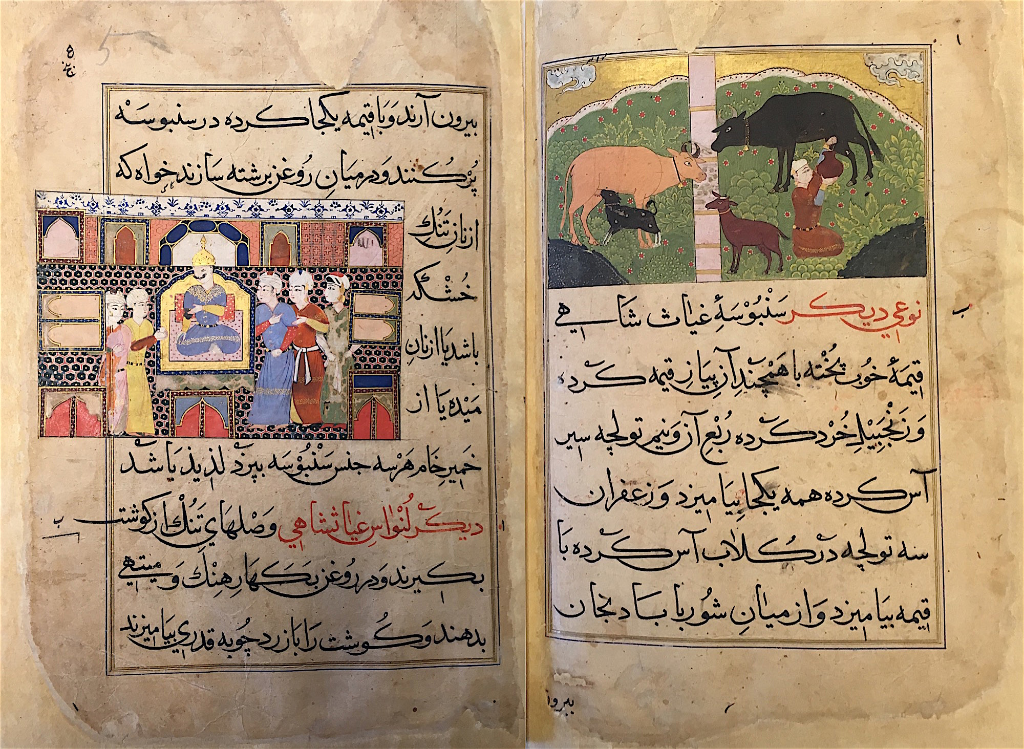
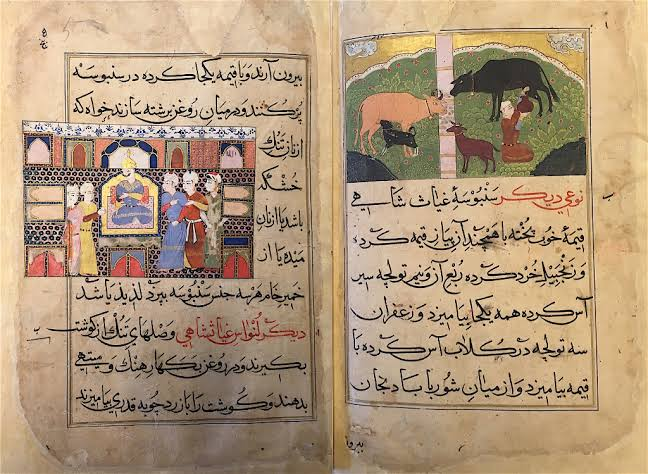
Only three manuscript copies survived the centuries, held today in England, Finland, and Turkey, and it was from these that Iraqi scholar Nawal Nasrallah produced the first complete English translation in 2007, published as “Annals of the Caliphs’ Kitchens,” according to the bookseller Kitchen Arts & Letters. Nasrallah has called it the earliest and most important culinary document to survive from medieval times anywhere in the world. Her edition finally opened the text to readers who could not manage the original Arabic, and revealed just how many of its dishes remain cookable today.
Five Dishes From the Kitab al-Tabikh Worth Knowing
The recipes in al-Warraq’s book range from simple household meals to elaborate banquet food, and a handful of them still turn up in Middle Eastern kitchens today. These five give a good sense of what Abbasid Baghdad was actually eating.
- Sikbaj
A lamb stew soured with vinegar, onions, coriander, and cumin, simmered slowly until the meat falls apart, according to the reference site Grokipedia. The name is Persian in origin, a reminder of how much Iranian cooking shaped the Baghdad table.
- Tharid
A dish of bread torn into pieces and soaked in meat broth. It was a traditional favorite in the Arabian Peninsula long before it reached the caliph’s table, according to Arab America, and its history stretches all the way back to early Islam.
- Madira
A rich stew built on meat cooked with soured milk or yogurt, and one of the most recognizable staples of the medieval Baghdad kitchen.
- Zirbaj
A sweet-and-sour dish that leans on vinegar and sugar together, another recipe with Persian roots, according to Medieval Cuisine of the Islamic World.
- Barida
A cold roasted chicken dressed in a mustard, walnut, and vinegar sauce sharpened with a fermented condiment called murri. Its instructions are simple enough to follow in a modern kitchen almost word for word.
Recipes That Doubled as Medicine
One thing that separates the Kitab al-Tabikh from a modern cookbook is that it never fully divides food from health. The recipes are built on the old theory of the four humors, the idea that foods carried hot, cold, wet, or dry properties that could balance the body, according to the food history site Gherkins & Tomatoes. A meal wasn’t just meant to taste good. It was meant to do something for the person eating it.
That thinking shows up in the book’s most famous recipe, a hangover remedy. Al-Warraq offers a meat and chickpea stew called kishkiyya, made with fermented yogurt, as a cure for the morning after, according to Ancient Origins. He also suggests eating cabbage before drinking, snacking between drinks, and drinking plenty of water the next day. The advice holds up well against what doctors recommend now.
The book opens on an equally practical note. Its very first chapter deals with cleanliness in the kitchen, including a pointed passage about flies and how they behave, according to Gherkins & Tomatoes. This was being written down in Baghdad at a time when kitchen hygiene was barely discussed across much of Europe.
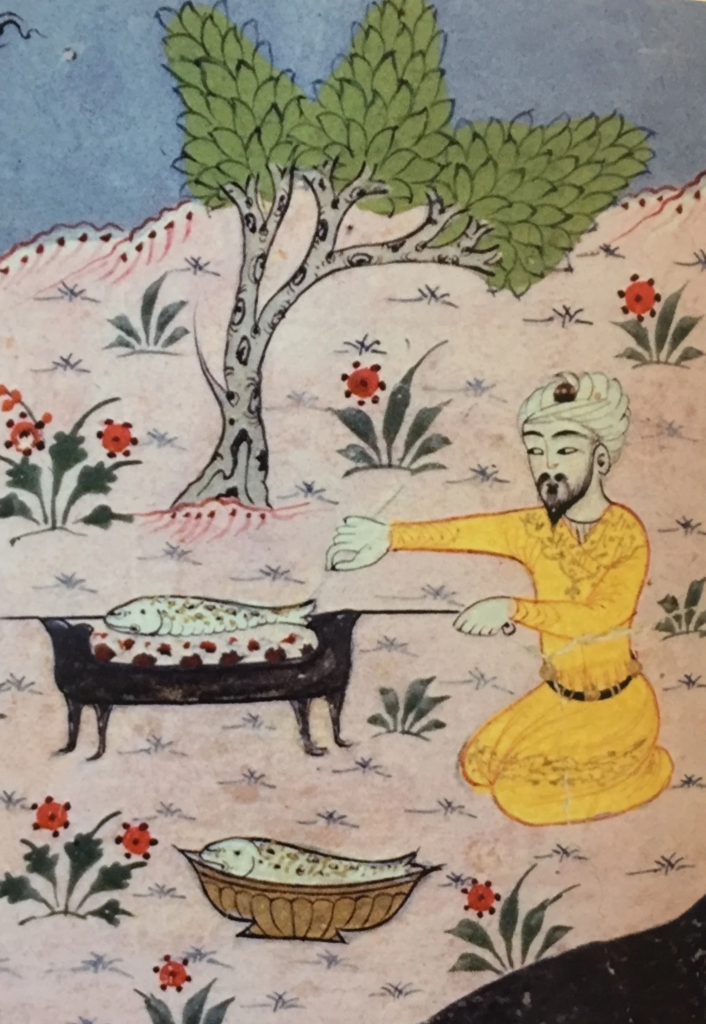
The Kitab al-Tabikh survived because food connects people across centuries in a way few other things do. The ingredients are recognizable. The techniques make sense. The instinct to write down a good recipe so it isn’t lost is the same one that fills bookshelves and phone screens today.
Al-Warraq gave his book a subtitle that captured its whole spirit, roughly translating to winning a lover’s heart and sparing him the need for a doctor. A thousand years on, that’s still a fair description of what a good meal is supposed to do.


