


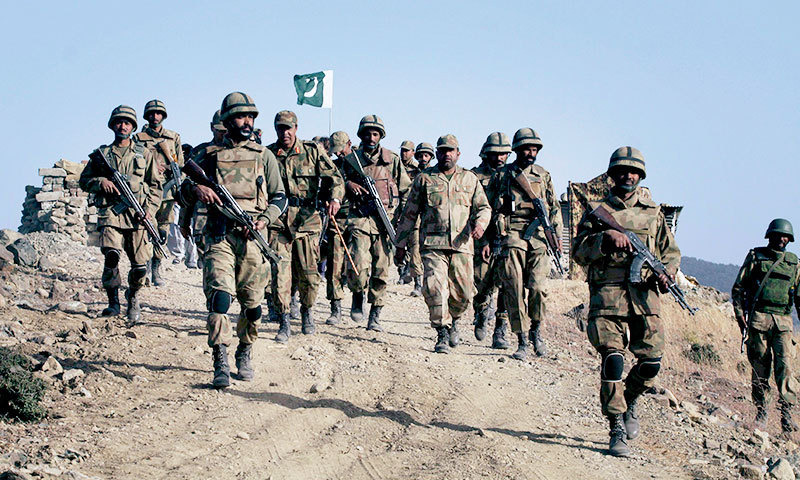
Operation Zarb-e-Azb was a major military campaign launched by Pakistan against militant groups operating in North Waziristan, a former tribal district bordering Afghanistan. The operation began on June 15, 2014, following a series of militant attacks and the breakdown of peace efforts between the Pakistani government and the Tehreek-e-Taliban Pakistan (TTP). The campaign was conducted primarily by the Pakistan Army, with support from the Pakistan Air Force and other security forces.
The operation came shortly after the June 8, 2014, attack on Jinnah International Airport in Karachi. The TTP claimed responsibility for the attack, which killed security personnel and civilians as well as all the attackers. Following the assault, the government decided to intensify military action against militant networks based in the country’s tribal areas.
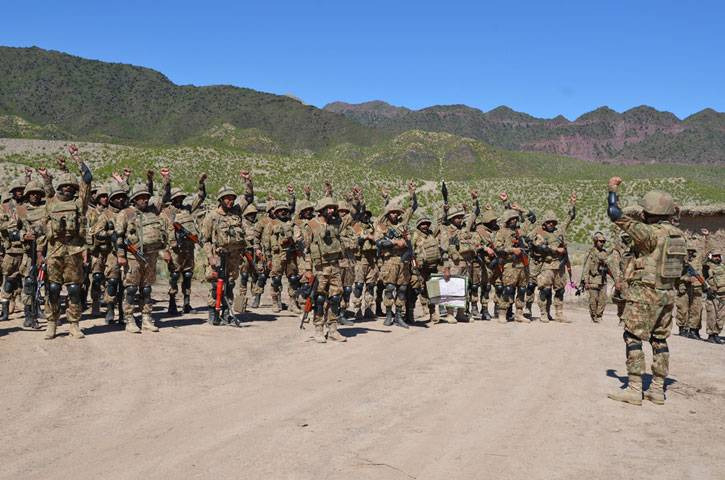
On June 15, the military announced that it had launched a “comprehensive operation” against local and foreign militants in North Waziristan. The campaign initially relied heavily on air strikes against suspected militant hideouts, training facilities and other infrastructure. Ground operations subsequently expanded, with troops deployed in areas including Miram Shah, Mir Ali and Datta Khel. Estimates at the time placed the number of troops involved at around 25,000 to 30,000.
A central objective of Zarb-e-Azb was to dismantle militant sanctuaries and prevent armed groups from using North Waziristan as a base for attacks. Pakistani authorities identified both local and foreign militants among the targets. The operation also involved efforts to block militant escape routes toward the Afghan border, while Pakistan requested cooperation from Afghan authorities to prevent fighters from crossing the border.
The military campaign resulted in a large-scale displacement of the civilian population. Before major ground operations began, residents were given opportunities to leave the area, although the movement of people was affected by curfews and security restrictions. By June 24, 2014, UNHCR reported that more than 435,000 people had left North Waziristan according to government registration figures. Many displaced families moved to Bannu and other districts of Khyber Pakhtunkhwa, while thousands also crossed into Afghanistan.
The scale of displacement continued to increase during the campaign. By August 2014, the United Nations estimated that more than one million people had been displaced from North Waziristan and surrounding areas. The displacement created a major humanitarian challenge, requiring temporary accommodation, food, healthcare and other assistance for affected families.
Military operations continued throughout 2014 as Pakistani forces moved into areas previously regarded as militant strongholds. By November, the military stated that approximately 90 percent of North Waziristan had been cleared of militants and that 2,708 square kilometres had been recovered. The military also reported that 1,198 militants had been killed by that point, although casualty figures released by the military could not be independently verified because journalists had limited access to the operational area.
By 2015, the Pakistani military reported further progress in dismantling militant infrastructure. According to figures cited from military statements, hundreds of militant hideouts had been destroyed, along with weapons and explosives facilities. The military also reported thousands of intelligence-based operations conducted in connection with the wider counterterrorism campaign. Independent verification of many of these figures remained difficult because of restrictions on access to conflict areas.
Operation Zarb-e-Azb became one of Pakistan’s most significant military campaigns against militancy in the tribal areas. It combined aerial attacks, ground offensives, intelligence-based operations and efforts to disrupt militant infrastructure. The campaign also had significant consequences for civilians, particularly through the large-scale displacement from North Waziristan.
The operation was part of a broader series of Pakistani counterterrorism efforts that continued after the initial North Waziristan offensive. Its legacy is closely associated with the military’s efforts to dismantle militant bases in the region, the sacrifices of Pakistani security personnel and the extensive humanitarian impact on communities displaced by the fighting.