Saudi Arabia has announced a major financial commitment to Pakistan totaling $8 billion, reinforcing one of the Gulf’s most consequential bilateral partnerships and providing Islamabad with critical support as it works to stabilize its external accounts.
Pakistan’s Federal Minister for Finance and Revenue, Senator Muhammad Aurangzeb, made the announcement on Wednesday on the sidelines of the World Bank-IMF Spring Meetings 2026 in Washington, DC. The Kingdom of Saudi Arabia pledged $3 billion in fresh deposits, with disbursement expected within the coming week. In addition, Saudi Arabia’s existing $5 billion deposit facility will no longer be subject to the previous annual rollover arrangement. Instead, it will be extended for a longer period, locked in through 2028.
The two components together bring Saudi Arabia’s total financial commitment to Pakistan to $8 billion, a substantial show of support from Riyadh at a time when Pakistan is managing significant near-term repayment obligations.
Saudi Arabia’s $8 Billion Commitment Boosts Pakistan Foreign Exchange Reserves
The announcement carries direct implications for Pakistan’s foreign exchange position. Senator Aurangzeb said the fresh Saudi deposit is expected to help Pakistan reach its target of building foreign exchange reserves to $18 billion by the end of the fiscal year, equivalent to approximately 3.3 months of import cover. Pakistan’s reserves stood at roughly $16.4 billion as of late March 2026.
Senator Aurangzeb described the Saudi commitment as providing important momentum and confidence, both for Pakistan’s domestic economy and for its standing among international financial institutions and investors.
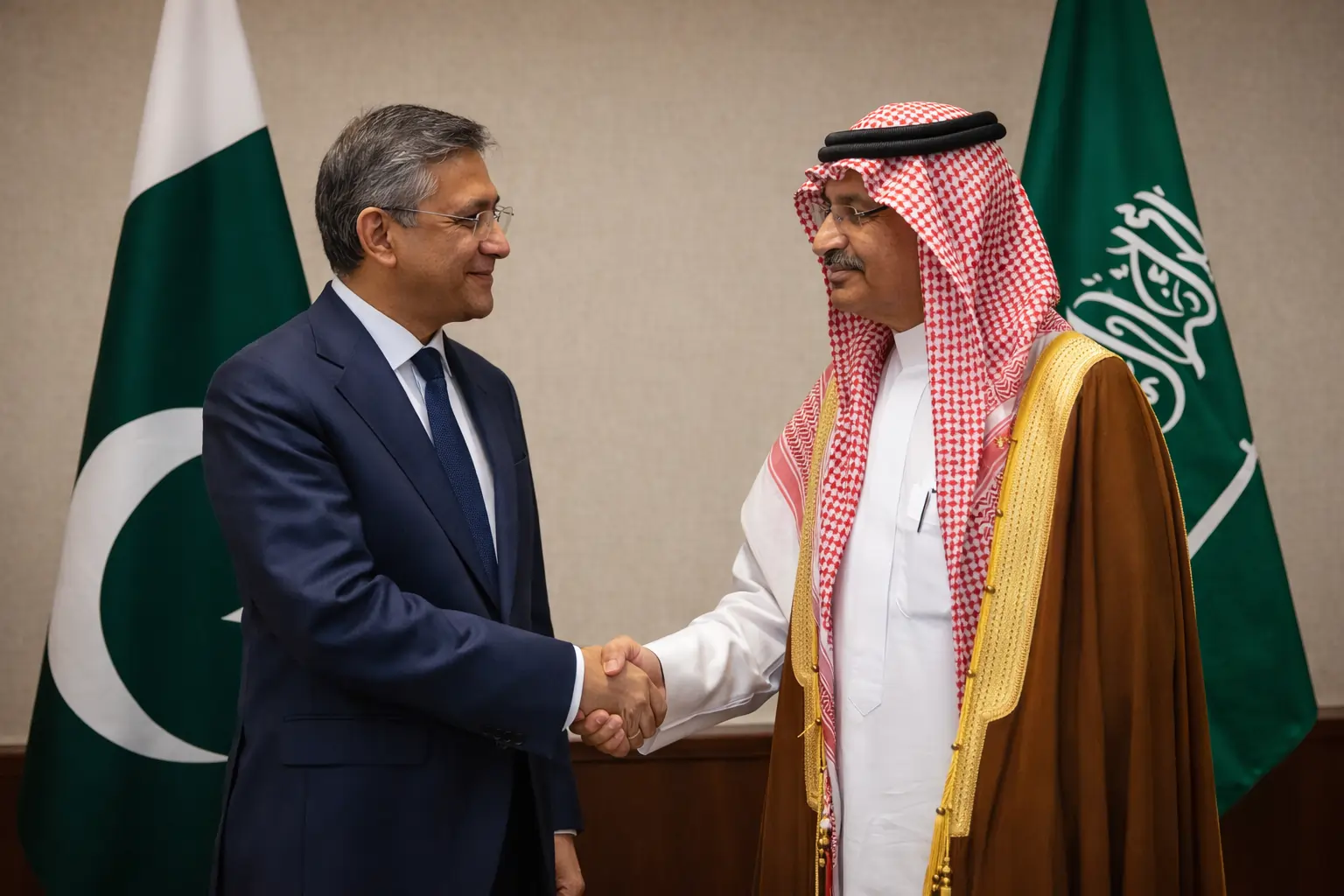
The finance minister held a detailed meeting in Washington with Saudi Finance Minister His Excellency Mohammed bin Abdullah Al-Jadaan. Senator Aurangzeb was accompanied by State Bank of Pakistan Governor Jameel Ahmad and Pakistan’s Ambassador to the United States, Rizwan Saeed Sheikh. Senator Aurangzeb expressed gratitude to Saudi leadership, particularly His Royal Highness Crown Prince Mohammed bin Salman, for their continued support and close cooperation throughout the process.
Notably, the meetings between the two finance ministers had already begun the previous Friday in Islamabad. Senator Aurangzeb said the government had deliberately refrained from commenting publicly until formal communication was received, given the sensitivity of the matter.
The decision to convert the $5 billion deposit into a longer-term arrangement is a meaningful structural shift. It removes the annual rollover uncertainty that had previously added pressure to Pakistan’s reserve planning and macroeconomic management.
Pakistan Meets External Obligations and Diversifies Funding Sources
The Saudi support package arrives as Pakistan navigates a demanding repayment schedule. The country is due to repay $3.5 billion to the United Arab Emirates this month, after the UAE did not roll over the loan for the first time in seven years. Despite that pressure, Senator Aurangzeb has been firm and consistent in his messaging: Pakistan will meet all its external obligations on time.
Last week, Pakistan successfully repaid a $1.4 billion Eurobond. Senator Aurangzeb described it as a non-event, a signal of the government’s confidence in its debt management capacity.
The IMF has stipulated that Pakistan’s three key bilateral creditors, Saudi Arabia, China, and the UAE, must maintain their cash deposits with Pakistan until the completion of the country’s ongoing three-year IMF programme, valued at $7 billion. Saudi Arabia’s move to extend its deposit on a longer-term basis aligns with that requirement and goes beyond it, offering a more stable and predictable funding foundation.
Senator Aurangzeb also outlined Pakistan’s broader external financing strategy. The government is advancing plans for a Global Medium-Term Note programme and a planned inaugural Panda Bond issuance, which would mark Pakistan’s first-ever Yuan-denominated debt offering. The inaugural Panda Bond sale is expected to be $250 million, out of a planned total of $1 billion. Pakistan is also exploring Eurobond and Islamic sukuk issuances as part of a deliberate push to diversify funding sources and reduce dependence on bilateral emergency financing.
Growing International Confidence in Pakistan’s Economic Direction
The Saudi announcement comes amid broader signs of improving sentiment toward Pakistan’s economy. Senator Aurangzeb noted positive feedback from the IMF, the World Bank, and global investors gathered in Washington this week for the Spring Meetings. Pakistan’s recent repayment of the Eurobond and its discipline in meeting external commitments have been cited as factors strengthening that confidence.
Pakistan also recorded a strong monthly performance in March under its Roshan Digital Account initiative, with Senator Aurangzeb describing it as a record inflow that reflects growing trust among overseas Pakistanis in the country’s economic direction.