

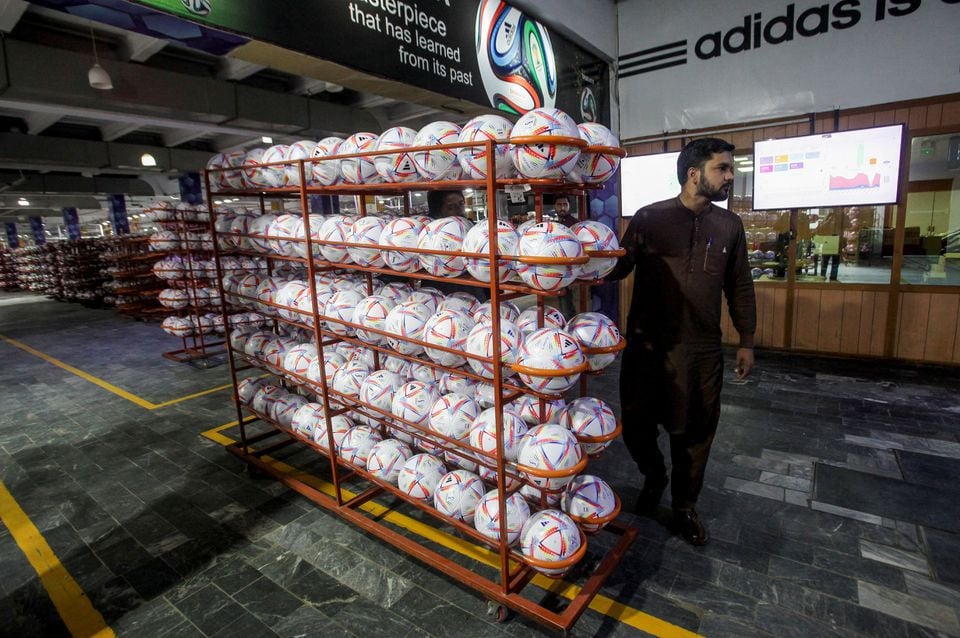
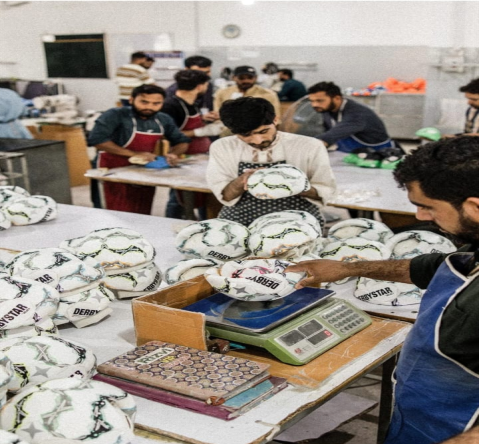
Nestled in the Punjab region of Pakistan, the city of Sialkot has quietly become one of the world’s most important manufacturing hubs—not for heavy machinery or electronics, but for the object that captivates billions: the football. Yet this industrial achievement is largely invisible to global audiences. When fans watch a World Cup match, they rarely know that the very ball at the players’ feet was likely stitched together by skilled artisans in this Pakistani city.
Colonial Roots and Early Craftsmanship
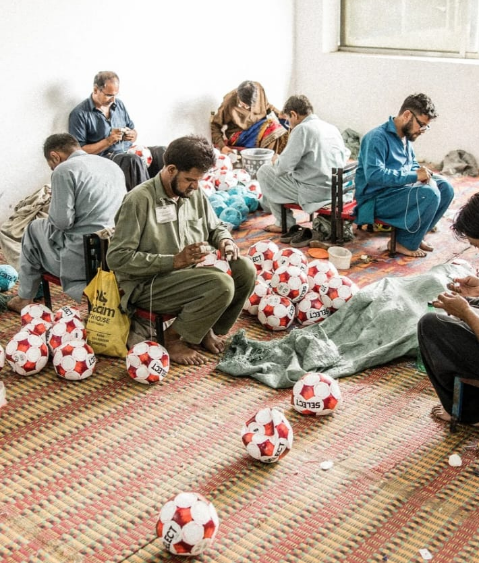
Sialkot’s industrial story begins during the British colonial era in the 19th century. When British soldiers arrived in the subcontinent, they brought with them a demand for sports equipment and precision goods. Local craftsmen in Sialkot recognized an opportunity and began producing sports goods for these soldiers—cricket balls, leather goods, and eventually footballs. What started as a small-scale operation became the foundation of an entire industry.
The craftspeople of Sialkot possessed a natural advantage: generations of experience in fine leather work and meticulous attention to detail. These artisans weren’t starting from scratch; they inherited a tradition of precision craftsmanship that had existed for centuries. Each generation refined these skills, passing knowledge down like a precious family heirloom. By the early 20th century, Sialkot had earned a reputation throughout the British Empire for producing quality sports goods that could withstand professional use.
The Global Expansion
As football exploded in popularity across Europe and Latin America in the mid-20th century, demand for high-quality footballs surged. International sports brands seeking reliable manufacturing partners discovered Sialkot’s artisans. Companies like Adidas, Nike, Puma, Umbro, and Mitre recognized that the city’s craftspeople could deliver the precision and consistency required for professional-grade equipment.
This marked a turning point. Sialkot transformed from a regional manufacturing centre into a global supplier. The city’s football workshops began producing balls for the world’s most prestigious competitions. The 1982 Tango España ball, used at the FIFA World Cup in Spain, was a product of Sialkot’s craftsmanship. Since then, nearly every World Cup ball has carried the mark of Sialkot artisans: the Azteca (1986), Etrusco Unico (1990), Questra (1994), Tricolore (1998), Fevernova (2002), Teamgeist (2006), Brazuca (2014), Telstar 18 (2018), Al Hilm (2022), and Trionda (2026).
The Dual Mastery: Footballs and Surgical Instruments
What makes Sialkot’s story even more remarkable is its parallel mastery of precision manufacturing. The same artisans who stitch World Cup footballs also produce surgical instruments of exceptional quality. This dual expertise reflects the fundamental principle that governs Sialkot’s success: precision, attention to detail, and an uncompromising commitment to quality.
This combination is not coincidental. The skills required to craft a football that meets FIFA’s rigorous specifications. Exact weight, perfect symmetry, consistent pressure; are virtually identical to those needed to produce surgical instruments used in operating rooms
worldwide. Both demand millimetre-perfect accuracy and flawless craftsmanship.
A City’s Identity
Today, Sialkot’s football and sports goods industry represents the lifeblood of the city’s economy. Thousands of small workshops and factories employ tens of thousands of workers, from skilled artisans to support staff. The industry has created a unique cultural identity—Sialkot is known throughout Pakistan and globally as the place where footballs are made.
The Hidden Giant
What remains striking is how little the world knows about Sialkot’s contribution to global football. When billions watch the FIFA World Cup, few realize that the ball on the pitch connects them to a city thousands of miles away in Punjab. Sialkot’s artisans work behind the scenes, creating the very instruments that bring joy to football fans worldwide.
In the age of high-tech manufacturing and automation, Sialkot has proven that traditional craftsmanship, precision, and dedication remain irreplaceable. A city far from football’s traditional heartlands—Europe and South America—has become indispensable to the world’s most popular sport. That is the remarkable legacy of Sialkot: a testament to human skill, perseverance, and the enduring value of quality craftsmanship.