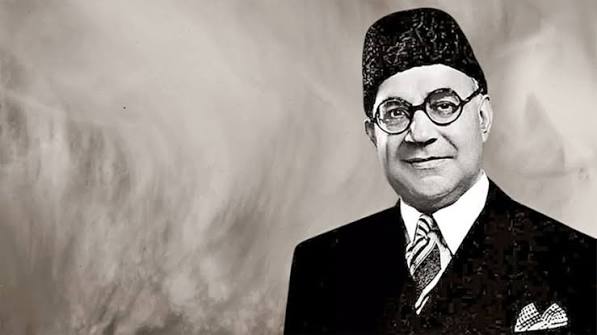
Liaquat Ali Khan was born on October 1, 1895, into a wealthy landowning family in Karnal, Punjab, with ancestral roots in Muzaffarnagar. As a Nawabzada, he inherited vast estates across present-day Haryana and Uttar Pradesh, and grew up amid privilege few could imagine — educated at home, then abroad, before entering law and eventually politics as a devoted lieutenant of Muhammad Ali Jinnah. He rose swiftly within the Muslim League, and by the time Pakistan was born in 1947, he was one of the most influential men in the new nation, poised to inherit both immense wealth and immense power.
Yet when Partition tore the subcontinent apart, Liaquat Ali Khan left behind palaces, land, and generations of inherited wealth in India. As Pakistan’s first Prime Minister, he was legally entitled to refugee compensation for everything he had lost. He never claimed a single rupee of it. While millions of ordinary refugees rebuilt their lives, the man leading the nation quietly gave up his own claim — because he believed a leader’s duty was to serve first, and benefit never.
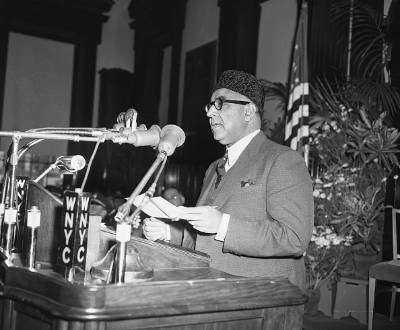
Nowhere is this spirit captured more powerfully than in the words he spoke to his own wife. At an Eid luncheon in 1950, hosted by Governor-General Khawaja Nazimuddin, Begum Ra’ana Liaquat Ali Khan voiced a quiet fear — that if anything happened to her husband, she and their children would be left with no home to call their own. Liaquat’s reply has echoed through Pakistan’s history ever since: “First, the five million refugees must be settled. Only then will my turn come.”
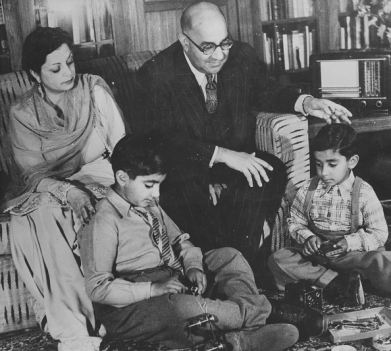
His turn never came. On October 16, 1951, in Rawalpindi, an assassin’s bullet cut short the life of the man who had given Pakistan everything and asked for nothing. Even in his final moments, his heart belonged to this country. He is remembered to have recited the Kalima, and to have whispered words that generations of Pakistanis still carry in theirs: “Allah Pakistan ko apni amaan mein rakhay” — May Allah protect Pakistan.
Liaquat Ali Khan’s love for Pakistan was matched by a quiet insistence on its independence in world affairs. Though he built strong ties with the United States, visiting Washington in 1950 at President Truman’s invitation, he was careful not to let that friendship come at the cost of Pakistan’s own judgment. By many Pakistani historical accounts, he resisted pressure to delay recognition of China and was reluctant to grant military air bases on Pakistani soil, preferring to keep the country’s options open rather than lean fully into either side of the Cold War. Even in his final days, he was said to have avoided binding Pakistan to a foreign military alliance, returning again and again to the same conviction — that Kashmir, not the politics of great powers, was the issue closest to Pakistan’s heart.
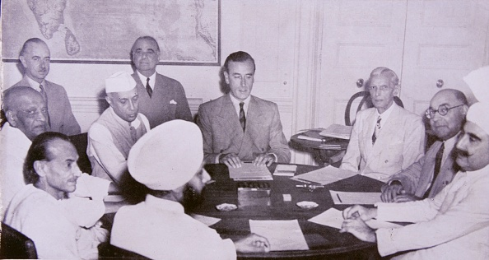
We remember Liaquat Ali Khan not as a man who sought power, but as one who surrendered comfort, wealth, and ultimately his life, so that a free Pakistan could rise. He became known as the “Homeless Nawab” — a Nawab with no palace, no property, no home of his own — because he gave his home, his wealth, and his life to build a home for all of us.
His sacrifice reminds every generation of Pakistanis: this country was not inherited. It was earned, and it must be honored.