

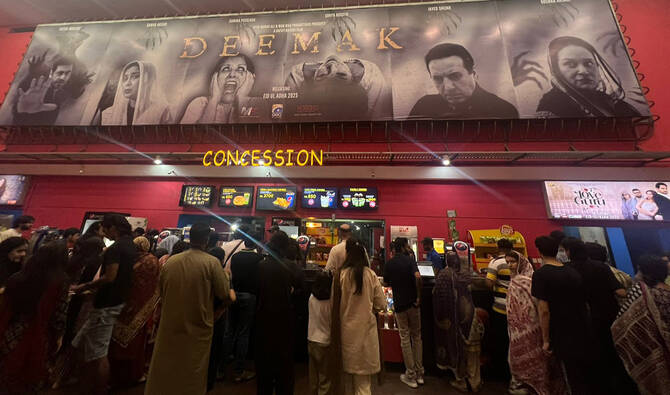
Eid al-Adha has traditionally been one of the most important windows for Pakistani cinema, for both audiences and filmmakers. Not only does it give audiences the chance to celebrate the festive season with larger-than-life stories on the big screen, but nearly 90% of the highest-grossing Pakistani films ever released were released during this season.
This year, the holiday arrives with an unusually diverse local lineup, as three films — Psycho, Zombeid, and Luv Di Saun — aim to appeal to very different tastes. While Psycho features the 90s legends Shaan Shahid and Meera, Zombeid brings back the magic of Fahad Mustafa and Mehwish Hayat after eight years. Luv Di Saun targets an international audience by representing Punjabi culture and promoting interfaith harmony.
So why would one go see these films in theaters? The simplest reason is that scale matters. Horror-thrillers rely on atmosphere and tension, best experienced in a dark auditorium; zombie thrillers thrive on suspense and audience reactions; and romantic entertainers flourish when their music, visuals, and emotional beats are amplified on the big screen. More importantly, going to see Pakistani films signals that local audiences are willing to support creative risks.
Among the most intriguing releases is Psycho, which actor-producer Meera describes as a landmark project for local cinema. Featuring an ensemble cast that includes Shaan Shahid, Sonya Hussyn, Javed Sheikh, Shabbir Jan, and Nayyar Ejaz, the film marks Meera’s reunion with Shaan and promises a darker, more psychological cinematic experience than audiences typically encounter.
Speaking about the project, Meera called the film “a unique journey” and a step toward expanding Pakistan’s cinematic language.
“This is a film in a different genre,” she said. “It is very good news for Pakistan and its film industry. We are entering a new era and a new way of thinking.”
She described the film as one that would take audiences into unfamiliar territory.
“Psycho is an interesting story that will take the audience somewhere else,” she said. “The audience’s thinking will change, and they will enjoy a new genre. A new journey will begin.”
Meera also stressed that the film offers younger filmmakers and aspiring actors a chance to learn from established industry veterans and praised its technical craft and cinematography. Her message to audiences is straightforward: support local cinema and embrace experimentation.
If Psycho represents Pakistan’s foray into psychological suspense, Zombeid brings pure genre entertainment to the holiday season. Starring Fahad Mustafa and Mehwish Hayat, the zombie thriller has generated considerable excitement for daring to tackle a genre rarely explored in Pakistani cinema.
For Mehwish Hayat, the project’s biggest attraction was precisely that sense of creative risk.
“What attracted me to Zombeid was the madness of it — in a good way,” she said. “We in Pakistan have never attempted a zombie thriller on this scale before. When I found out about it, I thought it was risky but also very challenging, and that made me want to do it.”
She explained that as an artist, she is always looking to experiment with different genres and give audiences something unexpected.
“I always like to attempt different kinds of work and give audiences something new, something fresh, and with Zombeid I felt that was exactly what we were doing,” she said.
The film promises a blend of horror, satire, action, and humor, with its zombie premise serving as both spectacle and social commentary. For Hayat, the role also offered an opportunity to explore a completely different side of her craft.
“The audience will see a different side of me as an actor because in this movie I’m not just playing emotions,” she said. “We had to react to danger, fear, and chaos, and those reactions are very different from the work we’ve been doing. That was challenging, but it was also something new and fresh.”
That ambition alone makes it worth seeing in theaters. Zombie films are designed for shared reactions—the gasps, laughs, and collective thrills of an audience responding together. It is exactly the kind of film that thrives in a packed theater with surround sound, and the novelty of seeing Pakistan attempt a full-scale zombie thriller only adds to its big-screen appeal.
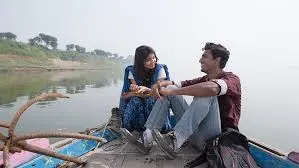
Then there is Luv Di Saun, starring Farhan Saeed, which offers a more familiar yet equally important cinematic option for Eid audiences. Positioned as the festive season’s romantic entertainer, the film blends humor, music, and emotional drama into an accessible, family-friendly package.
While thrillers and zombie spectacles offer novelty, romantic comedies remain among Pakistani cinema’s strongest crowd-pullers. Films like Luv Di Saun often succeed because they offer escapism grounded in emotional relatability. On Eid, when families traditionally head out together, this feel-good entertainer could be the perfect choice for a communal outing.
When asked in an interview why the audience should go see Luv Di Saun, both Farhan Saeed and debutant Mamya Shahjaffar said the film has something for everyone. There is romance for those who love romantic films, action for fans of action films, and music for those who love a good soundtrack, with a message of peace in between.
And then there is an international title to keep an eye on. Although The Mandalorian & Grogu was released worldwide on May 22, Pakistani distributors held it back for the holiday season. The next big-screen chapter in the Star Wars universe is likely to bring audiences back to theaters because they want to see their beloved duo, Din Djarin and Grogu, from Disney’s hit series The Mandalorian again.
Directed by Jon Favreau, who also created the TV series, the film promises to expand the mythology of the galaxy far, far away while preserving the emotional bond and adventure-driven storytelling that made the series a global sensation.
What makes this year particularly encouraging is the sheer variety on offer. Instead of multiple films competing within the same narrow genre, audiences have a genuine choice: psychological suspense, genre-bending zombie chaos, or light-hearted romance.
That diversity is exactly what Pakistani cinema needs to rebuild momentum and attract wider audiences. Every ticket sold this Eid will not just support a single film; it will support the idea that Pakistani filmmakers can experiment, innovate, and trust viewers to embrace something different.
For moviegoers planning their Eid watchlist, the message is clear: skip the sofa for at least one evening and head to the cinema. Whether it is Meera’s promise of a “new journey” in Psycho, the genre-breaking madness of Zombeid, or the festive charm of Luv Di Saun, this Eid’s local releases offer something worth experiencing where films are meant to be seen—on the big screen.