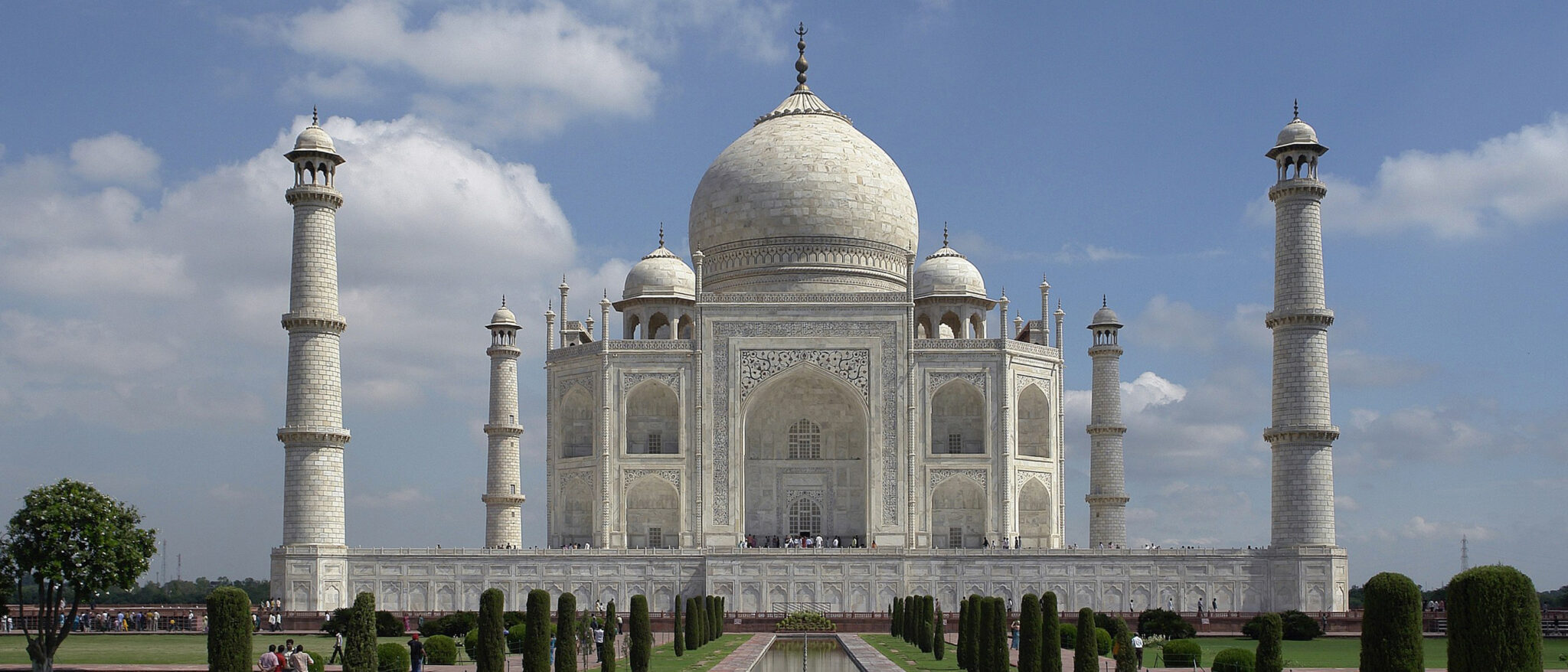
When people look at the Taj Mahal, they see an undying monument to love. But behind its glistening marble facades is a story of incredible mathematical precision and architectural genius, one masterminded by a royal court designer proudly identified with his hometown of Lahore: Ustad Ahmad Lahori.
Long before he was tasked with constructing the world’s most famous mausoleum, Lahori was celebrated within the Mughal Empire as a true polymath, deeply versed in astronomy, advanced geometry, and structural engineering. Born into an era when Lahore was a booming intellectual epicenter, his legendary mastery of calculation caught the eye of Emperor Shah Jahan, who bestowed upon him the ultimate title of Ma’mar-i-Kul (Chief Architect of the Empire). As the leader of a prestigious imperial design board, Lahori managed a force of over 20,000 artisans. He bridged the gap between raw imagination and structural reality, permanently altering the skyline of South Asia.
Architectural Innovations: Symmetry & Illusion
Built between 1632 and 1653 as a mausoleum for Empress Mumtaz Mahal, the monument is widely considered the absolute pinnacle of Mughal architecture. According to historical analyses detailed on Pantheon World, Lahori’s true genius lay in his ability to blend Persian elegance, Islamic structural tradition, and indigenous Indian craftsmanship into a flawlessly unified structure, employing brilliant engineering tactics that were centuries ahead of their time.
He specifically engineered the four towering minarets to lean slightly outward so that they look perfectly vertical from afar, while ensuring that in the event of an earthquake, they would collapse away from the central tomb. To achieve a soaring presence on the outside without creating a cold, cavernous hollow inside, Lahori built a clever “double dome” system where the interior ceiling is a completely separate structure from the massive outer onion dome. Furthermore, relying on his deep background in geometry, he placed every courtyard, garden pathway, and archway on a strict mathematical grid, creating a flawless bilateral symmetry that is broken only by the later addition of Shah Jahan’s grave.
Mind-Boggling Engineering: The Secret “Floating” Foundation
While the marble work is what captures the eye, the most fascinating detail of the Taj Mahal is entirely hidden underground. Building a massive, heavy stone monument right on the soft, shifting banks of the Yamuna River was an engineering nightmare. To prevent the building from sinking or cracking over time, Lahori and his engineers pioneered a revolutionary “floating foundation” system.
For this “Underwater Forest”, workers dug deep vertical wells past the water table, packing them with rubble, iron, and mortar. Atop these pillars, they constructed a massive underground raft made of exceptionally dense ebony and sal-wood. While wood conventionally rots when exposed to water, these specific timbers possess unique structural properties that require constant moisture to maintain their strength and flexibility. By keeping the timber completely submerged in the Yamuna River’s natural water table, the wood remains perfectly preserved, acting like a giant shock absorber that cushions the monument against soil shifts and seismic waves.
Beyond Agra: Re-shaping Delhi and Lahore
Ustad Ahmad Lahori’s brilliant legacy extends far beyond the borders of Agra. He was handed the keys to shape the empire’s most vital cities. He designed the massive red sandstone ramparts of Delhi’s Red Fort, drafted the urban master plan for the entire walled city of Shahjahanabad (Old Delhi), and laid down the initial blueprints for the grand Jama Masjid. Before moving to the courts of Agra and Delhi, Lahori also left his mark closer to home, contributing to early structural expansions and serene marble pavilions within the historic Lahore Fort.
A Lasting Pakistani Legacy
The chief architect proudly carried the identity of his birthplace throughout his life, writing his name as “Lahori”. His three sons all grew up to become highly accomplished imperial engineers and mathematicians, keeping his rigorous design methods alive for generations. For Pakistan, Ustad Ahmad Lahori stands as a towering historical icon. His legacy serves as a proud reminder that the principal mind responsible for designing one of the Seven Wonders of the World was a true son of Lahore, whose geometric genius permanently reshaped South Asia.