


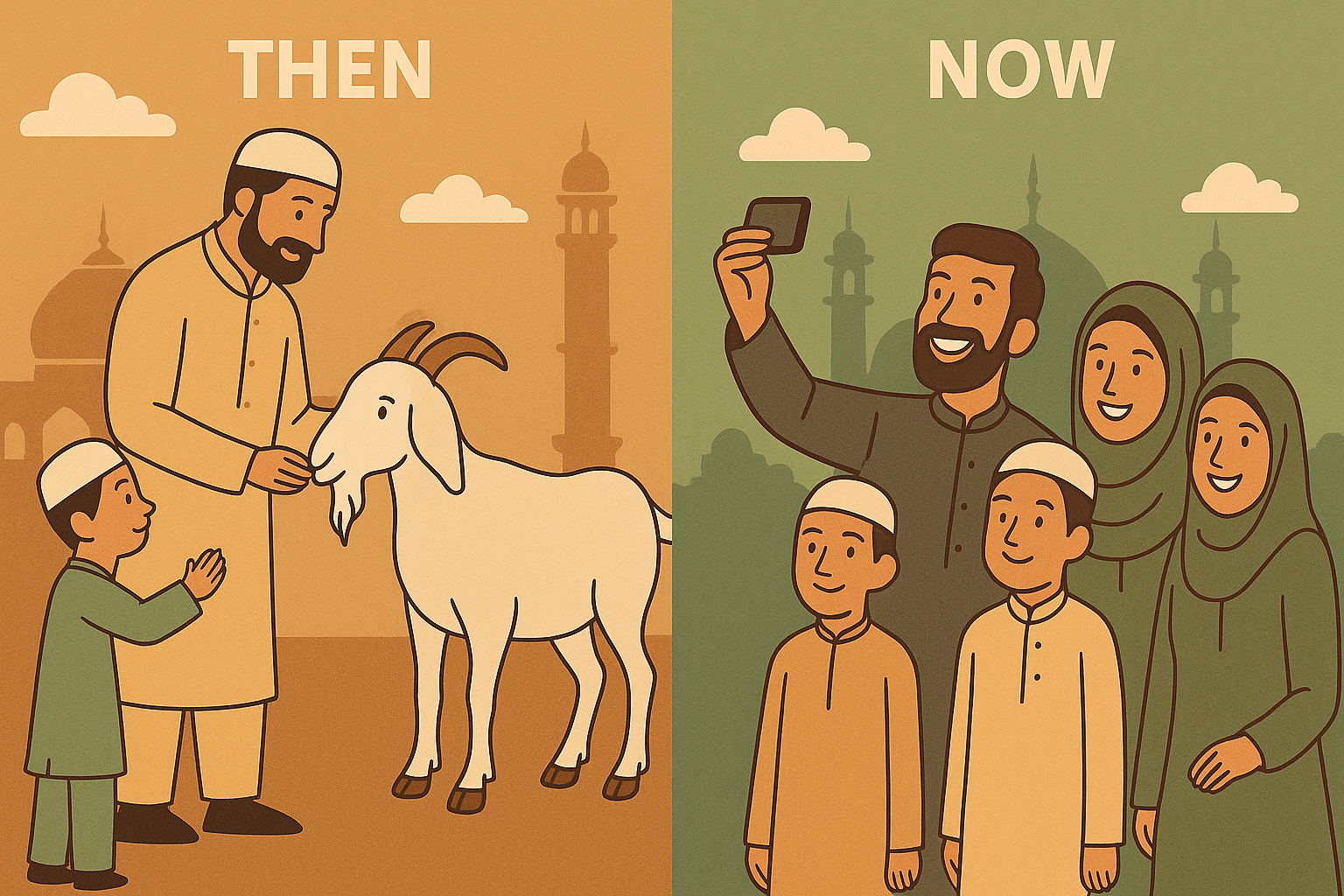
Digital Eidi, online qurbani, and app-based shopping have reshaped how Muslim families mark Eid.
A generation ago, Eid followed a fixed pattern. Greetings came over landlines, relatives gathered in one house, and children received cash in hand. Much of that has changed.
The core of the day is the same, including the prayer, the sacrifice, the food, and the family. But the way people give, greet, and shop has moved onto a screen.
With Eid Al Adha beginning tomorrow, let’s have a look at how eid celebrations have changed in a generation.
Digital Eidi Replaces the Envelope
Eidi, the money passed from elders to younger relatives, used to be a physical exchange. A child greeted an aunt or grandparent and received a folded note. The crispness of the bill mattered, and banks saw long lines of people swapping old currency for new notes before Eid.
That is changing fast. Pakistan Today reports that both elders and children are increasingly choosing online transfers over cash, using mobile banking apps to send Eidi to relatives in other cities or abroad. The Nation reported the same shift across South Punjab, where families that once handed over cash in person now use digital wallets. The reason is speed and reach. A transfer takes seconds and does not require everyone in the same room.

This matters most for families split across distances, whether between cities or countries. A parent can send Eidi to a child hundreds of miles away before the morning prayers end. Twenty years ago, that money would have waited for a visiting relative or a trusted courier.
Online Qurbani and the Outsourced Sacrifice
The qurbani, the ritual sacrifice central to Eid Al Adha, has changed sharply. In the past, families often bought an animal days in advance, kept it at home, and performed the sacrifice themselves. Children grew attached to the goat or cow tied in the yard. The process was loud, physical, and local.
Now much of it happens through a booking page. In the UAE, the Islamic Affairs and Charitable Activities Department sets official qurbani rates each year, and Gulf News reports prices this year run from 350 to 800 dirhams, with online booking widely available. Aid groups have built on the same idea.
Islamic Relief says its teams distributed qurbani meat to more than three million people across 29 countries in 2025, all arranged by donors who never saw the animal. For people with no space, no time, or no way to handle it themselves, this is often the only practical route. The sacrifice still happens. It just happens somewhere else.
Family Gatherings Move to the Group Chat
A generation ago, Eid greetings traveled by landline or in person. Households waited their turn for the phone, and long-distance calls were short and expensive. The day was measured in visits.
Now the first Eid Mubarak of the morning usually arrives by WhatsApp. Group video calls connect households across several countries at once. Voice notes, photos of the breakfast table, and short clips of children in new clothes circulate within minutes. The group chat does not replace a shared table, but it closes a distance that earlier generations had to accept.
Eid Shopping Shifts From the Bazaar to the App
Eid shopping once meant crowded bazaars, late nights at the tailor, and bargaining for bangles and shoes. Now much of it happens online. Clothes, gifts, and sweets are ordered through apps and delivered to the door, often with Eid sales running for weeks in advance.
Government programs show the same move. In Pakistan, Eid assistance schemes now transfer funds directly to mobile wallets such as Easypaisa and JazzCash rather than handing out cash at offices. Online stores also mean a parcel can reach a relative’s doorstep without anyone making a trip.
What Stays the Same Across the Generations
For all the change, the center holds. Families still wake early for Eid prayers. They still cook in large quantities and still divide the qurbani meat in three parts, keeping one, giving one to relatives, and one to those in need. Children still wait for Eidi, even if it now arrives as a notification rather than a note. The tools have changed. The reasons behind them have not. Eid is still about marking the day together, and people have simply found new ways to do that when they cannot all be in the same place.
The shift is not a clean trade. Older relatives sometimes miss the weight of cash and the noise of a full house. Younger ones rarely knew that version of Eid to begin with. But the move toward digital Eidi, online qurbani, and app-based shopping has made the day reachable for people who once would have spent it apart. In that sense, the technology has not replaced the tradition. It has made it possible for millions of people to share the same joy with their loved ones.
Eid Mubarak to you all!