

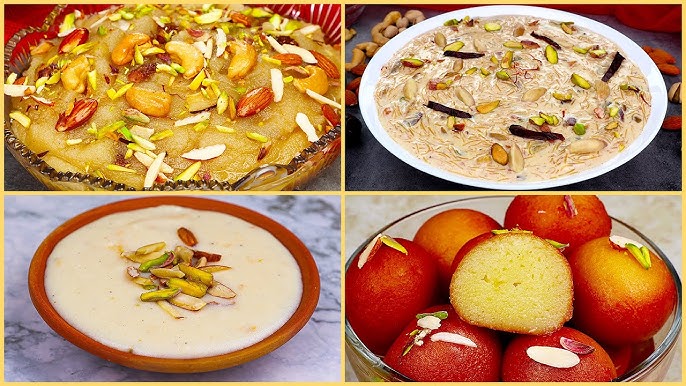
Five classic Eid desserts, from sheer khurma to baklava, that have anchored festive tables across the Muslim world for generations.
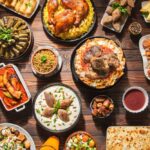
Eid is not Eid without something sweet. Long before the first guests arrive, kitchens across the Muslim world fill with the smell of simmering milk, toasted nuts, and warm sugar syrup. The dishes change from one country to the next, but the idea stays the same. A sweet bite marks the end of fasting or sacrifice, and it brings family to the same table.
With Eid Al Adha set to begin on Wednesday, May 27 in the UAE, here are five traditional sweets that continue to define the celebration.
Sheer Khurma
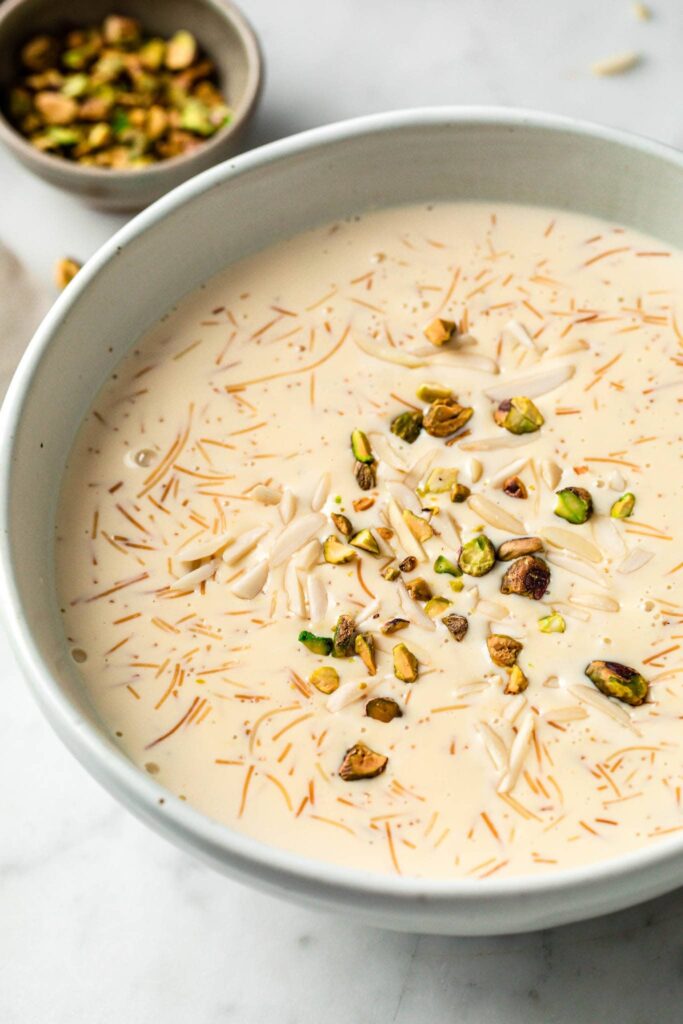
In Pakistan, India, and Bangladesh, the morning of Eid almost always begins with sheer khurma. The name comes from Persian and roughly means milk with dates. It is a thin vermicelli pudding cooked in milk, sweetened with sugar, and loaded with dates, almonds, pistachios, and sometimes raisins. Families serve it warm or chilled, often in small bowls passed around right after Eid prayers. For many South Asian households, the dish is the official taste of the day. It is simple in concept but slow in practice. The milk needs patience, and the nuts need careful chopping. That effort is part of the point.
Sewaiyaan
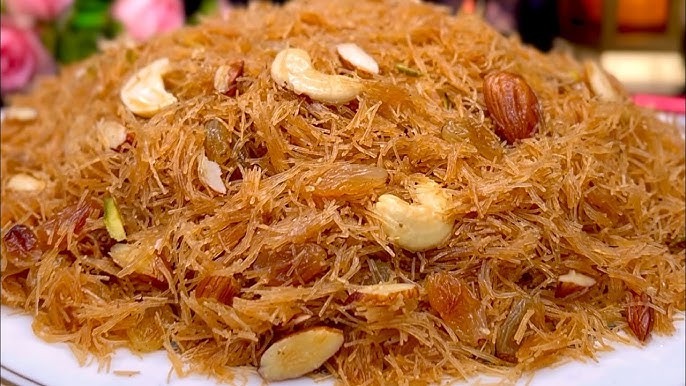
Sewaiyaan, a drier and richer version of vermicelli, is another South Asian staple. Here the thin strands are roasted in ghee until golden, then cooked down with milk and sugar until thick. Some cooks add khoya, a reduced milk solid, to make it heavier and more festive. In several regions, the choice between sheer khurma and sewaiyaan is almost a matter of family tradition, passed from one generation to the next. The hours spent in the kitchen are themselves a form of celebration.
Baklava
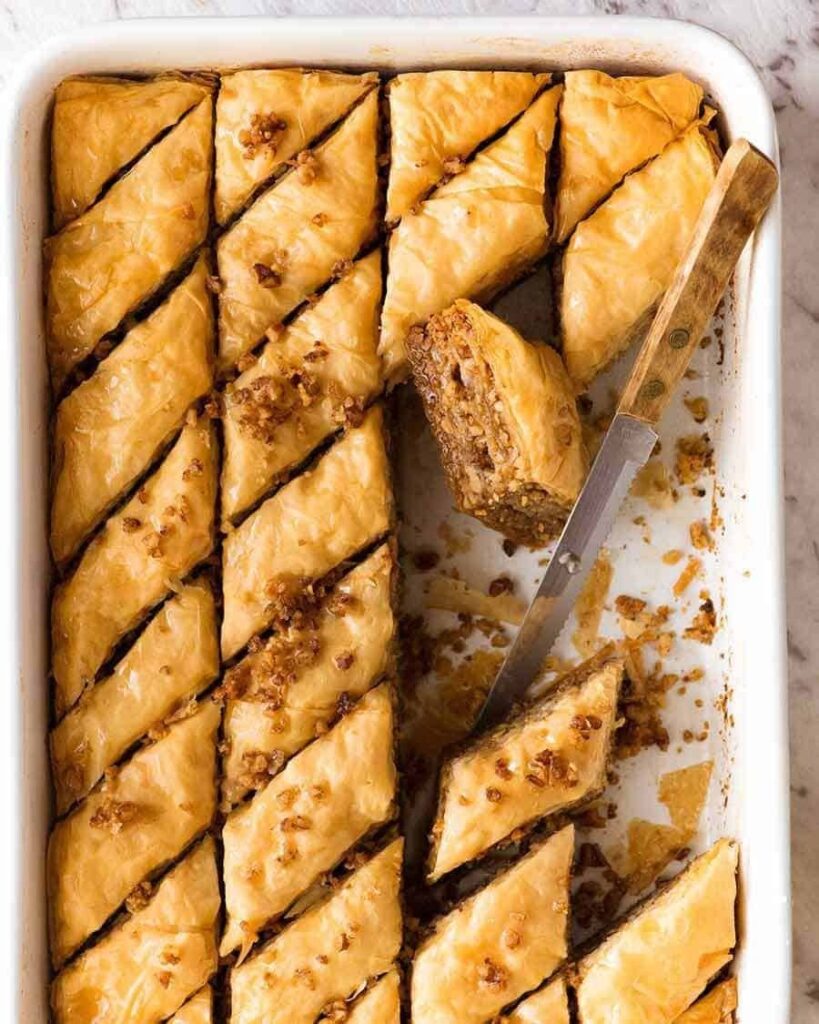
Across the Arab world and Turkey, baklava holds a place of honor at Eid. The dessert is built from many thin layers of filo pastry, brushed with butter, packed with chopped pistachios or walnuts, and soaked in sugar syrup or honey after baking. Each region has its own style. Some cut it into diamonds, others into rolls, and the level of sweetness varies from one country to the next. Baklava has spread well beyond its origins. In the UAE, it is sold in sweet shops year round, but demand rises sharply in the days before Eid. For expat families far from home, a box of baklava is an easy way to bring a familiar festive flavor to a new country.
Maamoul
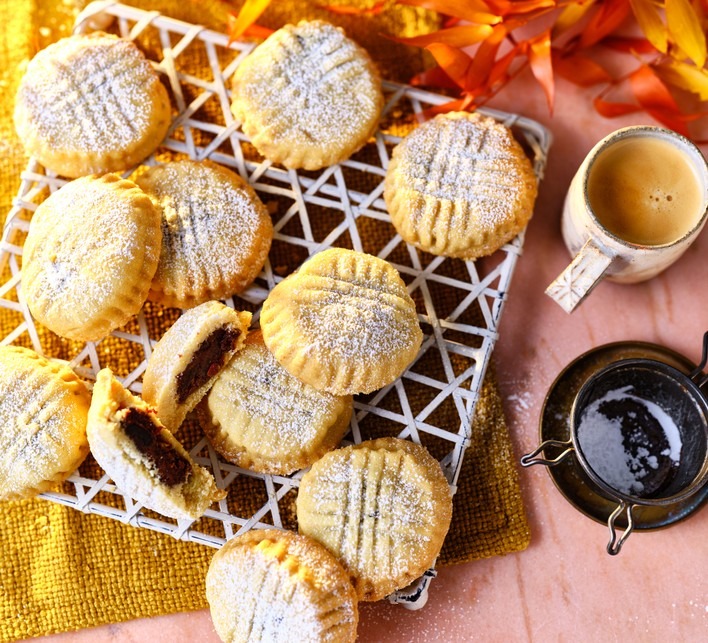
Maamoul is another Eid essential in the Levant and the Gulf. These small shortbread cookies are filled with dates, walnuts, or pistachios and pressed into carved wooden molds that leave a decorative pattern on top. They are often dusted with powdered sugar and arranged in neat rows for guests. Many families bake large batches in the days before Eid, and the process becomes a shared activity, with children helping to shape and fill the dough.
Kheer
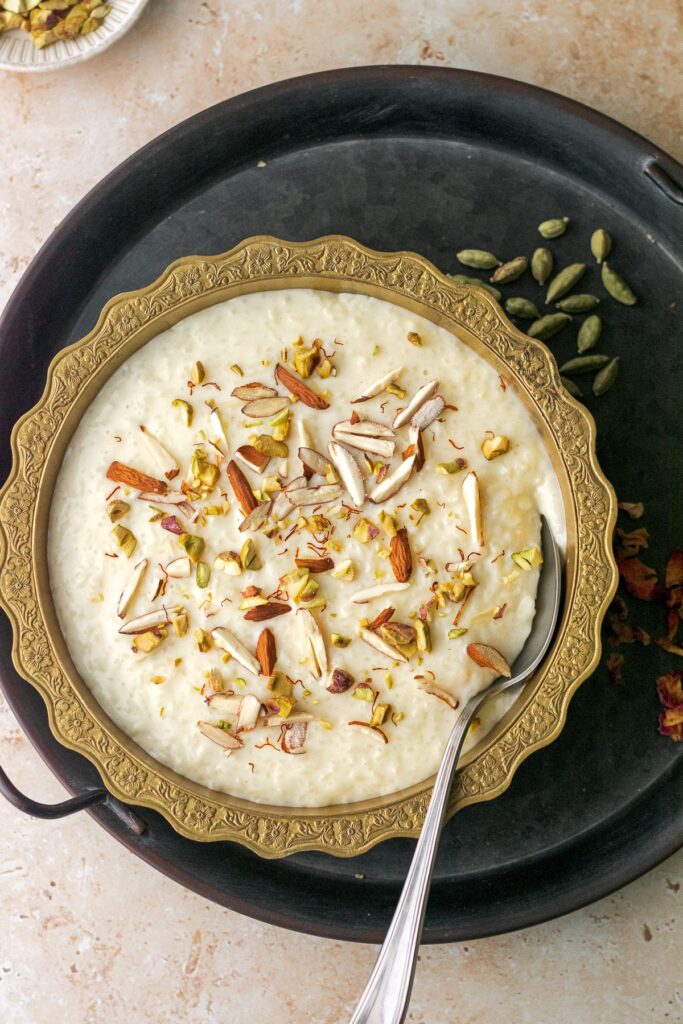
Kheer, a rice pudding, may be the most widely shared Eid dessert of all. Versions of it appear under different names across South Asia, the Middle East, and parts of Africa. The basic recipe is humble. Rice is slowly cooked in milk with sugar, then flavored with cardamom and topped with nuts. Saffron is added in wealthier or more festive versions, giving the pudding a soft golden color. What makes kheer special is its reach. A family in Karachi, a household in Cairo, and a kitchen in Dhaka can all serve a bowl of it on Eid and recognize the same comfort in each spoonful. It is inexpensive, easy to scale for large gatherings, and welcomed by guests of every age.
For this Eid Al Adha, many of these sweets will once again move to the center of the table. Eid Al Adha is the festival of sacrifice, and much of the day revolves around sharing meat and savory dishes.. In that sense, the sweet on the plate is only half the tradition. The other half is the act of giving it away.