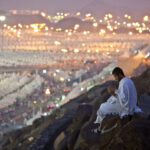


From his search for the one God to the building of the Kaaba, here is the life of Prophet Ibrahim and its lessons for Muslims.
Among the prophets of Islam, few hold a place as central as Prophet Ibrahim, known in other traditions as Abraham. The Quran honors him with the title Khalilullah, the Friend of God, a description given to no other prophet in the same way. He is regarded as the patriarch of monotheism, and his life is treated as a model of submission, patience, and trust in God. His story appears across many chapters of the Quran, including Surah Al-Anbiya, Surah Maryam, Surah Al-Anam, and Surah Ibrahim.
With the Day of Arafah approaching, here is what inspires us about Prophet Ibrahim’s story
Early Life in Babylon
Islamic tradition holds that Ibrahim was born in ancient Babylon, in Mesopotamia, at a time when idol worship was the state religion. The people worshipped statues of wood and stone, along with the sun, the moon, and the stars. King Nimrod ruled the region and, according to tradition, claimed divinity for himself.
Ibrahim’s father, named Azar in the Quran, was an idol-maker by trade. From a young age, however, Ibrahim was given clarity of thought. Surah Al-Anbiya states that God granted him sound judgment early in life. He questioned how objects that could not hear, see, or help anyone could be treated as gods.
The Search for the One God
The Quran presents Ibrahim’s path to monotheism as a process of reasoning. In Surah Al-Anam, he observes a star, then the moon, then the sun, each time considering whether it could be the Lord. As each one set and disappeared, he concluded that a true god does not fade or vanish. He then declared that he had turned his face toward the One who created the heavens and the earth, and that he would not associate partners with God.
He did not keep this belief private. Ibrahim began calling others to the truth, starting with his father. Surah Maryam records the dialogue between them, in which Ibrahim repeatedly addresses Azar as “O my father” while urging him to give up the worship of what cannot benefit him. He used reason and patience rather than force. Azar rejected the message and threatened him.
Breaking the Idols
One of the best-known events of Ibrahim’s life was his direct challenge to his people’s beliefs. While the people were away at a festival, Ibrahim entered their temple and broke the idols into pieces, leaving only the largest one intact, with the axe placed beside it.
When the people returned and found the destruction, they suspected Ibrahim and brought him for questioning. He told them to ask the largest idol what had happened, if it could speak. The people were forced to admit their idols could not speak at all. Surah Al-Anbiya records that they were left confounded, recognizing in that moment the helplessness of what they worshipped. The act was a deliberate demonstration, meant to make the people see the truth themselves.
The Fire of Nimrod
The people responded with anger rather than reflection. King Nimrod ordered that Ibrahim be burned alive. Islamic tradition describes a large pit dug and filled with wood, with crowds gathering to watch.
The Quran records that as Ibrahim was thrown into the flames, God commanded the fire directly: “O fire, be coolness and safety upon Ibrahim,” in Surah Al-Anbiya. The fire did not harm him, and he emerged unharmed. Muslims understand the event as a sign of God’s protection over those who hold to the truth.
Hajar and the Well of Zamzam
After years of rejection, Ibrahim migrated from his homeland in obedience to God, traveling toward the land of Canaan. His trials continued through his family.
God commanded Ibrahim to leave his wife Hajar and their infant son Ismail in the barren valley of Makkah, where nothing grew. As Ibrahim prepared to leave, Hajar asked whether God had commanded this. When he confirmed it, she replied, “Then Allah will not neglect us.”
When their water ran out and the child cried with thirst, Hajar ran between the hills of Safa and Marwa seven times, searching for help. Islamic tradition holds that the Angel Jibreel then struck the ground, and water gushed forth. This was the well of Zamzam, which still flows in Makkah today. Pilgrims drink from it, and the running between Safa and Marwa is now performed as the ritual of Sai during Hajj and Umrah. The water drew travelers and settlers, and the empty valley gradually became the city of Makkah.
Building the Kaaba
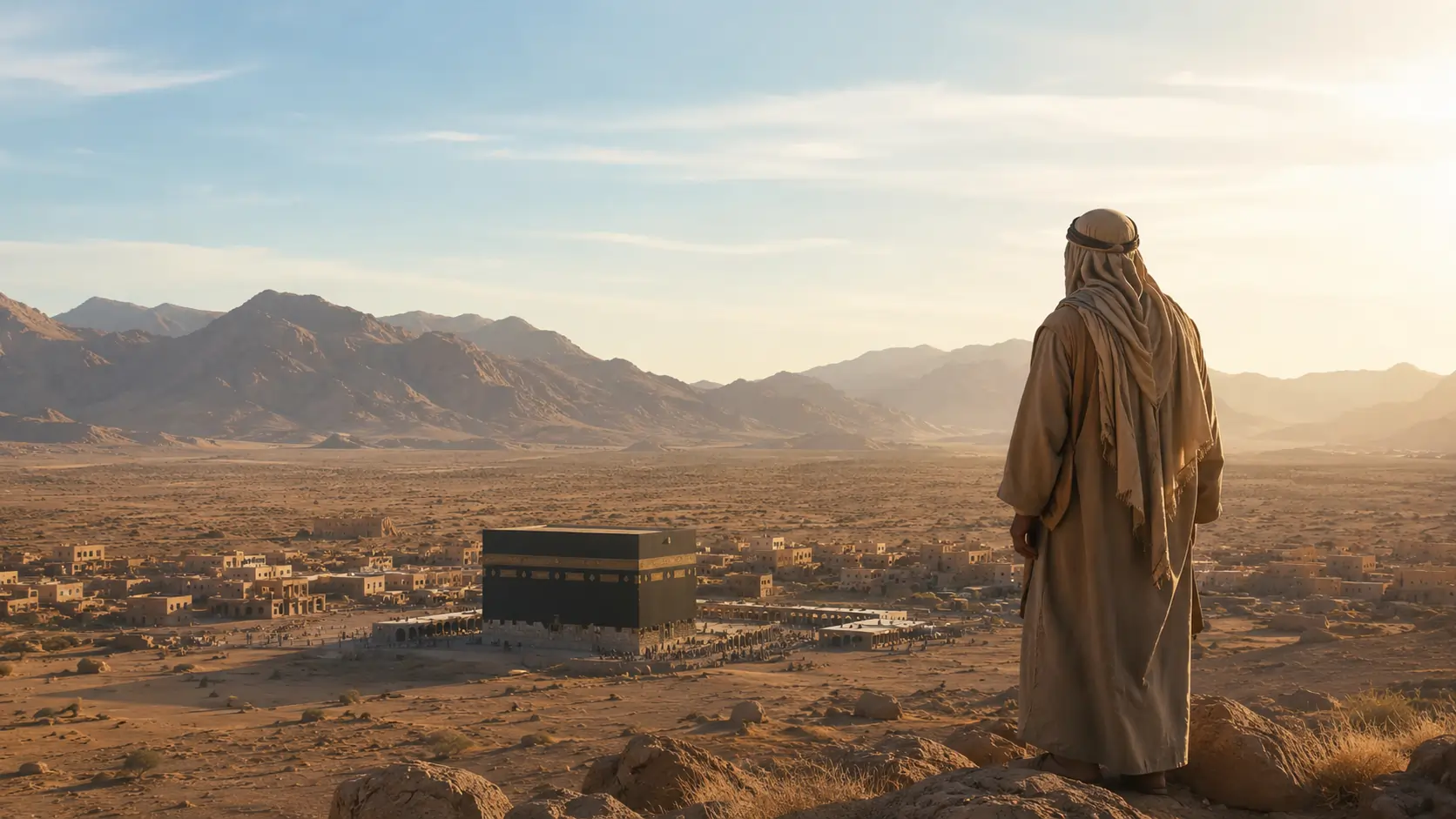
Years later, Ibrahim returned to Makkah, where Ismail had grown. God commanded the two of them to raise a house for His worship. Together, father and son built the Kaaba. Surah Al-Baqarah describes the moment when Ibrahim and Ismail were raising the foundations of the House, praying that God would accept the work from them.
The Kaaba became, and remains, the focal point of Muslim worship. It is the direction Muslims face in daily prayer and the center of the Hajj pilgrimage. Ibrahim also prayed for the valley and its people, asking God to make it a place of peace and to provide for those who would settle there.
The Sacrifice and Ibrahim’s Legacy
The greatest of Ibrahim’s trials was the command to sacrifice his son in obedience to God. That event is commemorated each year by Muslims during Eid al-Adha, the Festival of Sacrifice. It rested on a lifetime of faith built through every test before it.
Ibrahim’s life is remembered for consistent qualities: the willingness to question what those around him accepted, the patience to call others gently, and the trust he placed in God through every hardship. From reasoning under the night sky to building the Kaaba, his story is still taught because the example it sets remains central to Islamic faith.