
For years, I thought survival was something that happened in chapters. A difficult year. A bad season. A crisis that eventually passes.
I know better now. Sometimes survival becomes a way of life.
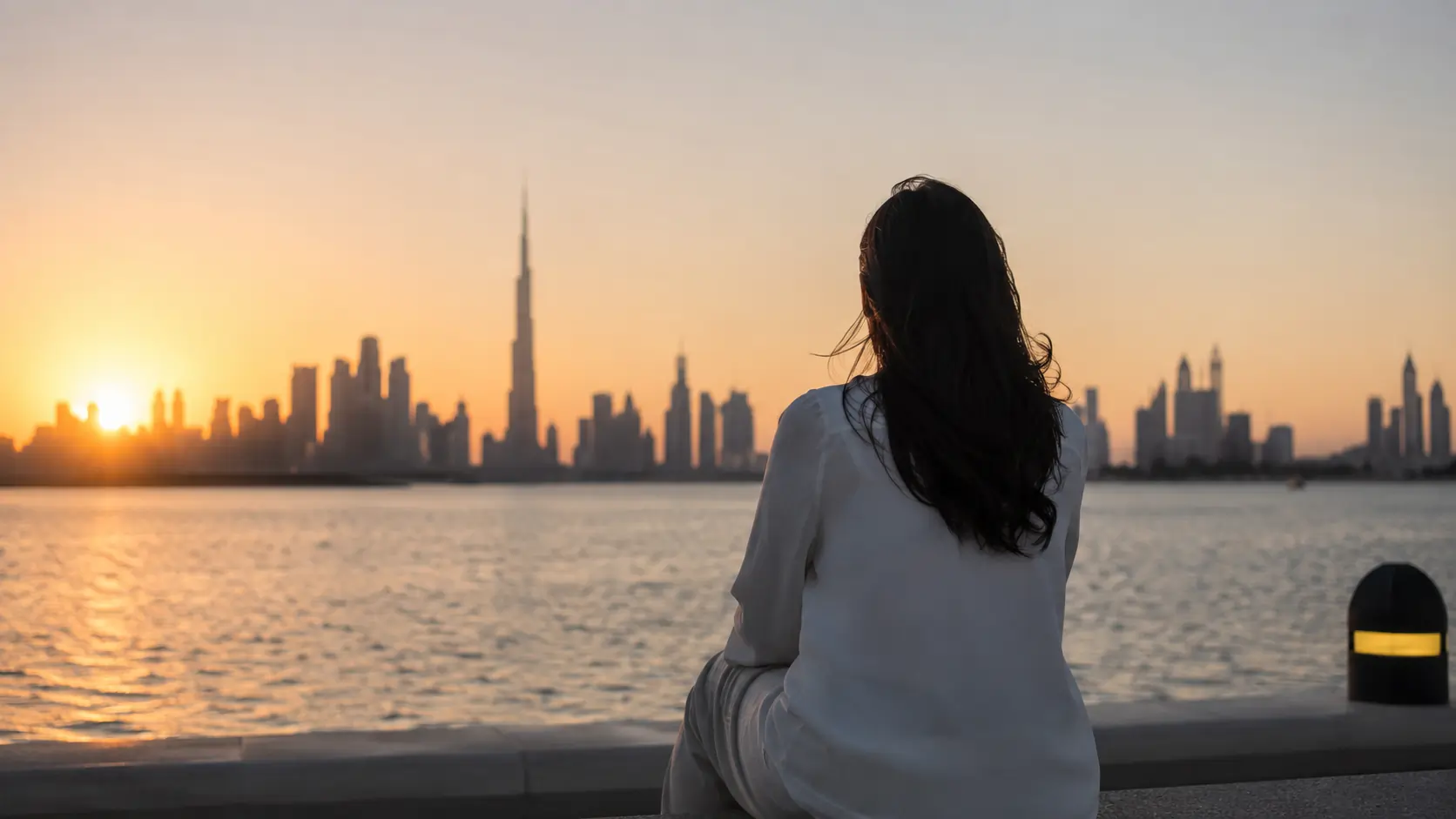
I am based in Dubai. I am a journalist, content creator, and founder of a media platform. On social media, I talk about geopolitics, current affairs, films, television dramas, beauty products, and the strange contradictions of modern life.
I am also the mother of two autistic boys.
And somewhere between those identities exists the person writing this column. The woman who has spent years trying to understand what resilience actually means.
The internet has a romantic idea of resilience. It is often presented as a smiling woman who has somehow mastered life, overcome every obstacle, and emerged stronger than ever.
Real resilience looks very different. Sometimes it looks like showing up while exhausted. Sometimes it looks like making decisions while scared. Sometimes it looks like carrying responsibilities that never truly leave your shoulders.
And sometimes it looks like posting a makeup reel at noon and spending the evening managing a crisis nobody online will ever see.
One of the strange realities of social media is that people often believe they know you because they have watched you. But watching someone is not the same thing as knowing them.
A woman discusses a television drama and she is assumed to be frivolous. She talks about makeup and she is assumed to be shallow. She posts a photograph from a restaurant and people assume her life must be easy.
We rarely stop to consider what exists outside the frame. There is a warning printed on car mirrors that says: Objects in mirror are closer than they appear.
I sometimes think social media needs the opposite warning.
Objects are often deeper than they appear.
The woman discussing foundation shades may have spent the previous night awake with a struggling child. The man posting travel photographs may be carrying a private grief.
The smiling family portrait may have been taken in the middle of a difficult season. Distance flattens people.
It turns human beings into caricatures. The closer you get to someone’s story, the harder it becomes to judge them.
And the older I get, the more I realize how little we truly know about one another. One of the most important lessons I have learned in my forties is that not every voice deserves equal weight inside your head.
Many of us grow up carrying the opinions of parents, spouses, relatives, teachers, colleagues, and society itself. We absorb them so completely that we stop recognizing where their voice ends and ours begins.
The result is confusion. You know what you feel.
You know what you see. You know what your instincts are telling you. Yet you spend years doubting yourself because somebody else’s certainty sounds louder than your own. Life has a way of correcting that.
Not gently.
Pain, grief and responsibility are brutal teachers.
But they teach nonetheless.
Over the years, I began noticing something surprising. The moments when I made my best decisions were often the moments when I trusted my own observations instead of surrendering them to louder voices. That realization changed the way I looked at myself.
For much of my life, I was uncomfortable acknowledging my own strengths. Like many women, I confused self-respect with arrogance. I worried that appreciating my capabilities somehow made me self-important.
It doesn’t.
There is nothing arrogant about recognizing your strengths. There is nothing arrogant about acknowledging your effort.
There is nothing arrogant about admitting that you have survived things that would have broken other people. In fact, refusing to acknowledge those realities may be its own form of dishonesty.
The older I get, the more I realize that purpose matters.
Purpose does not remove suffering. It does not erase loneliness. It does not solve every problem. What it does is give hardship a direction.
A destination. A reason.
For years, one question haunted me more than any other: what happens when parents like me are no longer around?
That question eventually stopped being a source of fear and became a source of purpose. It forced me to think beyond survival. It forced me to imagine building something larger than myself.
And perhaps that is where healing begins—not when pain disappears, but when pain is transformed into action.
Recently, I have noticed something else. I have started wanting things again. A new project. A new idea. A story worth writing. A future worth building.
We often dismiss these desires as shallow or materialistic.
I disagree. Want is evidence of life.
Want means hope has survived. Want means there is still a future version of yourself that you are trying to reach.
As someone who has spent years navigating caregiving, uncertainty, and exhaustion, even functional depression, I have come to believe that wanting is one of the most underrated human instincts.
It is the force that gets us out of bed.
It is the reason we make plans. It is the reason we dream.
And dreams matter. Not because they always come true. But because they remind us that we are still moving forward.
I was born in Karachi. I built a life in Dubai.
And now I find myself standing at another crossroads, thinking about purpose, community, belonging, and what comes next.
The future remains uncertain.
But for the first time in a long time, uncertainty feels less frightening. Because I have finally learned something that should have been obvious all along. The voice I was searching for was never somewhere else.
It was my own. And it was right there all along.