UAE has rejected Iranian claims at the BRICS foreign ministers meeting, citing nearly 3,000 missiles and drones targeting civilian sites.
The United Arab Emirates has rejected Iranian claims at the BRICS foreign ministers meeting in New Delhi, stating that nearly 3,000 missiles and drones have targeted civilian sites and critical infrastructure across the country since late February. Emirati officials used the platform to push back against Tehran’s denial of responsibility for the sustained attacks.
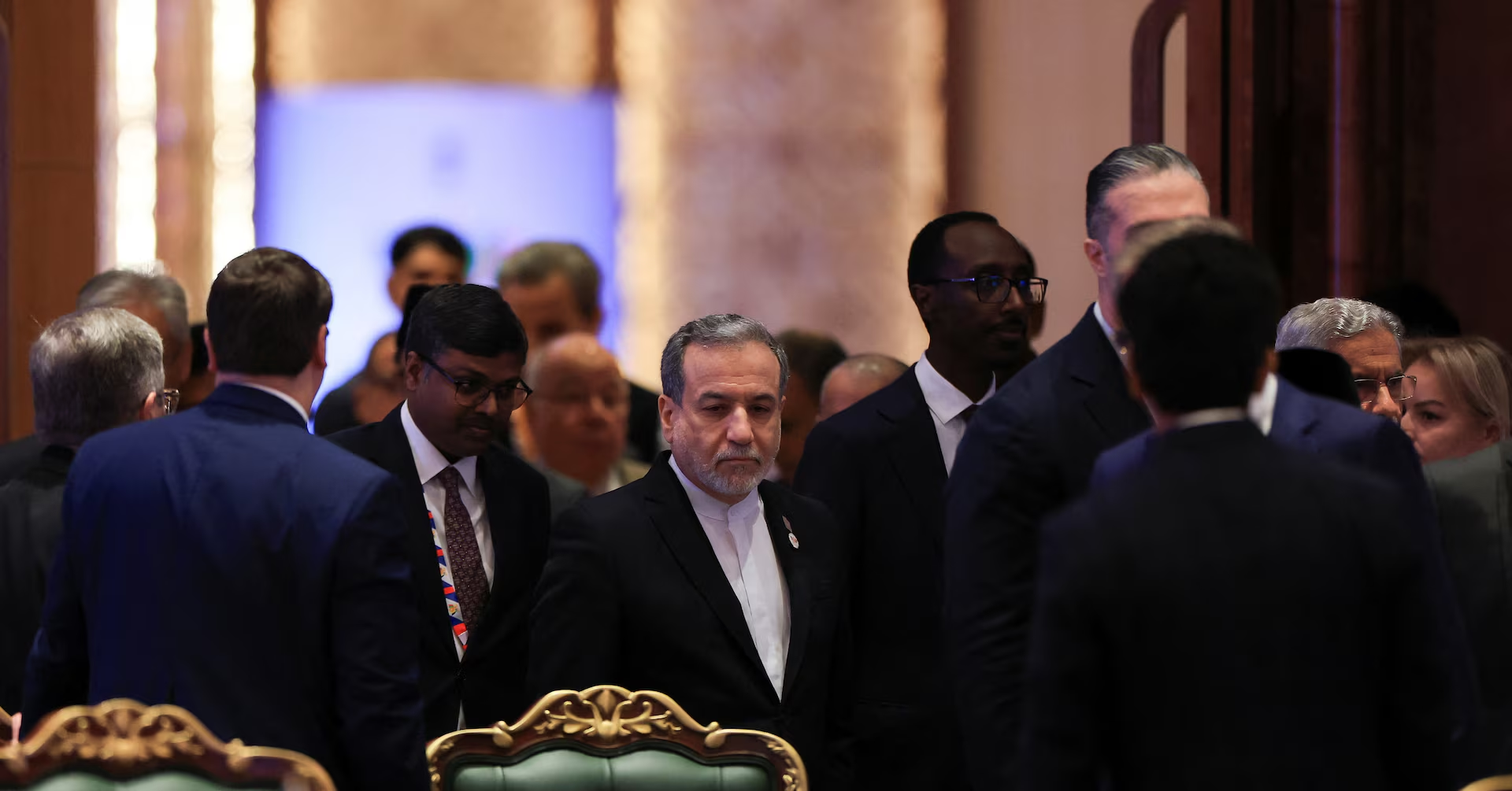
The exchange unfolded as foreign ministers from BRICS member states gathered for talks chaired by India this week. Iran and the UAE, both part of the expanded bloc, presented opposing positions on the conflict that has shaped regional affairs for more than two months.
The UAE delegation cited official figures from the Ministry of Defence, stating that Iranian munitions fired at the country have included more than 550 ballistic and cruise missiles and over 2,200 drones since 28 February 2026. Most were intercepted by Emirati air defences.
UAE officials rejected Iranian assertions that strikes had been directed only at American targets in the region. The delegation presented details of civilian sites and facilities that had been struck, including ports, airports, financial infrastructure, residential buildings, and energy facilities.
The UAE Ministry of Foreign Affairs has previously described the attacks as a flagrant violation of national sovereignty, international law, and the UN Charter. The ministry has also condemned the renewed Iranian aggression targeting civilian sites and facilities, calling it an unacceptable act of aggression and a direct threat to the country’s security, stability, and territorial integrity.
UAE Position At BRICS New Delhi Forum
Emirati officials at the BRICS meeting stated that Iran’s repeated denials contradict the documented record of attacks on UAE territory. The UAE reaffirmed its right to self-defence, a position it has maintained throughout the conflict.
UAE Permanent Representative to the United Nations Jamal Al Musharakh had earlier condemned Iranian missile and drone attacks at the UN in Geneva, stating that the actions constitute a clear violation of sovereignty and international law. He confirmed the UAE has been actively engaging with the UN, humanitarian agencies, and international organisations on the evolving situation.
The total number of civilian fatalities from the attacks stands at 10, including nationals from Pakistan, Nepal, Bangladesh, Palestine, India, and Egypt. Two UAE military personnel and a Moroccan civilian contractor have also been killed. Over 224 people have been injured across the country.
The UAE has implemented a series of diplomatic measures in response to the attacks. The country has closed its embassy in Tehran and withdrawn its ambassador and all diplomatic staff. The operation licenses of five Iranian schools located in the UAE have also been revoked.
UAE President Sheikh Mohamed bin Zayed Al Nahyan, alongside Saudi Crown Prince Mohammed bin Salman, has warned that continued Iranian attacks on Gulf states may lead to broader regional escalation. UAE presidential adviser Anwar Gargash has condemned attacks on UAE assets, including a drone attack on an ADNOC-affiliated tanker in the Strait of Hormuz, which he described as maritime piracy.
The UAE has stated it would remain open to mediation only if Iran stops the attacks. Emirati officials have emphasised that the country continues to coordinate with regional and international partners on protecting its sovereignty and the safety of its citizens and residents.
The BRICS meeting concluded without a joint communique on the conflict, with the UAE position firmly recorded in the proceedings.