


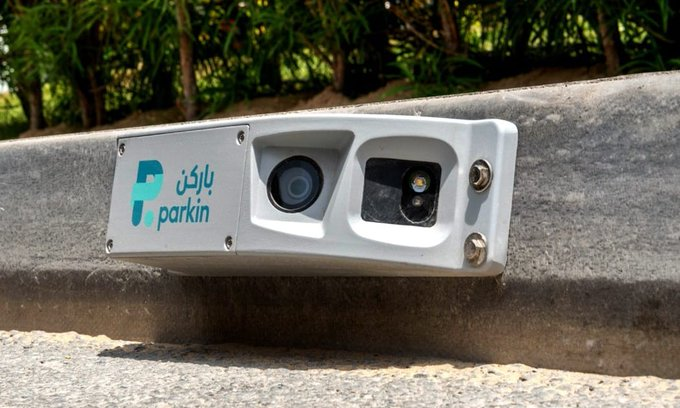
Dubai’s parking operator Parkin is installing over 500 curb and pole cameras across three major locations as part of the first phase of its on-street parking camera system. The announcement was made on May 13.
The cameras are currently being deployed across Trade Centre 1, Burj Khalifa, and Al Corniche. The systems use AI-enabled camera technology to capture vehicle images and automatically read number plates. Parkin noted that the curb-side cameras are the first of their kind in the region.
Once active, the cameras will detect vehicle entry and exit times, calculate parking duration, process fee payments automatically, and identify violations. All cameras are solar powered and support real-time occupancy monitoring. Both the curb and pole camera systems will be fully integrated into the Parkin App, with fees settled through the Parkin Wallet.
The first phase is designed to transform parking into a faster, more predictable experience by reducing the time spent searching for spaces, lowering the risk of fines, and enabling auto-payments through the app.
Alongside the on-street camera rollout, parking lot cameras have also been deployed across controlled parking areas in the emirate. An additional 200 cameras are set to be installed across several more locations, though Parkin has not specified which sites will be included in that next wave.
The real-time occupancy data generated by the camera network will be accessible through the Parkin App, giving drivers visibility into space availability across monitored zones.
Dubai Number Plate Recognition System Also Goes Mobile With Scan Car Trial
In addition to the fixed camera infrastructure, Parkin began trialing a separate mobile system in February 2026. A roof-mounted scan camera was installed on a single inspection vehicle as part of that trial. The system is designed for deployment in some of Dubai’s more congested areas, where stationary cameras are harder to position effectively.
The vehicle-mounted camera scans number plates as the car moves through a zone, allowing violations to be detected without on-foot inspections. Parkin described the technology as a way to reduce the need for field patrols in high-density areas.
The scan car system and the fixed curb and pole cameras operate as complementary parts of Parkin’s wider enforcement and monitoring network. Fixed cameras cover major static locations, while the mobile system handles areas where street conditions or vehicle density make permanent installations less practical.
Stay tuned for more updates and news!