

The UAE had no passenger rail a decade ago. Here is how the national network was planned, built, and launched.
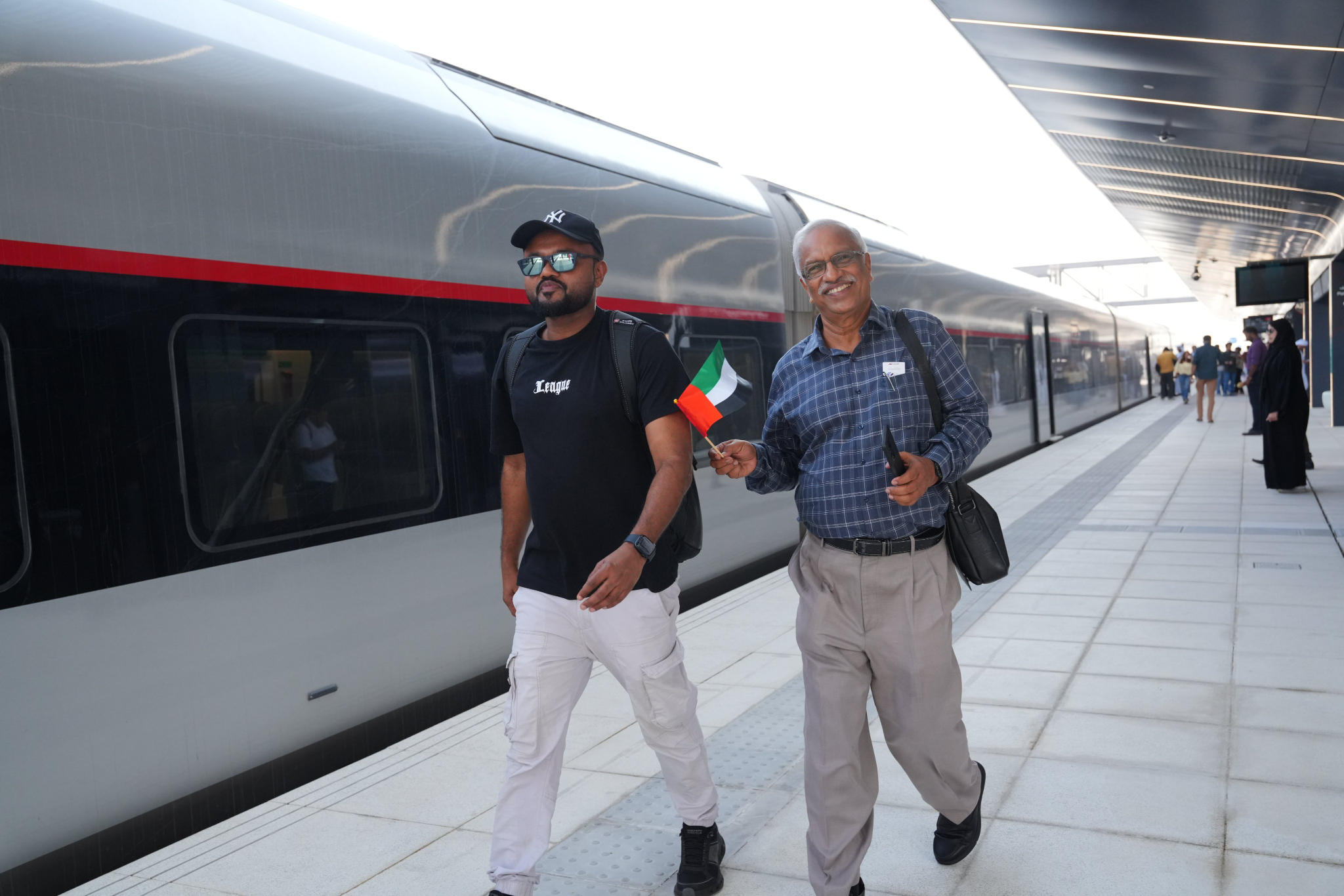
On June 30, 2026, Etihad Rail began carrying passengers between Abu Dhabi and Fujairah, a journey of 1 hour and 45 minutes. The service followed a project that started in 2009 and was delivered in stages over 17 years, beginning with freight and ending with passenger trains across all seven emirates.
Etihad Rail was established in June 2009 under Federal Law No. 2 to develop and operate the UAE’s national freight and passenger railway. The company was created as a government-owned entity, aligned with the country’s long-term economic diversification plans.
The completed network is designed to span roughly 1,200 kilometers, running from Al Ghuweifat on the Saudi Arabian border to Fujairah on the east coast. It is intended to form part of the wider Gulf Cooperation Council railway, which aims to connect the UAE, Saudi Arabia, Oman, Qatar, Bahrain, and Kuwait.
According to The National, total investment in the project is around Dh50 billion, with an expected economic contribution of about Dh200 billion over time. A separate government estimate placed the network’s economic impact at Dh200 billion by 2050, alongside projected savings of Dh8 billion in road maintenance and Dh23 billion in tourism benefits.
From Freight Operations to a National Network
Stage One became operational in January 2016. It covered 264 kilometers and carried granulated sulphur from the gas fields at Shah and Habshan to the port of Ruwais for export. The route was developed in partnership with ADNOC and moved roughly 7 million tonnes of sulphur a year, using two trains capable of hauling up to 22,000 tonnes daily, each pulling as many as 110 wagons.
Stage Two began construction in 2020, with the first track laid in early 2021. It added around 600 kilometers, extending the line from Ghuweifat in the west to Fujairah in the east and connecting Khalifa Port, Jebel Ali Port, Dubai, and Sharjah. Building it required tunnels through the Hajar Mountains and hundreds of bridges and crossings.
According to figures released at the freight network’s completion, 11 contractors, 25 consultants, and about 28,000 workers took part, contracts went to 215 local companies, and roughly 70 percent of construction materials were produced within the UAE. Stage Two opened for freight on February 28, 2023, completing the national cargo network. Etihad Rail states that one fully loaded freight train can replace around 300 trucks, cutting emissions for that cargo by 70 to 80 percent.
The Passenger Network and Future Expansion
Passenger services launched on June 30, 2026, with the introductory Abu Dhabi to Fujairah route. Under the published rollout, Dubai and Al Dhaid stations open on September 30, 2026, Al Dhafra region stations on December 30, 2026, and Sharjah station on March 30, 2027. Once complete, the passenger network is set to connect 11 cities and regions across all seven emirates, from Al Sila to Fujairah.
The service runs on a fleet of 13 trains, each carrying up to 400 passengers, at speeds of up to 200 kilometers per hour. Etihad Rail states this reduces intercity travel times by 30 to 40 percent compared with road transport. Fares on the first route start at Dh55 in Comfort Class and Dh120 in Premium Class. Annual ridership is projected to reach around 36 million passengers by 2030.
Further projects are in development. A high-speed line between Abu Dhabi and Dubai, announced in 2025, is planned to connect the two cities in about 30 minutes at speeds of up to 350 kilometers per hour, with operations targeted for 2030. The Hafeet Rail project, a joint venture between Etihad Rail and Oman Rail, will build around 300 kilometers of track linking Abu Dhabi with the port of Sohar in Oman. The government has also stated the railway supports its Net Zero 2050 target by reducing road transport emissions.
The first class of Emirati students to specialize in railway operations graduated in 2020, filling roles including train captain, traffic controller, and inspector on a network the country did not previously have.
Follow us for more updates and news!