


With its national cluster framework now complete, Pakistan moves to build a homegrown chip workforce and enter the global semiconductor value chain.
Pakistan has completed the institutional framework for its national semiconductor education and research clusters, a significant step in its effort to build a skilled workforce for the global chip industry and to reach a national target of developing more than 7,200 semiconductor professionals by 2030.
The milestone was reached with the formal establishment of the third and final Semiconductor Education and Research Cluster, following an agreement in Karachi that designated NED University of Engineering and Technology as the lead institution for the country’s South Region. NED joins NUST, which leads the North Region, and ESUPAK-UET Lahore, which leads the Central Region. The signing completes all institutional agreements under the National Semiconductor Human Resource Development Program, also known as INSPIRE, formally putting Pakistan’s three regional clusters in place within the program’s first year. Federal Minister for IT and Telecommunication Shaza Fatima Khawaja described the development as a significant milestone in the country’s journey toward building a globally competitive semiconductor ecosystem.
Inside Pakistan’s national semiconductor framework
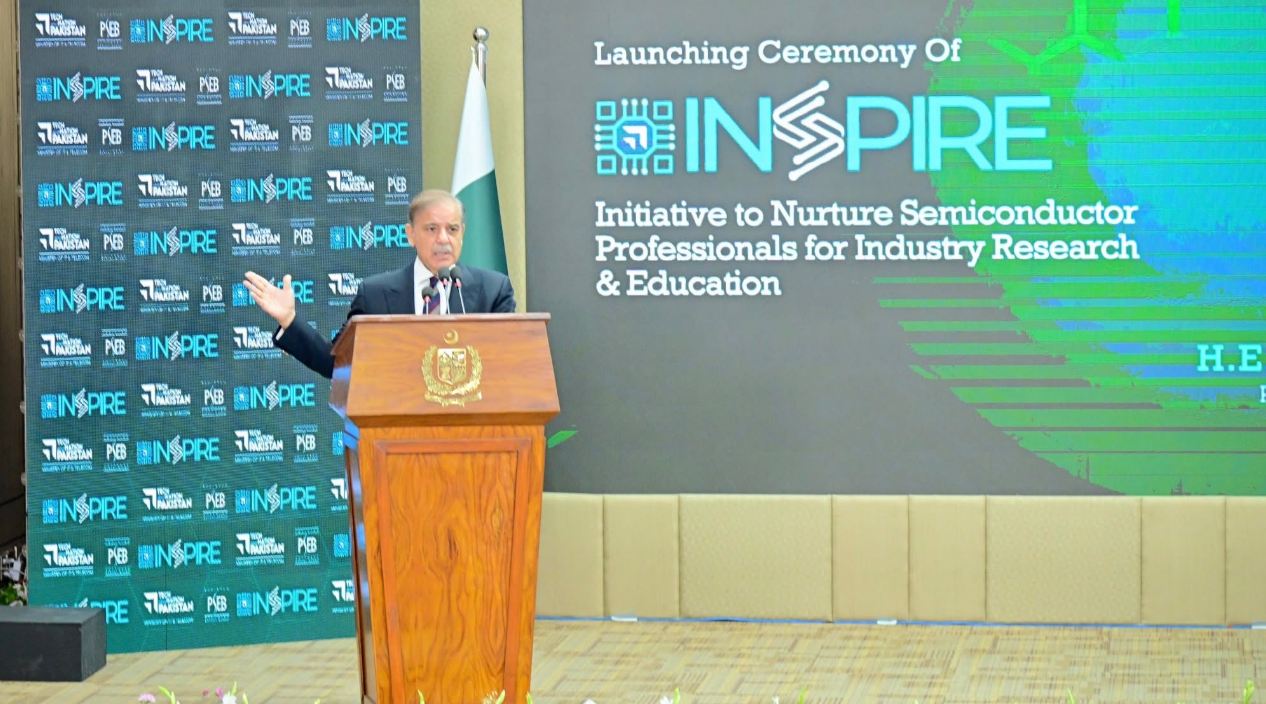
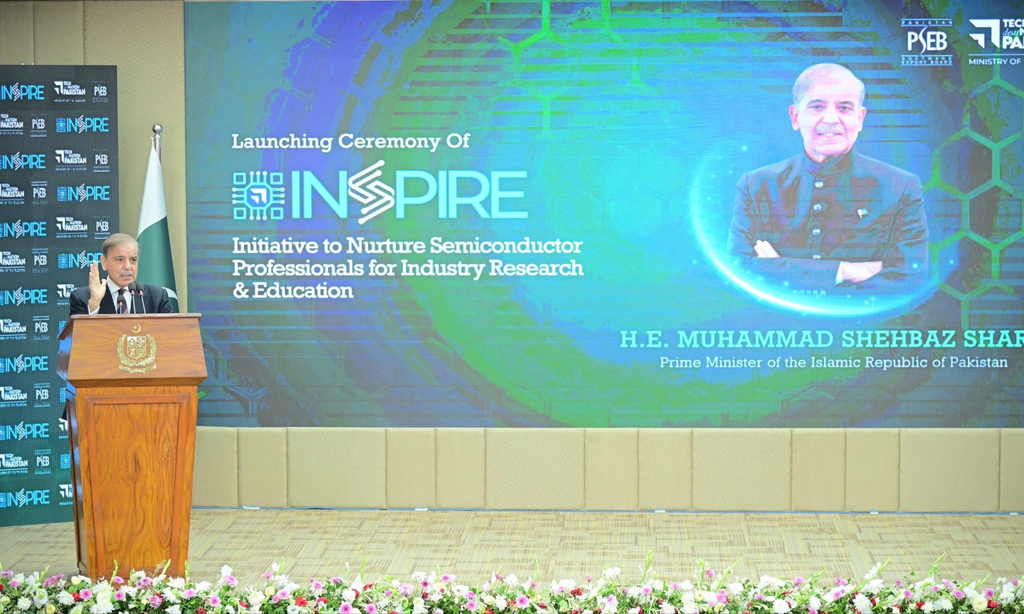
INSPIRE, short for the Initiative to Nurture Semiconductor Professionals for Industry, Research and Education, was launched by Prime Minister Shehbaz Sharif in October 2025. According to Dawn, the prime minister called it a milestone in Pakistan’s transition to a knowledge-based digital economy and a signal of the country’s entry into the $600 billion global semiconductor ecosystem. The program is led by the Ministry of Information Technology and Telecommunication and carried out by the Pakistan Software Export Board, with a budget of around Rs4.8 billion.
The initiative aims to train 7,200 professionals over five years in fields such as semiconductor design, verification, and research. It brings in nine public-sector universities across the country’s northern, central, and southern regions, organized into the three regional clusters, and involves setting up integrated circuit laboratories where students can gain hands-on experience.
The current intake is training 270 students drawn from across Pakistan, an early group meant to lay the groundwork for the far larger pool of talent the program hopes to produce by the end of the decade. Sindh Governor Syed Muhammad Nehal Hashmi, who attended the Karachi signing, said the agreement reflected the government’s commitment to preparing young people for the opportunities of the global chip industry.
Why the global semiconductor industry matters
The scale of the opportunity helps explain the ambition behind the program. The global semiconductor industry is valued at more than $600 billion and is widely expected to pass $1 trillion by 2030, driven by demand for the chips that power everything from smartphones and cars to data centers and artificial intelligence systems. Semiconductors sit at the heart of the modern digital economy, yet their design and manufacture remain concentrated in a small number of countries, leaving much of the world dependent on imported technology.
For Pakistan, the initiative is an attempt to claim a role in that value chain by starting where the barrier to entry is lowest, which is skilled people. Rather than beginning with the enormously expensive business of chip fabrication, the country is first building a base of trained engineers and researchers in chip design and verification, work that relies more on knowledge than on heavy capital investment. Officials have described INSPIRE as the first phase of a longer national roadmap, one that could in time extend toward outsourced assembly, testing, and eventually fabrication, allowing Pakistan to move gradually up the supply chain as its expertise deepens.
Building a chip design workforce for the future
With all three clusters now formally in place, the program moves into full implementation. The government has presented the effort as part of a wider drive toward a knowledge-based digital economy, tied to broader reforms across the technology sector and a stated focus on improving the employability of young people. By linking universities, research institutions, and industry, officials hope to create a pipeline that carries students from the classroom into working roles in a highly specialized field. The program’s steering committee is chaired by Dr. Naveed Sherwani, a globally recognized semiconductor expert, whose involvement is intended to align the effort with international industry standards.

The challenges ahead are real. Building a semiconductor workforce from a relatively modest starting base is a long-term undertaking, and turning trained graduates into a sustainable domestic industry will depend on continued investment, steady policy, and strong ties between academia and genuine industry demand at home and abroad. Observers have also stressed the importance of a simple and predictable regulatory environment if the sector is to grow and attract investment.
Even so, the completion of the cluster framework gives the initiative a concrete institutional footing it did not have before. Should the program reach its goal of more than 7,200 trained professionals by 2030, Pakistan would gain a far larger pool of skilled workers able to contribute to a trillion-dollar global industry, along with a stronger claim to a place in the technologies set to shape the years ahead. For a country working to reposition its economy around innovation and human capital, the framework marks a measured but meaningful start.
Stay tuned for more interesting updates and news!


