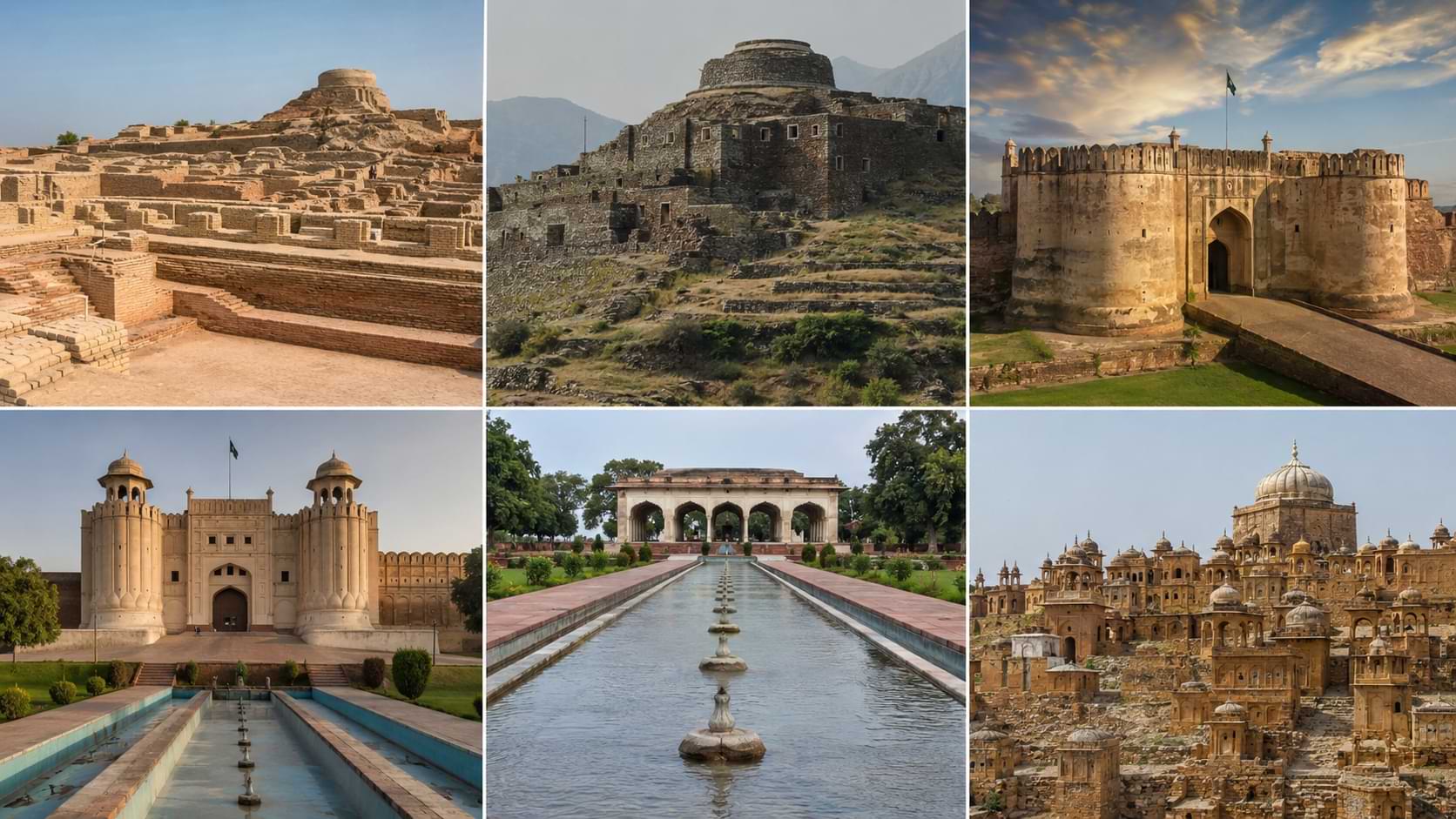
Pakistan stands as a custodian of one of the world’s most remarkable cultural legacies, housing six UNESCO World Heritage Sites that collectively span five thousand years of human civilization. From the Bronze Age to the Mughal era, these monuments represent not only architectural and engineering marvels but also windows into the diverse societies that flourished within this region’s borders.
The journey begins at Mohenjo-Daro, Pakistan’s first UNESCO heritage site recognized in 1980. Built around 2500 BCE, this ancient city stands as a contemporary of Egypt and Mesopotamia, representing one of the world’s earliest urban civilizations. What makes Mohenjo-Daro truly extraordinary is its advanced infrastructure. Every house featured sophisticated drainage systems, a feat that Rome wouldn’t replicate for another two thousand years. The Great Bath, with its waterproofing techniques, has withstood millennia, testament to the Indus Valley people’s engineering prowess. Perhaps most intriguingly, the absence of grand palaces or temples suggests a profoundly egalitarian society, challenging conventional notions of ancient civilization.
Moving forward in time, Taxila represents the intellectual heart of ancient Asia. This renowned seat of learning hosted legendary scholars including Chanakya and physician Charaka, who taught sixty or more subjects to students traveling from Tibet, China, and Korea. With acceptance rates of merely ten to twenty percent, Taxila was extraordinarily selective; a standard that shaped the education of Asian leaders for centuries. Its graduates profoundly influenced the development of civilizations across the continent.
The sixteenth century brought military architecture to prominence with Rohtas Fort, built by Sher Shah Suri in 1541 following his victory over Humayun. Spanning 171 acres with walls stretching four kilometres long, constructed in just four years, this fortress controlled the crucial Grand Trunk Road trade route. Remarkably preserved in its original form, Rohtas serves as a living time capsule of sixteenth century military engineering.
The Mughal period’s aesthetic and hydraulic achievements are magnificently captured in Lahore Fort and Shalimar Gardens. The Alamgiri Gate was specifically designed to accommodate emperor’s elephant caravans, while Shalimar Gardens represents an extraordinary feat of engineering. A canal stretching 160 kilometres supplied water to 410 fountains without any modern pumping systems; a hydraulic marvel that continues to astonish contemporary engineers.
Makli Necropolis in Thatta presents a different dimension of heritage. Often called the city of the Dead, this sprawling necropolis contains between 500,000 and one million tombs constructed over four centuries. Nearly 125,000 Muslim saints rest here, making it one of the world’s largest necropolises. The site encompasses tombs from the Samma, Tarkhan, and Mughal dynasties, creating a layered historical record in stone.
These six sites collectively narrate Pakistan’s story from Bronze Age innovation through Mughal sophistication. They demonstrate remarkable continuity of civilization, from the egalitarian urban planning of Mohenjo-Daro to the intellectual centers of Taxila, military fortifications of Rohtas, and the aesthetic achievements of Lahore and Shalimar. With 26 additional sites on UNESCO’s tentative list, Pakistan’s commitment to preserving its cultural inheritance remains strong. These heritage sites transcend national boundaries, representing humanity’s shared cultural legacy and reminding us of the heights of innovation and beauty that civilizations can achieve.