


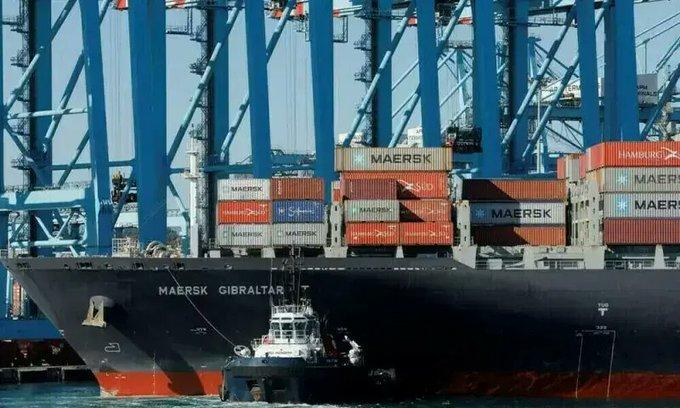
Karachi Port handled more than 2,000 vessels in a year for the first time since 2018, a quiet comeback for Pakistan’s busiest gateway during a turbulent stretch at sea.
Karachi’s harbor has not been this busy in nearly a decade. Pakistan’s largest seaport took in more than 2,000 ships over the past year, the first time it has crossed that line since the 2017-18 fiscal year, and a sign that trade is once again moving through the country’s main gateway at a pace it had lost somewhere along the way.
The figures came from Federal Minister for Maritime Affairs Muhammad Junaid Anwar Chaudhry, who shared annual data from the Karachi Port Trust. Between July 2025 and the middle of June this year, the port logged 2,003 vessel calls. Those ships carried a combined gross registered tonnage of 84.43 million tons, and both numbers climbed on the year before, vessel calls by 7.5 percent and tonnage by 3 percent. Modest on paper, but pointed in the right direction, and finally past a mark the port had been chasing for years.
Why Karachi Port Matters to Pakistan’s Trade
Strip away the statistics and we get a clearer picture. Karachi Port is where most of Pakistan goes to meet the world. Opened in 1887, it is still the country’s principal seaport, the place where a huge share of everything the nation buys and sells crosses the water. For a country of more than 240 million people, that makes the harbor less a piece of infrastructure than a lifeline, and a big chunk of Pakistan’s trade with the Gulf, including the UAE, passes through it.
KPT Chairman Rear Admiral Shahid Ahmed put the rebound down to a few things working together: more ships choosing Karachi, smoother operations on the docks, and shipping lines that kept their faith in the port through a rough patch for the wider economy. He called it a hub for containers, bulk cargo, and general trade, stitched into the regional and global routes that carry goods between Pakistan, the Middle East, Asia, and Europe. The minister read the numbers as a vote of confidence in where Pakistan’s trade is heading, and pointed to the port’s push to modernize and draw in fresh investment.
What makes the timing striking is everything else that was happening offshore. The record year overlapped with the 2026 Iran war, which broke out in late February and threw the region’s shipping into chaos. Iran largely closed the Strait of Hormuz, the narrow chokepoint that funnels much of the Gulf’s energy trade, and commercial traffic through it fell by more than 90 percent. Shipping lines rerouted, fuel ran short across parts of Asia that lean on Gulf oil, and prices spiked.
Karachi sits on the Arabian Sea, just outside that bottleneck, and for a few tense months that geography mattered more than usual. While vessels piled up at the mouth of the Gulf, Karachi kept working, a functioning deepwater port beyond the worst of the danger zone. Maritime tracking data even showed ships anchoring out in the Arabian Sea off the Karachi coast as the lanes near Hormuz seized up and crews waited out the disruption.
The officials who released the data did not attribute the milestone to the conflict. The 7.5 percent rise was recorded across the full year from July 2025 to June 13, 2026, rather than concentrated in the months of fighting. Karachi Port lies on the Arabian Sea, outside the Strait of Hormuz, and kept operating while commercial traffic through the strait fell by more than 90 percent. On June 14, the United States and Iran announced a deal that includes reopening the strait to commercial shipping.
Karachi Port has operated since 1887 and handles a large share of Pakistan’s seaborne trade. Its 2,003 vessel calls between July 2025 and June 2026 were the first time the port passed 2,000 since the 2017-18 fiscal year, an increase of 7.5 percent over the previous year.