


A Familiar Question Resurfaces
Discussions about restructuring Pakistan’s provincial map have returned to public attention, prompted by Interior Minister Mohsin Naqvi’s remarks suggesting the country examine whether its current four-province structure still serves its governance needs. The comments have reignited a debate that has surfaced periodically for decades, centered on a meaningful question: how can Pakistan best organize its administration to serve a large and diverse population more effectively?
The Scale Factor
Pakistan’s four provinces, together with Islamabad Capital Territory, Gilgit-Baltistan and Azad Jammu and Kashmir, vary considerably in size and population. Punjab alone houses more people than most countries in the world. Balochistan, by contrast, covers roughly 44 percent of the country’s total land area but remains sparsely populated. This diversity of scale means provincial governments often manage regions so large that tailoring policy to local realities — in healthcare delivery, education access, water management or employment generation — can be genuinely difficult, regardless of how capable the administration is.
The Case for Smaller Administrative Units
Those advocating for new provinces argue that governance effectiveness is closely tied to proximity between decision-makers and the communities they serve. Districts located far from provincial capitals often report that their specific concerns receive limited attention, simply because administrative and financial resources tend to concentrate around major urban centers. Breaking large provinces into smaller units, proponents argue, would place governance closer to the people, allow local leadership with direct knowledge of regional conditions to shape policy, and potentially speed up the pace at which development projects move from planning to implementation.
What a 12-Province Structure Might Look Like
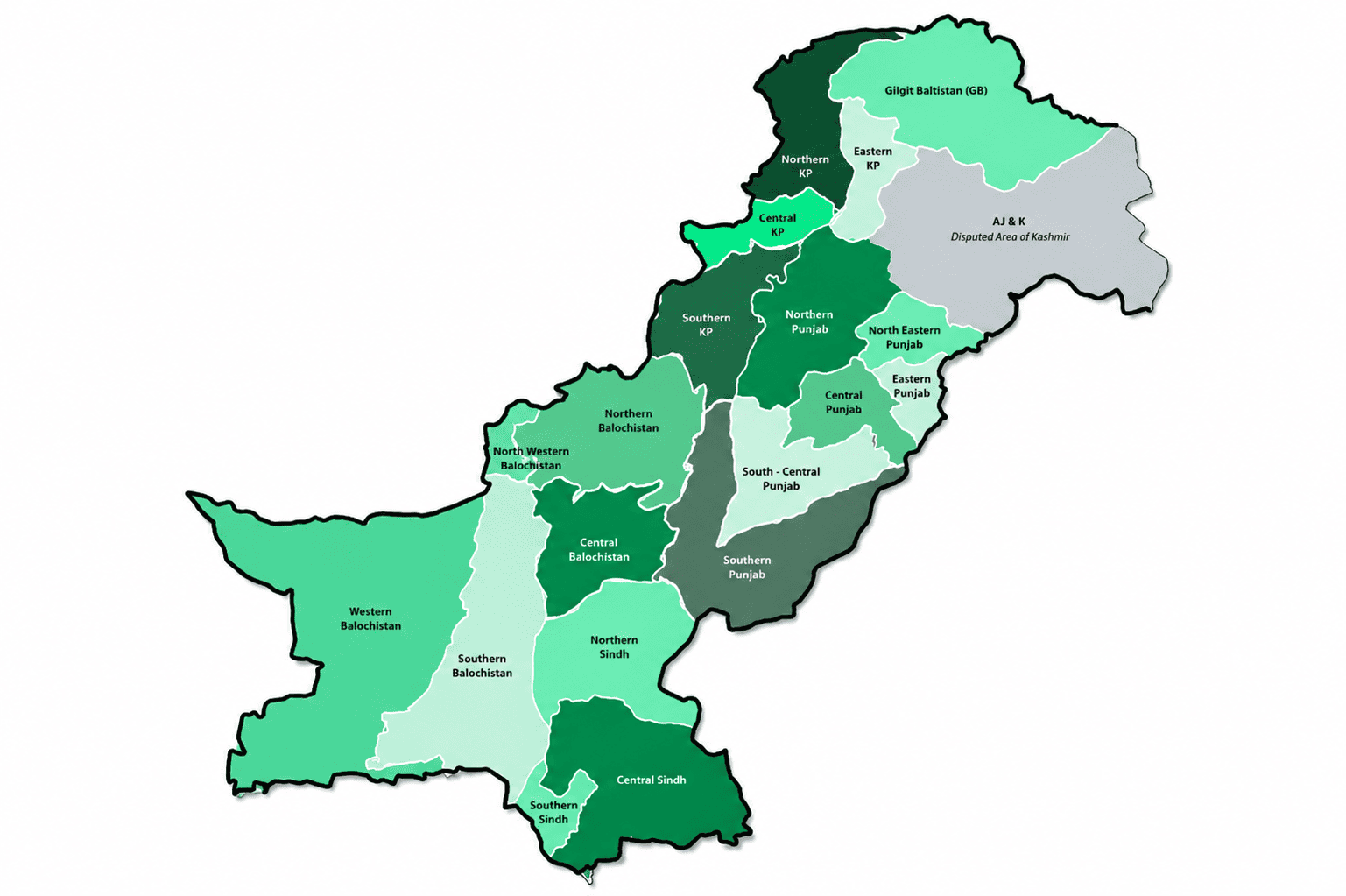
No formal government blueprint currently exists, but various proposals circulated over the years offer a rough outline of what further division could entail.
Punjab has often been discussed as a candidate for division into South, Central and North Punjab. Balochistan has similarly been proposed for a North-South split, while Khyber Pakhtunkhwa has seen recurring calls for a separate Hazara province. Sindh, too, has featured in some proposals for additional administrative units.
A recurring theme among these proposals is the preservation of existing provincial names paired with geographic qualifiers — South Punjab or North Balochistan, for instance — an approach intended to maintain historical and cultural continuity while addressing concerns from nationalist groups about regional identity.
Lessons From International Experience
Decentralization has produced meaningful governance improvements in various countries, particularly when paired with genuine fiscal autonomy, capable local institutions and clear lines of accountability. In Pakistan’s context, additional provinces could open political space for leaders from historically underrepresented regions, potentially strengthening democratic participation and giving remote communities a stronger sense of ownership over their own development.
Supporters also point out that administrative decentralization could ease pressure on existing provincial capitals, improve coordination between local and provincial governments, and help direct infrastructure and investment toward regions that have historically received less attention.
Considerations Along the Way
As with any major structural reform, implementing a new provincial framework would involve careful planning. Constitutional procedure requires broad political consensus, and practical questions — such as where new boundaries should fall, which cities would serve as capitals, and how resources would be allocated — would need thorough deliberation. Many observers note that the reform’s ultimate success would depend on pairing any new administrative units with strong institutions, transparent financial management and merit-based governance, ensuring that the benefits of decentralization are fully realized.
The Question of Public Consent
Given the scale of change involved, many analysts argue that any move to alter provincial boundaries should be grounded in public consultation. Some have suggested that referendums in directly affected regions, where constitutionally feasible, would lend the process democratic legitimacy and help ensure the reform reflects the genuine preferences of local communities.
The Broader Stakes
The conversation around a 12-province Pakistan extends beyond cartography. At its core, it is a debate about how the country’s governance architecture might evolve to better meet the needs of a large, diverse and unevenly developed population. Whether or not the proposal advances toward implementation, its recurrence in national discourse reflects a broader and ongoing aspiration: building institutions that are both accessible to citizens and responsive to their circumstances, wherever they may live.