


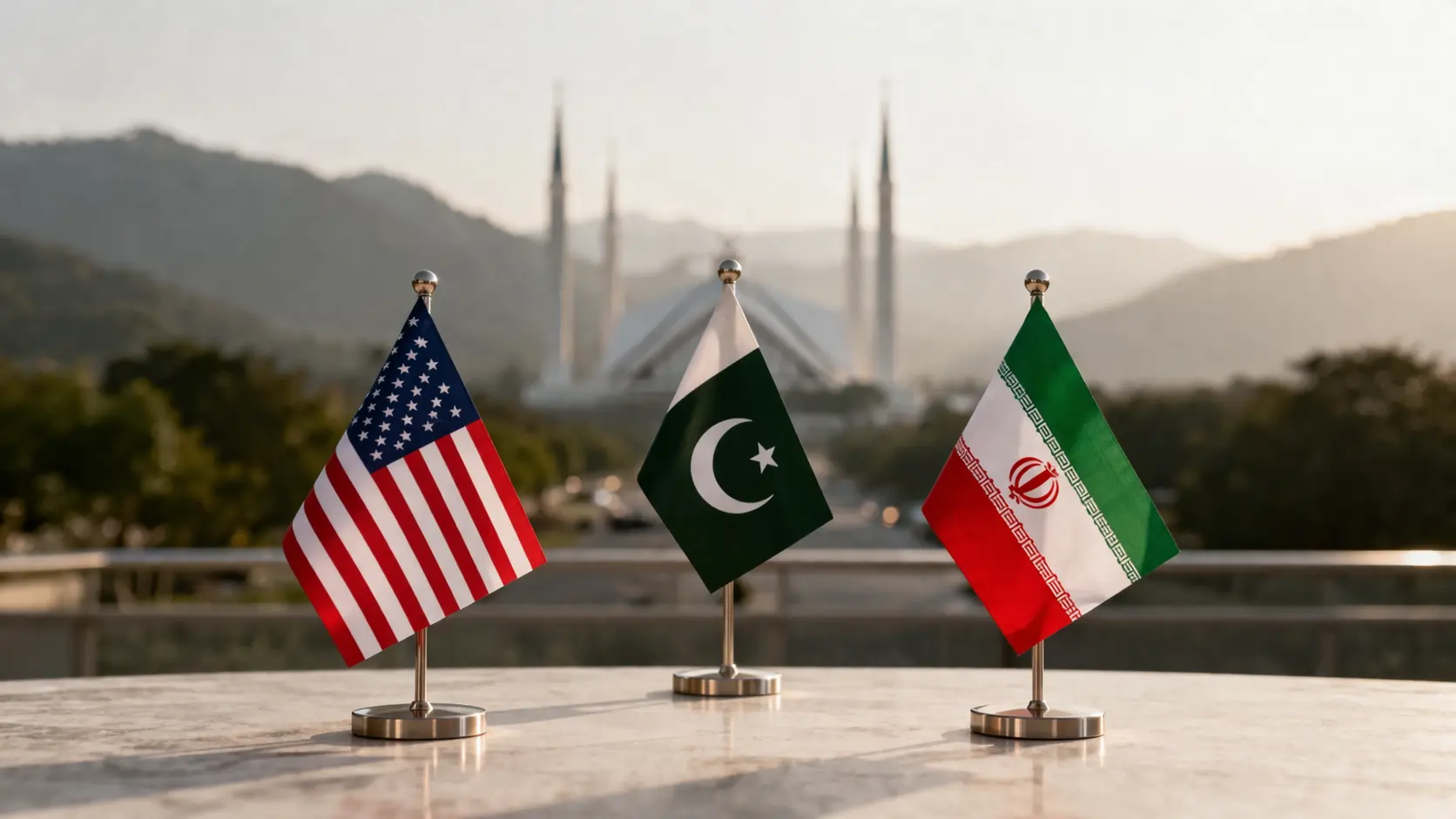
Pakistan has formally proposed hosting a second round of negotiations between the United States and Iran in Islamabad. Two Pakistani officials confirmed the proposal while speaking on condition of anonymity, as they were not authorized to discuss diplomatic developments publicly. The Associated Press first reported the offer on Monday.
The officials said the offer remains flexible and will ultimately depend on whether Washington and Tehran prefer to hold the next round of discussions at another location.
The proposal comes just days after marathon talks between the two sides ended without a deal. Pakistani authorities are now increasingly referring to the engagement as the “Islamabad Process,” a shift that suggests an effort to frame it as an ongoing diplomatic track rather than a one-off meeting.
Pakistan’s Push to Revive US-Iran Diplomacy Before April 22 Deadline
The first round of talks wrapped up on April 12 after roughly 21 hours of discussions at Islamabad’s Serena Hotel. US Vice President JD Vance led a 300-member American delegation. Iranian Parliament Speaker Mohammad Bagher Ghalibaf headed a 70-member team from Tehran. Pakistani leadership, including Prime Minister Shehbaz Sharif, Foreign Minister Ishaq Dar and Chief of Defense Forces Asim Munir, acted as intermediaries.
It was the highest-level meeting between the two sides since the 1979 Islamic Revolution in Iran. But the talks collapsed over deep disagreements. Washington demanded a full commitment from Tehran to abandon its nuclear weapons ambitions. Iran’s concern was more fundamental. Ghalibaf said the US side failed to gain the trust of the Iranian delegation.
Iran’s Foreign Minister Abbas Araghchi said the two sides had come close to a memorandum of understanding, but accused Washington of “maximalism, shifting goalposts, and blockade.”
The ceasefire, brokered by Pakistan on April 8 after nearly six weeks of US-Israeli strikes on Iran, is set to expire around April 22. That gives Islamabad barely a week to bring both parties back to the table.
US Naval Blockade and Strait of Hormuz Tensions Threaten Ceasefire
The diplomatic window is narrowing fast. Trump announced a naval blockade of the Strait of Hormuz on Sunday, aimed at stopping Iranian use of the waterway. Iran’s Revolutionary Guards responded with a warning that any military approach toward the strait would be met with force.
CBS News reported that Pakistan is now waiting for responses from both Washington and Tehran. Pakistani officials remain in active contact with both capitals and are pushing for resumed dialogue under the direct instructions of PM Sharif and Field Marshal Munir.
The primary objective is to reach a workable understanding before the ceasefire expires in order to prevent a return to all-out war.
Ali Vaez, Iran project director at the International Crisis Group, said the likely scenario is not immediate war but a volatile period of pressure and last-minute attempts to prevent a wider conflict.
Pakistan brokered the original ceasefire through weeks of backchannel diplomacy, leveraging its close ties with both Washington and Tehran. Both Trump and Iranian officials have praised PM Sharif and Field Marshal Munir for their efforts. That, analysts say, suggests both sides remain open to further Pakistan-brokered negotiations.