


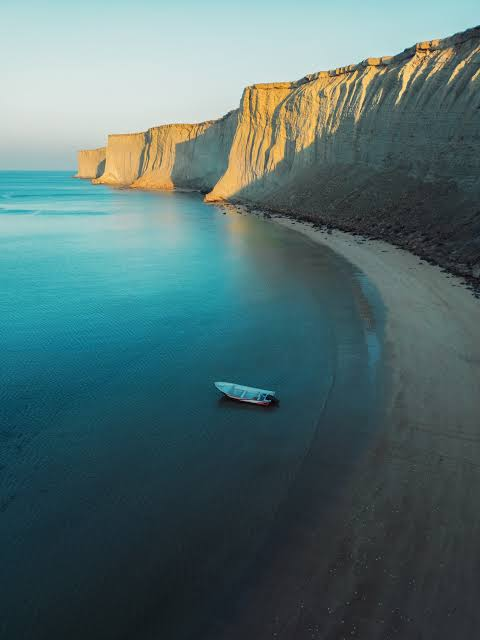
Pakistan’s Interior Minister says once you see it, you’ll never want to go to the Maldives again.
Balochistan does not get enough credit. Most people think of it as a vast, rugged province and leave it at that. But the truth is it is full of hidden gems that most Pakistanis have never even seen, let alone the rest of the world. Astola Island is one of them, and it might just be the most underrated destination in the entire country.
Pakistan’s Interior Minister Mohsin Naqvi recently said that once you see Astola, no one will ever want to go to the Maldives again. That is a big claim. But the more you learn about this island, the more you start to think he might actually be onto something.
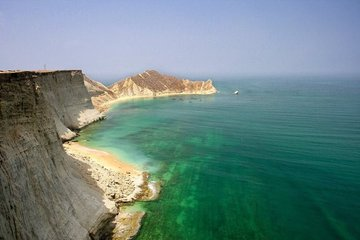
Astola Island, locally known as Jezira Haft Talar, which means Island of the Seven Hills, sits about 25 kilometres off the Balochistan coast near the fishing port of Pasni in Gwadar District. It is Pakistan’s largest offshore island, stretching about 7 kilometres in length, with dramatic cliffs on the north side that drop straight into the Arabian Sea, and sandy beaches on the south side that slope gently into turquoise water. There are no hotels, no restaurants, no permanent residents, and no cell signal. No one lives there at all. What you get instead is the kind of untouched natural beauty that is genuinely hard to find anywhere in the world anymore.
What Makes Astola So Special
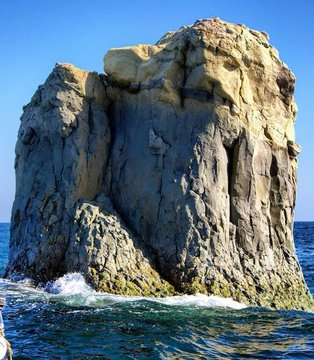
The island has seven small hills running across it, which is how it got its name. The landscape shifts as you walk around it. One side is dramatic cliffs and sea caves, the other is quiet sandy beach. There are coral reefs just below the surface of the water, and the water is so clear you can see straight through it. Researchers have recorded over 800 green turtle nests on Astola’s beaches in a single expedition. Both green turtles and hawksbill turtles nest here, and the island is one of the most important nesting grounds for these endangered species in the region.
The island is also home to the Astola saw-scaled viper, a subspecies of snake found nowhere else on the planet. Over 60 bird species have been recorded here, including migratory birds that stop at Astola on their long journeys across the Arabian Sea. Dolphins are regularly spotted in the surrounding waters, and Arabian Sea humpback whales pass through the area too.
In 2017 Astola was declared Pakistan’s first Marine Protected Area under the Convention on Biological Diversity, which means the entire island and its surrounding waters are now protected by law. It is also designated under the Ramsar Convention as a wetland of international importance.
The History Goes Back Further Than You Think
Astola’s history stretches all the way back to 325 BC. When Alexander the Great sent Admiral Nearchus to explore the Arabian Sea coast, his sailors were apparently so spooked by this mysterious empty island in the middle of the sea that they refused to go near it. It has been mentioned in historical records ever since.
The island also carries real spiritual significance. There is a small mosque on Astola dedicated to the Muslim saint Pir Khawaja Khizr, used by local fishermen who visit during the fishing season. The ruins of an ancient Hindu temple dedicated to the goddess Kali still stand on the island too. Hindus historically called the island Satadip. People of different faiths have considered this place meaningful for centuries, which makes it even more fascinating.
The Best Part? The Adventure Starts Before You Even Get There
For all the adventurous souls reading this, here is the thing about Astola: the journey to get there is half the experience. The island is only accessible by boat from Pasni. From Karachi it is a seven to eight hour drive along the Makran Coastal Highway, which is a stunning coastal road with sea views, fishing towns, and natural wonders like Hingol National Park and the Princess of Hope rock formation along the way.
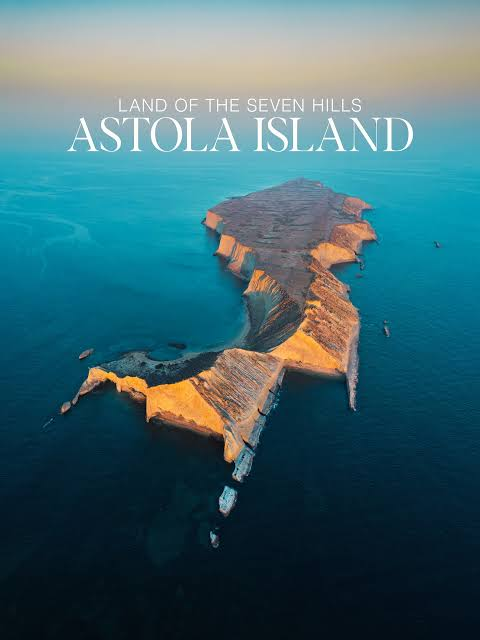
Once you reach Pasni you hire a local boat, and then it is roughly two to three hours out to sea depending on conditions. Yes, three hours on the Arabian Sea, open water, wind in your face, no land in sight. That is right. And when the island finally appears on the horizon, rising like a fortress from the sea, people say you immediately understand why you made the trip.
The best time to go is between September and April when the sea is calmer and the weather is manageable. From June to August the island becomes inaccessible due to rough seas and monsoon conditions. There are no facilities on the island at all, so visitors need to bring everything including food, water, and camping gear. A boat rental from Pasni costs roughly between PKR 50,000 and 100,000 which can easily be split among a group of six to ten people.
Activities on the island include snorkeling, diving, hiking up the seven hills to catch the sunrise or sunset, camping under genuinely dark skies with no light pollution, kayaking, and if you are lucky, watching sea turtle nesting.
Balochistan has always had this magic to it. Astola Island is just one more reason to finally go and see it for yourself.