

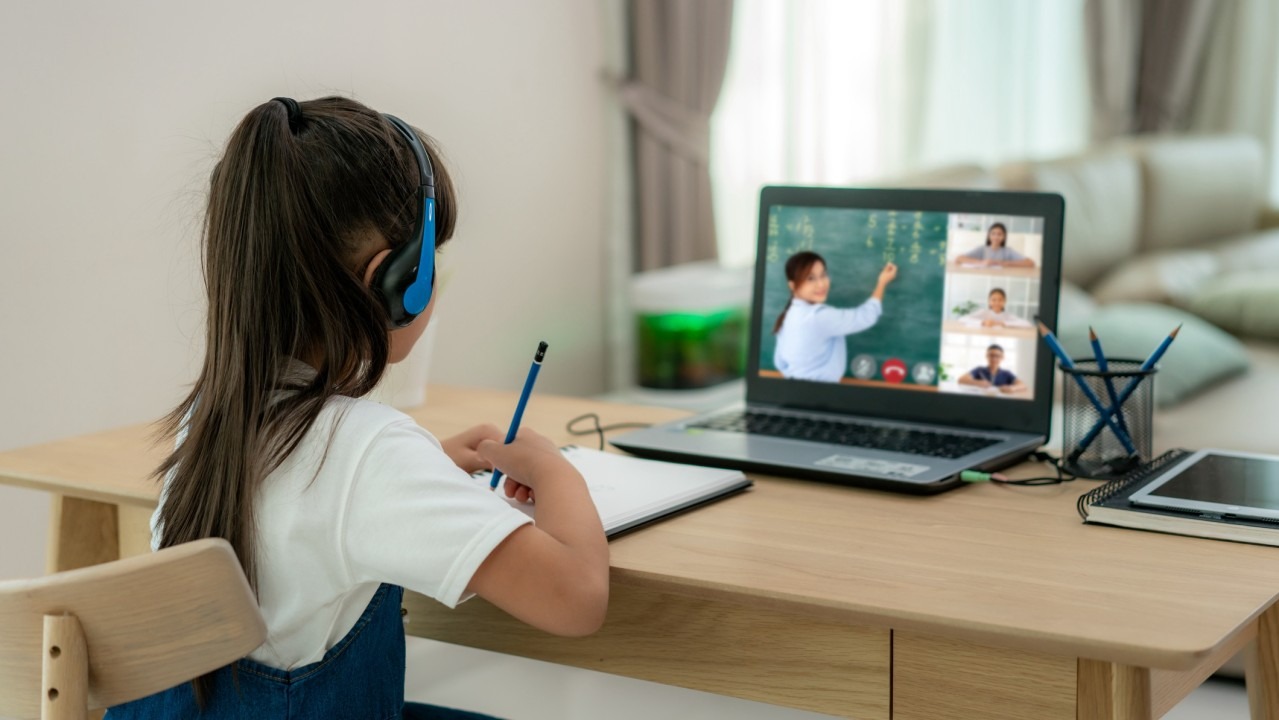
For many students in Pakistan, getting an education has traditionally meant travelling to a school, college or university. But that model is changing. With the growth of online and distance learning, education can increasingly reach students beyond the classroom, including those who face barriers related to location, time or access to institutions.
Pakistan’s Higher Education Commission (HEC) formally recognises online and distance learning as an additional way for universities to provide education. Its Open and Distance Learning (ODL) Policy 2024 sets minimum standards for institutions offering education through online and distance-learning methods. The policy specifically aims to provide learners with affordable and flexible educational opportunities and improve access to quality education.
One of the biggest advantages of online education is flexibility. Students do not necessarily have to be physically present on a university campus to access lectures, course material and assessments. HEC’s ODL policy identifies time and travel as challenges that can prevent people from continuing higher or further education. Online learning provides an alternative for students who may find regular campus attendance difficult because of these barriers.
Pakistan already has institutions with experience in distance education. Allama Iqbal Open University, for example, has been operating as an open university, while the Virtual University of Pakistan was established as a public university in 2002 and uses technology-based methods to deliver education. These institutions demonstrate that learning outside the conventional classroom is not entirely new in Pakistan, although internet-based tools have expanded the ways educational content can be delivered.
Digital learning is also reaching younger students. UNICEF’s Learning Passport programme in Pakistan provides digital educational content aligned with school curricula. The programme has been implemented in public schools in Sindh, where students use tablets during supervised sessions to access instructional videos, interactive activities and assessments. A UNICEF report stated that the programme targeted around 5,000 girls in 30 public schools in Sindh as part of efforts to address the digital learning divide.
The programme also illustrates how online learning can be adapted to local needs. Learning Passport can provide educational applications in local languages, while students’ learning histories can be recorded to help teachers monitor progress. In the Sindh programme, students have used digital content for subjects including mathematics and science.
The expansion of online education has received further institutional support in recent years. In August 2024, HEC approved its revised Open and Distance Learning Policy, which places emphasis on curriculum design, learning materials, delivery methods, assessment, technology, infrastructure and quality assurance. In 2025, HEC and Allama Iqbal Open University also organised capacity-building training for higher-education institutions covering areas such as e-learning methods, instructional design, information and communication technology integration and quality assurance.
However, online learning does not automatically make education accessible to everyone. Internet connectivity remains a major limitation in Pakistan. UNICEF has reported that only 33 per cent of households had internet access, creating difficulties for students who rely on digital learning, particularly girls. Access to technology can also vary according to geographic location, the educational institution a student attends and their grade level.
This means that expanding online education requires more than simply putting lessons on the internet. Reliable connectivity, suitable devices, trained teachers, digital learning materials and quality-assurance systems are all important. HEC has acknowledged these requirements through its ODL framework and subsequent capacity-building initiatives.
Online learning is therefore becoming an important part of Pakistan’s broader education system. It cannot replace schools, universities, teachers or physical infrastructure, but it can provide another route to education for people who face barriers to traditional learning. As Pakistan continues to improve its digital infrastructure and strengthen online education standards, technology has the potential to make educational opportunities available to more learners, particularly when digital access is combined with effective teaching and reliable infrastructure.