


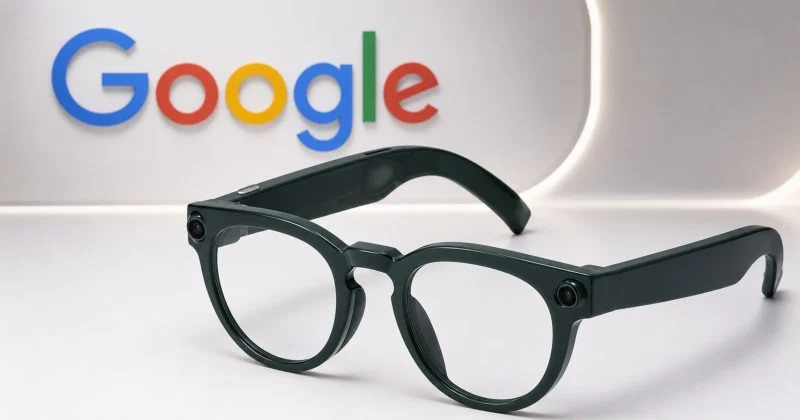
Google has unveiled Gemini-powered AI smart glasses at I/O 2026, launching this fall with iPhone support.
Google has stepped back into smart glasses. At its I/O 2026 developer conference, the company unveiled a new line of AI-powered eyewear built around its Gemini assistant, with a launch planned for fall 2026 and confirmed support for both Android and iPhone users.
The announcement marks Google’s most serious push into face-worn hardware since Google Glass more than a decade ago. This time the company is betting on artificial intelligence as the core of the experience, and on a partnership model that brings established eyewear brands into the design process.
Google Smart Glasses Announcement at I/O 2026
Google introduced what it calls intelligent eyewear, built on Android XR, the company’s operating system for extended reality devices. The platform has been in development since Google announced Android XR in December 2024.
There are two categories. Audio glasses, which deliver spoken help through the wearer’s ear, are scheduled to launch first this fall. Display glasses, which add a small in-lens screen to relay visual information from Gemini, are planned for a later release.
The audio glasses come fitted with cameras, speakers, and microphones, but no display in the lens. Google has described the audio-first design as intentional, aimed at delivering information without pulling users out of their surroundings.
The hardware is the result of a collaboration. Google has partnered with Samsung on the platform side and with eyewear brands Warby Parker and Gentle Monster on the frames. Both eyewear companies are expected to offer full collections when the glasses launch. Google previewed two designs at the conference but has not detailed the wider range.
Gemini AI Features and Capabilities
Gemini sits at the center of the device. Users can activate the assistant by saying “Hey Google” or by tapping the side of the frame.
During the I/O keynote, Google product manager Nishtha Bhatia demonstrated the glasses in a live session. The features shown covered a broad range of everyday tasks.
The glasses offer contextual awareness through the built-in camera. Gemini can identify nearby restaurants, pull up reviews, read confusing parking signs, or name a cloud formation based on what the camera sees. They also provide turn-by-turn navigation, with Gemini able to add stops or suggest nearby locations based on user preferences.
Communication features include managing calls, sending text messages, and summarizing incoming messages, so users can stay in touch without reaching for a phone. The glasses can capture photos and videos through voice commands, and edit them using Google’s Nano Banana image editing engine. Real-time translation of both speech and writing is included.
Google also showed multi-step task handling. In one demonstration, Gemini prepared a coffee order on DoorDash in the background, leaving the user only the final confirmation. The glasses can tap into apps on a connected smartphone through voice, including ordering a ride with Uber.
Google Smart Glasses Price and Release Date
Google has confirmed a fall 2026 launch for the audio glasses but has not announced exact release dates or supported markets. The company has also not revealed official pricing. Industry analysts have estimated a likely range of 600 to 900 dollars for the audio model, well below the roughly 1,500 dollar price of the original Google Glass.
The most notable strategic decision is cross-platform support. Google has confirmed the glasses will work with iPhones as well as Android devices. The company has positioned Gemini as a cross-platform service layer rather than a feature limited to its own hardware. Roughly half of the global smartphone market runs iOS, and Google’s decision to support it widens the potential audience considerably.
Apple is reported to be working on its own AI smart glasses, though that product is not expected to arrive until 2027 or later, and would likely carry tighter iOS integration.
Google vs Meta Smart Glasses
The launch puts Google in direct competition with Meta, the current leader in the smart glasses category. Meta holds a dominant share of the global market after selling more than seven million pairs of its Ray-Ban smart glasses in 2025. Reports place Meta’s share of the segment somewhere between 76 and 85 percent.
Meta’s Ray-Ban glasses already connect to both iPhone and Android. Google’s pitch is deeper Gemini integration through Android XR, along with a more platform-neutral setup. Meta requires a Meta account, and Apple’s future glasses are expected to require an iPhone.
Stay tuned for latest updates and news!