Gold and silver prices declined across both international and local markets on Monday, with the latest figures from Pakistan’s bullion association showing a notable single-day fall as the metals continue to trade under pressure from the ongoing US-Iran conflict.
In the international bullion market, gold fell $49 per ounce, settling at $4,788. On Tuesday, the metal slipped further, trading at $4,782, down 0.81% from the previous session. According to Trading Economics data, gold has now shed more than 8% of its value since the US-Iran war began in late February.
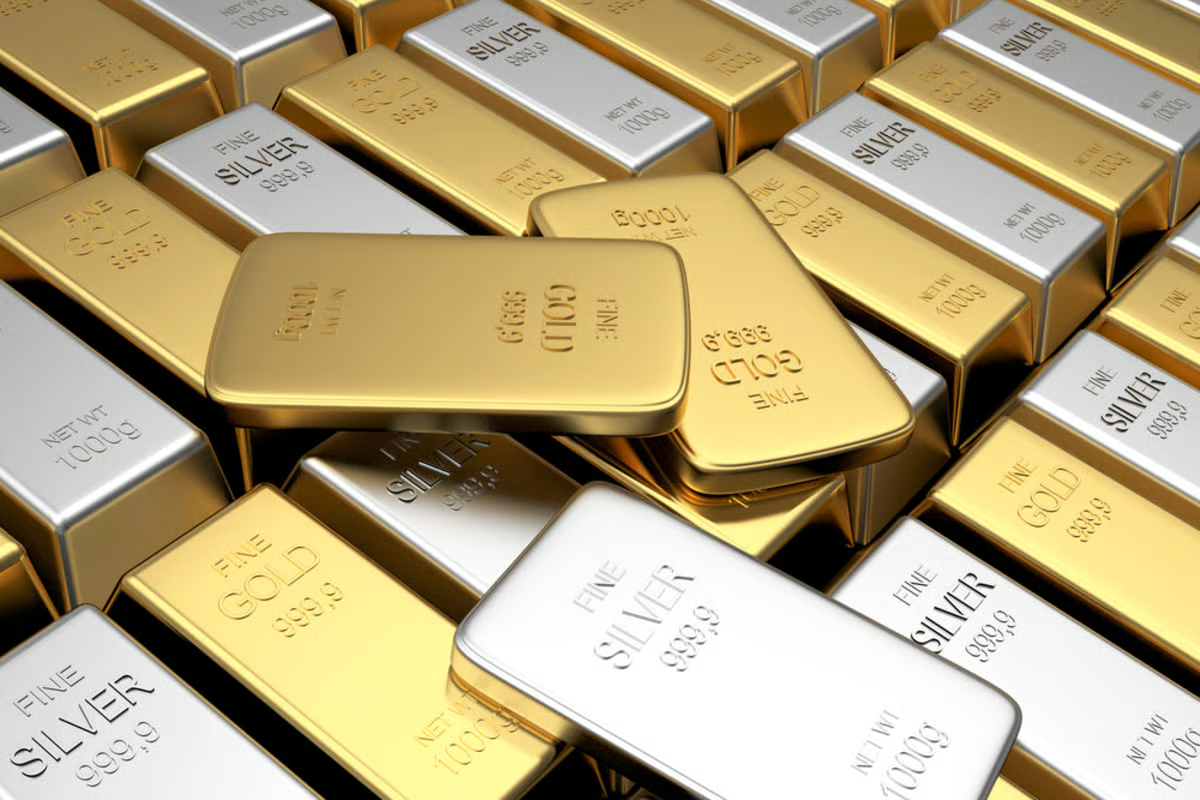
In Pakistan’s local market, the All-Pakistan Gems and Jewellers Sarafa Association reported that the price per tola dropped Rs4,900 to Rs501,162. The rate for 10 grams fell Rs4,201 to Rs429,665. Silver moved in the same direction, with the per tola price dropping Rs145 to Rs8,417 and the 10-gram rate falling Rs124 to Rs7,216.
In the UAE, 24-karat gold was trading at AED 576.34 per gram on Tuesday morning, per live rates tracked by iGold, which sources data from the Dubai Gold and Jewellery Group.
Why Gold Has Been Falling Despite Ongoing Conflict
The drop runs counter to what many investors might expect. Gold typically rises during geopolitical crises as buyers seek safe-haven assets. But the mechanics of the current situation have worked differently.
When Iran closed the Strait of Hormuz after the outbreak of hostilities in late February, global oil prices surged. That triggered a sharp rise in inflation expectations, which in turn raised the likelihood of central bank interest rate hikes. Higher interest rates make yield-bearing assets like bonds more attractive relative to gold, which pays no return. Money moved out of bullion as a result.
The US Navy’s seizure of the Iranian-flagged cargo ship Touska in the Gulf of Oman last week added another layer of market anxiety, briefly pushing gold down as much as 2% before prices partially recovered. Gold hit an all-time high of $5,589 per ounce in January 2026 before the conflict and has pulled back roughly 14% from that peak.
State Street’s gold strategy team, in its April 2026 monthly monitor, described the situation as “down but not out,” maintaining a base case projection of $4,750 to $5,500 per ounce for the rest of the year. JPMorgan has a year-end target of $6,300, set before the Iran escalation. Goldman Sachs has projected $6,000.
What Happens Next Depends on Islamabad
Markets are in a holding pattern ahead of the second round of US-Iran negotiations in Islamabad, where the Pakistan-brokered two-week ceasefire is set to expire Wednesday. Vice President JD Vance is expected to lead the US delegation. Iran’s participation remained publicly uncertain as of Monday, though reports cited senior Iranian officials preparing to send a delegation.
President Trump said he was unlikely to extend the ceasefire without a deal and reiterated that the US naval blockade on Iran would remain in place until an agreement was reached. That blockade, imposed on April 13, has drastically reduced traffic through the Strait of Hormuz, keeping energy markets volatile and inflationary pressure elevated.
Any deal that leads to a full reopening of the strait would ease oil prices and reduce rate-hike expectations, which analysts say would be supportive for gold. A breakdown in talks and resumption of hostilities could push the situation in the opposite direction.
CBS News noted in an April 3 analysis that the broader structural drivers for gold, including continued central bank buying, a soft dollar outlook, and high sovereign debt levels globally, remain in place, suggesting the current volatility reflects consolidation rather than a sustained reversal. China has continued buying gold through the price dip, according to State Street, helping place a floor under the market even as Western institutional selling has added downward pressure.
For residents in the UAE tracking prices at the Gold Souk or considering purchases, the current levels represent a meaningful pullback from the record highs seen earlier this year, even as prices remain historically elevated.