


The pyramids were already thousands of years old by the time Cleopatra ruled Egypt.
Start with a fact that tends to short-circuit people. Cleopatra lived closer in time to the first Moon landing than to the building of the Great Pyramid of Giza. Not vaguely close. Closer to Neil Armstrong than to the workers who hauled the stones at Giza.
Then add a second one that finishes the job. When those stones were being stacked, woolly mammoths were still alive. A last colony of them was still trudging around an Arctic island while Egyptian crews were building the pyramids, and they would keep going for centuries after the capstone went on.
We picture ancient Egypt as one scene: pyramids in the background, a pharaoh in gold, Cleopatra somewhere in the frame, all of it happening at roughly the same distant moment. It is a tidy image and it is badly wrong. Egypt did not have an ancient history. Egypt was ancient history, layered so deep that its own most famous queen looked back on the pyramids the way we look back on her.
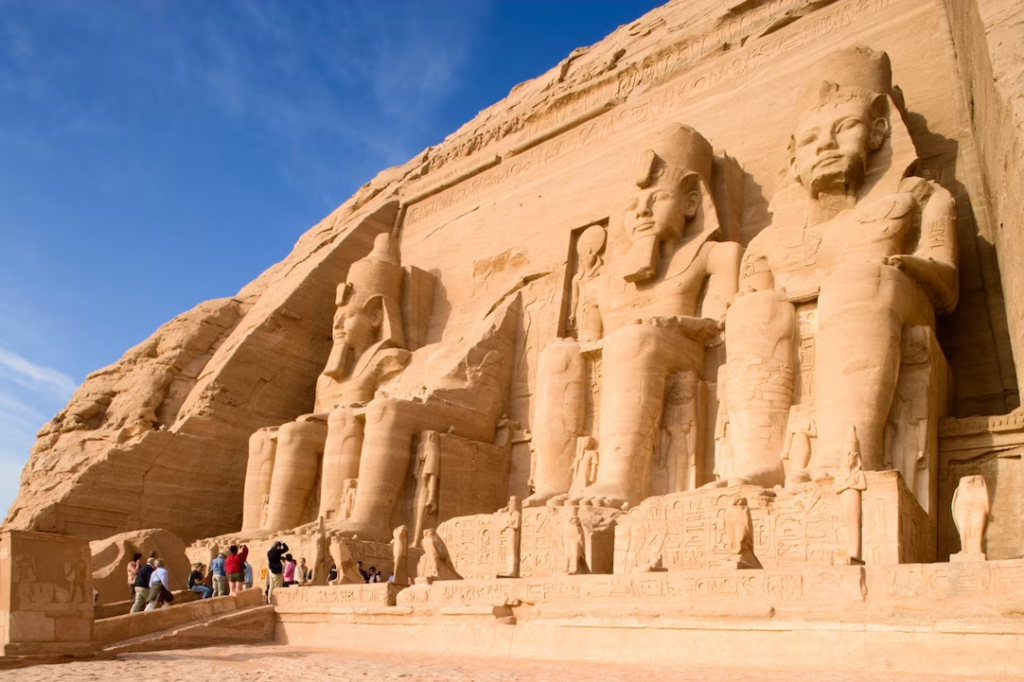
How Old the Great Pyramid of Giza Really Was
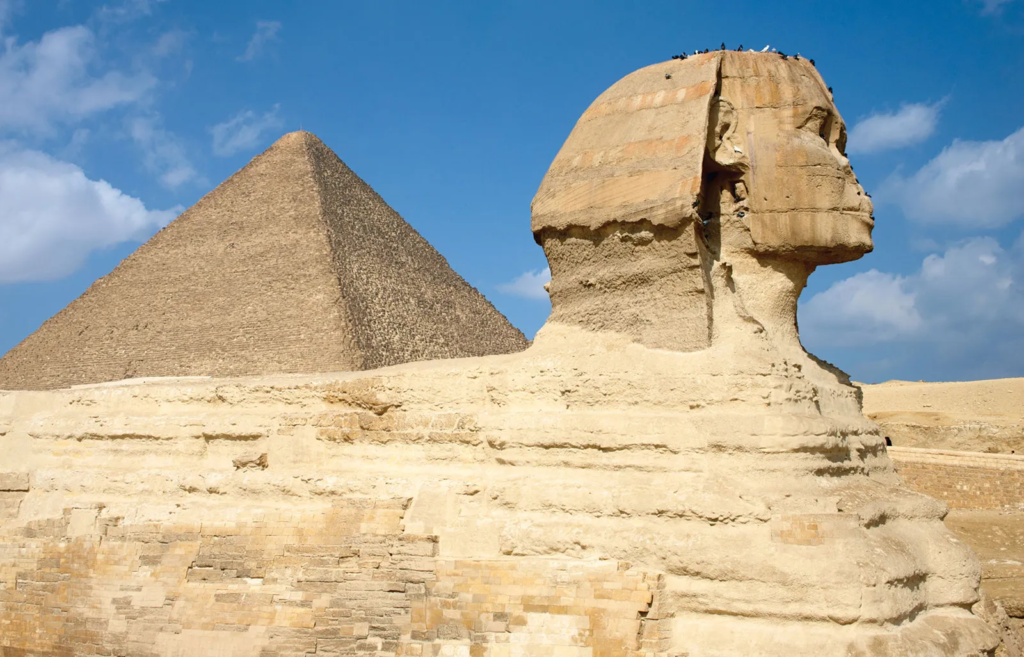
Some numbers are worth sitting with. The Great Pyramid was built for Pharaoh Khufu around 2560 BC, during Egypt’s Old Kingdom. And it stayed the tallest structure on Earth for roughly 3,800 years. According to Britannica and Wikipedia’s history of the world’s tallest buildings, nothing beat it until 1311, when the spire of Lincoln Cathedral in England finally nudged past it by a few feet. Think about that run. Empires rose and vanished, languages were born and died, and the pyramid just stood there, the tallest thing humanity had ever made, for nearly four thousand years.
By Cleopatra’s day, it was already a relic. When she looked at Giza, she was looking at monuments about 2,500 years old. Greek and Roman visitors were already treating them as bucket-list wonders, the ancient world’s version of tourists snapping photos. Some even carved their names into the stone, graffiti that is still there today.
The builders had a sense of humor about the work, too. Tucked near Khufu’s burial chamber, one work crew left their own tag on the wall. Roughly translated, it reads “the Friends of Khufu Gang.” Four and a half thousand years later, the clearest human voice in the Great Pyramid is a construction crew signing their name.
There is one more twist. Cleopatra was not descended from the pyramid builders at all. According to World Atlas, she came from the Ptolemaic dynasty, founded by Ptolemy I, a Macedonian Greek general who took Egypt after the death of Alexander the Great. Her family had ruled for about three centuries by her time, but they were newcomers by Egyptian standards. She was famously the first of her line to bother learning the Egyptian language. So the woman we treat as the face of ancient Egypt was, in a sense, a Greek latecomer standing beside monuments her ancestors had nothing to do with.
Why Ancient Egypt’s Timeline Feels So Vast
The reason this keeps ambushing people is that Egyptian civilization lasted an almost unreasonable length of time. From the unification of Upper and Lower Egypt around 3100 BC to Cleopatra’s death in 30 BC, it ran for roughly 3,000 years. That is longer than the stretch from Cleopatra to us. To put it another way, ancient Egypt lasted about 15 times longer than the United States has existed so far.
By the time Cleopatra took the throne, Egypt had already lived through the Old Kingdom, the Middle Kingdom, the New Kingdom and several messy intermediate periods where the whole thing cracked apart and stitched itself back together. Whole dynasties had come and gone in numbers hard to hold in your head. The great age of pyramid building was ancient news, abandoned many centuries before she was born.
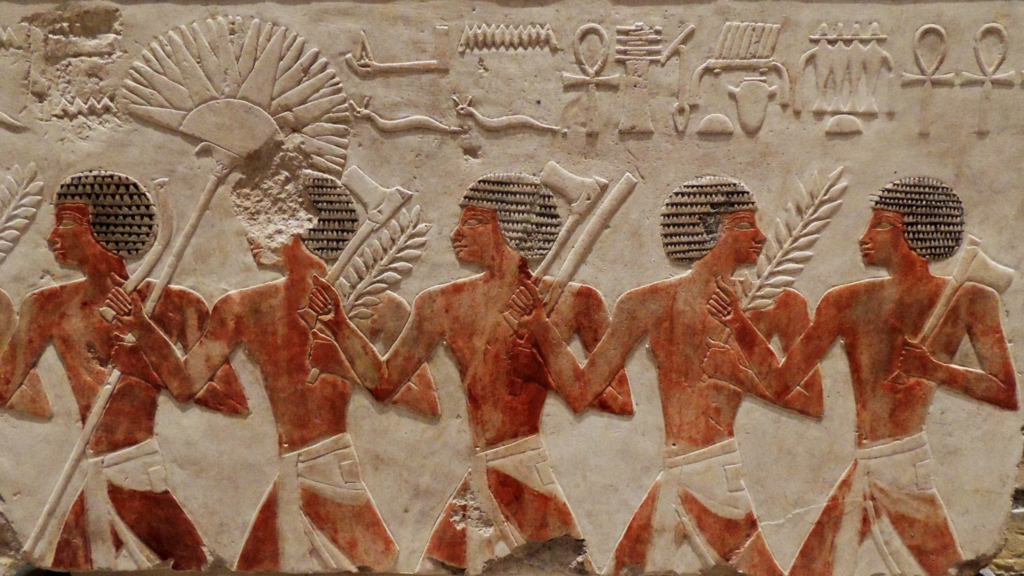
Even the pharaohs we think of as impossibly old were old news to each other. Tutankhamun, the boy king whose golden mask is practically shorthand for ancient Egypt, lived more than 1,200 years before Cleopatra. He was buried with a dagger forged from a meteorite, its blade literally made from a fallen star. And from Cleopatra’s seat on the throne, even King Tut was distant history, a name from more than a millennium in the past.
This is what the Moon landing comparison is really for. It is not a party trick. It is a corrective for the way our minds crush deep time into a single blurry lump labeled “long ago.” Two names share the tag “ancient Egypt,” so we file them side by side, when an ocean of centuries actually sits between them.
Ancient Egypt was so old it had its own antiquity, its own ruins, its own half-forgotten past. The pyramids were history to the people we call ancient. Cleopatra gazed up at them as a visitor from a far later world, which, once you run the numbers, is almost exactly what she was.