


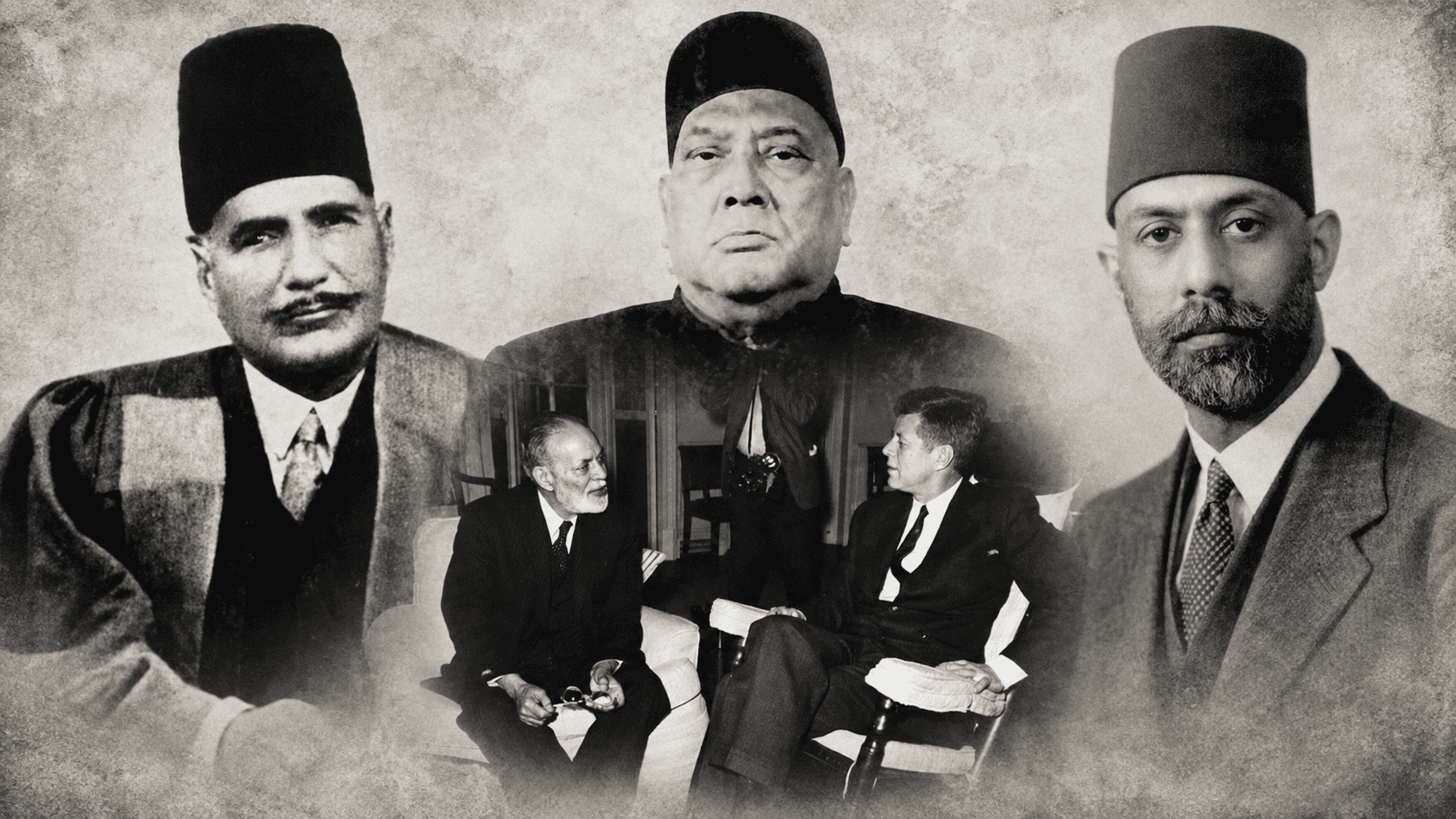
The creation of Pakistan in 1947 was not the work of a single leader but the culmination of decades of intellectual ferment, political maneuvering and constitutional struggle. Quaid-i-Azam Muhammad Ali Jinnah and Liaquat Ali Khan remain the movement’s most celebrated names, but the road to Pakistan was paved by several other figures whose contributions turned an abstract demand into a political reality.
Allama Muhammad Iqbal: The Philosopher Who Planted the Seed
Long before Pakistan had a name, it had a vision — and that vision belonged largely to Allama Muhammad Iqbal. In his landmark 1930 Allahabad Address, the poet-philosopher proposed a consolidated Muslim-majority political unit in north-western India, giving early shape to what would later become the Pakistan idea. Beyond this political proposal, Iqbal’s poetry stirred the Muslims of the subcontinent toward a renewed sense of identity, dignity and collective destiny — a psychological awakening that would prove as vital as any resolution.
Chaudhry Rahmat Ali: The Student Who Coined a Nation
Three years later, in a Cambridge lodging house, a young student named Chaudhry Rahmat Ali gave Iqbal’s vision a name. His 1933 pamphlet, Now or Never, argued forcefully for a separate Muslim homeland and introduced the word “Pakistan” to the political lexicon. His proposed boundaries never matched the country that emerged in 1947, but the name endured — a rare instance of a single pamphlet reshaping the language of a national movement.
A.K. Fazlul Huq: The Man Who Moved History
On a March day in 1940 in Lahore, it was Bengal’s premier, Abul Kasem Fazlul Huq — known as Sher-e-Bengal, the “Tiger of Bengal” — who rose to formally move what would become the Lahore Resolution. That single act converted a scattered demand for Muslim safeguards into a defined political programme, giving the movement its most consequential rallying document.
Sir Zafrulla Khan: The Voice Before the World
While others built the case at home, Sir Muhammad Zafrulla Khan carried it abroad. A lawyer, diplomat and senior Muslim League figure, he presented the Muslim political case before British authorities and international audiences, later becoming Pakistan’s first foreign minister and shaping its early diplomatic identity.
Together, these four men embodied the movement’s many dimensions: Iqbal supplied its philosophy, Rahmat Ali its name, Fazlul Huq its political turning point, and Zafrulla Khan its voice on the world stage — a reminder that Pakistan’s creation was the work of thinkers, students, politicians and diplomats alike.


