
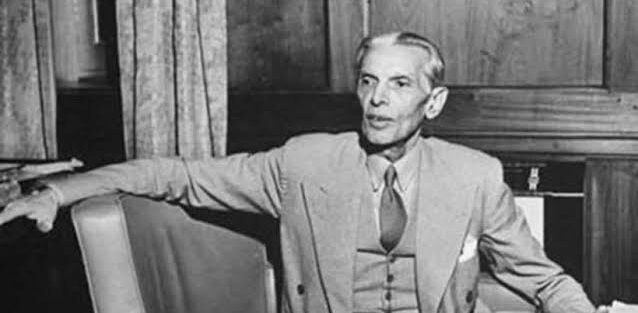
Few secrets in the history of South Asia carried consequences as profound as the one surrounding the health of Muhammad Ali Jinnah in the years before Pakistan’s creation.
According to accounts published decades later, Jinnah was suffering from advanced tuberculosis during the crucial period leading up to Partition. His physician, Dr J. A. L. Patel, discovered the seriousness of his condition through an X-ray and kept the file confidential, sealed in an unmarked envelope. Dr Jal Daeboo, a fellow radiologist, was also said to be aware of the diagnosis. Their discretion meant the information never reached British officials, political opponents, or the wider public — Jinnah’s own daughter, Dina Wadia, reportedly did not learn of it until after his death. Only his sister, Fatima Jinnah, and — in his final months — Liaquat Ali Khan were let into the secret.
The significance of the diagnosis went far beyond Jinnah’s personal health. By 1947, the future of British India was being decided through intense political negotiation, and Jinnah, as leader of the All-India Muslim League, remained the central figure demanding a separate homeland for Muslims. Despite his deteriorating health, he continued to negotiate with British officials and Indian political leaders without revealing what his doctors had told him. The narrative popularised in Freedom at Midnight, the 1975 book by Larry Collins and Dominique Lapierre, argues that Jinnah understood the political stakes of concealment. If his opponents had known he had only a limited time to live, they might have simply waited him out rather than concede his demands.
The most striking part of the story concerns Lord Louis Mountbatten, the last Viceroy of British India. According to Lapierre’s account, Mountbatten learned of Jinnah’s condition only years later, while the authors were researching their book. Shown a report of their meeting with Jinnah’s doctor, he reportedly went pale and exclaimed, “I can’t believe it! Good God.” Mountbatten later said that had he known of the illness at the time, he would have approached the Partition process differently — a remark authors and historians have since taken to suggest independence, or Pakistan’s creation itself, might have unfolded very differently.
A man battling a fatal illness continued to lead a political movement through one of the most consequential moments in South Asian history — negotiating, travelling, and speaking in public even as tuberculosis quietly closed in.
On 14 August 1947, Pakistan emerged as an independent state, with Jinnah becoming its first Governor-General. He would live little more than a year longer, dying in September 1948.
Behind that historic moment, lay a secret that held until the struggle was already won.