
The long-delayed sports car flipped, hovered, and leapt over other vehicles at its reveal in Texas.
Nine years after it was first promised, the new Tesla Roadster has finally made its debut, and it did not stay on the ground for long.
At a launch event near Waco, Texas, on October 15, the car drove up a curved ramp that turned it upside down, then flew off the end, rolled 180 degrees in midair, and landed back on its wheels. In another run, it used thrusters to lift itself over a line of Tesla vehicles while in motion.
Clips from the livestream have since spread widely across social media, with the topic drawing more than 1.7 million posts on X.
“Flying cars are real,” Elon Musk said at the event.
How the Tesla Roadster Thruster Technology Works
The flying moves come from compressed air, not rockets or propellers in the usual sense.
Tesla engineering vice president Lars Moravy said 10 thrusters connected to 600 liters of compressed air lift and spin the car in midair, according to TechCrunch. The air tank can be recharged.
Tesla said it has filled “every usable void” in the car with carbon fiber overwrapped pressure vessels, the same type of high-pressure tank used in rockets. Musk described the Roadster as a joint effort between Tesla and SpaceX.
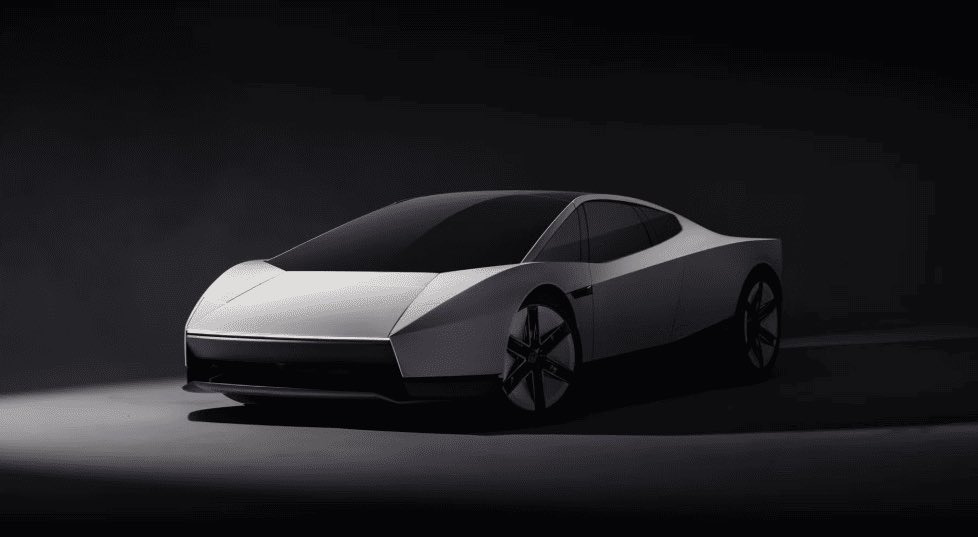
Tesla claims the Roadster can reach 60 mph in one second, hit a top speed above 230 mph, and travel 300 miles on a charge. Its sharp, angular design was inspired by the SR-71 and F-35 military jets, the company said.
Tesla Roadster Models, Release Date and Road Approval
The Roadster will come in three versions.
The Performance model is a two-seater built for the road, with active aerodynamics. The Thrust model, also a two-seater, adds rear-mounted cold-gas thrusters and is aimed at the racetrack. The Rocket model seats one person, carries the full set of 10 thrusters, and will be sold by invitation only.
No price was announced. Reservations have opened on Tesla’s website, and Musk said production would begin in 2028.
Musk was also direct about the risks. He said the car’s success “is not guaranteed” but that “it will probably work.” He added that buyers whose top priority is safety should not buy the Roadster.
Tesla’s website states that the flying model is not approved for use on public roads. The US Federal Aviation Administration said the vehicle does not meet its definition of an aircraft, which leaves open the question of which agency would oversee it.
The second-generation Roadster was first unveiled in 2017 alongside the Tesla Semi and was originally expected within a few years. Its launch was pushed back several times, and a planned reveal on October 1 this year was postponed due to severe weather.
Musk first floated the idea of adding thrusters to the Roadster in 2018. Eight years on, the idea is on video for the world to see, with production set to begin in 2028.