

The second named storm of the season disrupted flights, trains and ferries across Scotland, Northern Ireland and northern England, with another storm possibly on the way.
Storm Boelo swept across the northern UK over the weekend, bringing damaging winds, heavy rain and widespread disruption to travel and power supplies. The strongest gust was recorded on Tiree in the Inner Hebrides, where winds reached 82mph at around 4 a.m. on Sunday, October 25.
Boelo arrived only a day after Storm Austen, the first named storm of the 2026/27 season, which hit southern England on Friday and left thousands of homes without power. Austen also destroyed part of Brighton’s West Pier.
The Met Office issued amber wind warnings for Scotland, parts of Northern Ireland and northern England down to Carlisle, in force from 9 p.m. on Saturday until 9 p.m. on Sunday. Forecasters warned of a danger to life from flying debris and large waves, and advised people to stay indoors as much as possible.
Yellow warnings for wind and rain covered much of the rest of the country, including North Wales, Liverpool, Manchester and Sheffield.
Storm Boelo Flooding Hits Largs and Coastal Towns
Some of the most striking scenes came from Largs, on Scotland’s west coast, where floodwater turned the main street into a river. One local trader described the water as being at its “highest level ever.”
By Sunday morning, the Scottish Environment Protection Agency had 32 flood warnings and 11 flood alerts in place, while the Environment Agency had issued 66 flood alerts and 10 flood warnings across England. In Lancashire, more than 400 people were evacuated from a caravan park as conditions worsened.
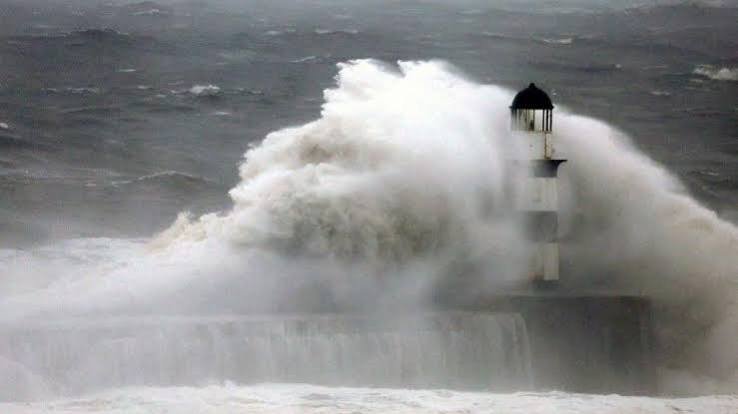
Large waves battered exposed northern coastlines, and heavy rain added to the risk on roads already littered with debris. Met Office Chief Forecaster Jason Kelly said the strongest winds and greatest disruption would be felt in the north, with gusts of 60 to 70mph expected widely and up to 80mph in exposed coastal areas. Cumbria Police received calls about localized flooding and fallen trees across the county.
UK Power Cuts and Travel Disruption
Thousands of homes lost electricity as the storm moved through. In Scotland, power cuts affected communities across the Highlands, Argyll, the Western Isles and Orkney, with Mull, Skye, Harris and Lewis among the hardest hit. In northwest England, more than 500 homes lost power in Blackpool and around 200 in Wigan.
Air travel was heavily affected, with more than 1,500 flights delayed and hundreds cancelled at airports including Heathrow, Manchester, Edinburgh and Glasgow. Rail services also faced major disruption. London North Eastern Railway cancelled nearly all services to Aberdeen, Avanti West Coast advised passengers not to travel north of Preston, and a fallen tree blocked the line between Liverpool and Manchester. Blackpool’s tram network was suspended and several ferry services were cancelled.
Fallen trees closed roads in Northern Ireland and along the Scottish coast, including the A78 near Skelmorlie. Network Rail urged people living near railway lines to secure garden furniture after a trampoline ended up beneath a train and a shed was blown onto the tracks.
A number of weekend events were called off. Aintree Racecourse abandoned its Halloween Fun Day, Liverpool’s River of Light festival was cancelled, and London’s Diwali on the Square did not go ahead. Edinburgh Castle and the Fountains Abbey estate in North Yorkshire were also closed on Sunday.
Another spell of strong winds is expected early this week. A yellow wind warning is in place from 3 a.m. to midnight on Tuesday, with gusts of up to 70mph possible in northern areas. If the system triggers amber or red warnings, it will be named Storm Chloe, the next name on the list shared by the UK, Ireland and the Netherlands.