


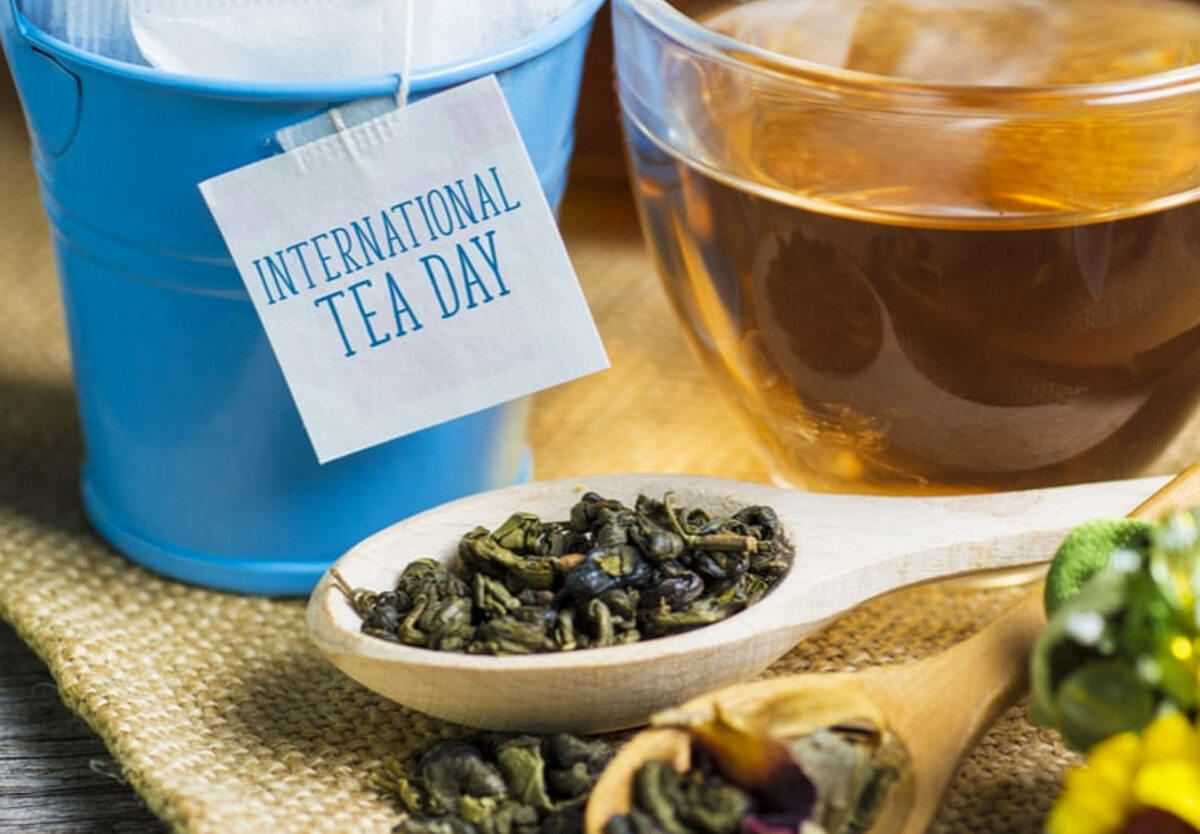
International Tea Day falls on Thursday, May 21. A look at the cultural and economic value of the world’s favorite drink after water.
Today is International Tea Day, observed every year on May 21. Set up by the United Nations General Assembly in 2019, the day was created to honor the role tea plays in our daily lives and to draw attention to the millions of people whose livelihoods depend on it. The resolution called on the Food and Agriculture Organization to lead the observance, recognizing the importance of the tea sector in fighting poverty, supporting rural economies, and sustaining traditions in some of the world’s poorest farming communities.
This year’s theme is Sustaining Tea, Supporting Communities. The main event is being held at FAO headquarters in Rome, opened by Director-General QU Dongyu, and features cultural performances, country presentations, and tea-tasting sessions from producing nations. The spotlight this year falls on smallholder farmers, who form the backbone of the global tea industry but are increasingly under pressure from climate change, rising production costs, and unstable market prices.
Tea is the most consumed drink in the world after water. The global industry is worth around USD 19.5 billion a year, with total tea trade valued at about USD 9.4 billion. World production reached approximately 7.3 million tonnes in 2025, with imports standing at around 2 million tonnes. Per capita consumption has grown by 2.1 percent every year over the past decade, showing that demand continues to rise even as the industry faces serious environmental and economic challenges.
More than 13 million people across the world depend on tea for their livelihood. Smallholder farmers, who make up the majority of this workforce, produce around 60 percent of all tea consumed globally. Yet many of them earn very little for the work they do. The price of tea on international markets has barely changed in real terms over the past two decades, while the cost of fertilizer, transport, and labor has risen sharply. Erratic rainfall, rising temperatures, and shifting growing seasons have made conditions even more difficult for producing regions.
In Kenya, the world’s largest exporter of black tea, smallholders rely on the crop for their entire household income. In Sri Lanka, the famous Ceylon tea industry employs over a million people, but has been hit hard by economic crisis, fertilizer shortages, and falling export volumes. In Assam and Darjeeling, the historic estates of India face declining yields and labor disputes. Pakistan imports nearly all the tea it drinks, making it one of the largest tea importers in the world despite the cultural centrality of chai to daily life.
In China, where tea originated more than 5,000 years ago, the industry remains the world’s largest, with millions of farmers producing green, oolong, white, and pu’er varieties across vast regions.
The drink remains a daily ritual that crosses borders. In the UAE, karak is the everyday brew, served thick and sweet at roadside cafeterias and now woven into the country’s food identity. In Pakistan and India, chai is offered at every meeting, every gathering, and every moment of pause. In Saudi Arabia and the Gulf, kahwa is poured for guests as a sign of welcome. In Turkey, black çay is shared in tulip-shaped glasses through the day. In Japan, matcha is whisked into a green froth as part of a centuries-old ceremony. In Morocco, mint tea is poured from a height into small glasses. Every country has shaped the leaf into something of its own.
The FAO has also recognized six tea cultivation sites as Globally Important Agricultural Heritage Systems, with four in China, one in Japan, and one in the Republic of Korea. These are landscapes where the traditions of growing, harvesting, and brewing tea have been preserved across generations, and where farming methods remain closely tied to the surrounding ecosystems.
The UN’s message this year is a call for governments, traders, and consumers to support a fairer and more sustainable tea industry, one that protects both the farmers and the land they work on. With demand continuing to rise and the climate crisis closing in, the future of the world’s favorite drink will depend on the choices made now, both at the policy level and at the kitchen table.