

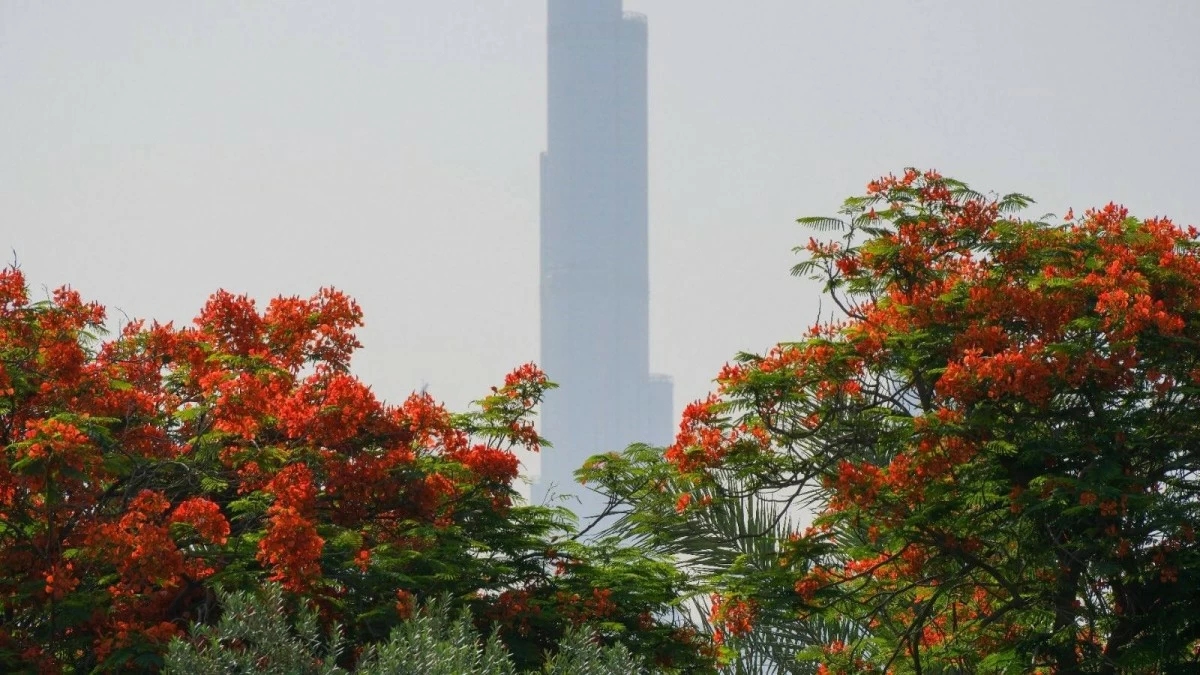
Every summer, parts of Dubai transform into a sea of fiery orange and red as the Flame Tree bursts into bloom. Lining roads, parks, residential communities, and public spaces, the tree has become one of the city’s most recognizable seasonal sights. Although many people now associate it with the UAE, the Flame Tree, scientifically known as Delonix regia and commonly called the Royal Poinciana or Gulmohar, actually originates from Madagascar.
Over the years, however, the tree has evolved from an imported ornamental species into a symbol of Dubai’s urban identity, blending natural beauty with the emirate’s vision for greener and more livable cities.
The Flame Tree is native to Madagascar, an island nation off the southeastern coast of Africa. Botanists consider it one of the world’s most visually striking tropical trees because of its umbrella-shaped canopy and vivid scarlet-orange flowers. The species spread globally during the colonial era and was later introduced to tropical and subtropical regions across Asia, the Middle East, the Caribbean, and parts of the United States.
In the UAE, the tree adapted surprisingly well to the country’s climate. Despite Dubai’s harsh summers, the Flame Tree thrives in hot and humid conditions when properly irrigated. According to reports from Dubai authorities, the tree can grow up to 12 meters tall, live for nearly 60 years, and develop a canopy spanning approximately 15 meters wide. Its dense shade can also reduce surrounding ground temperatures by nearly five degrees Celsius, making it valuable in urban landscaping projects.
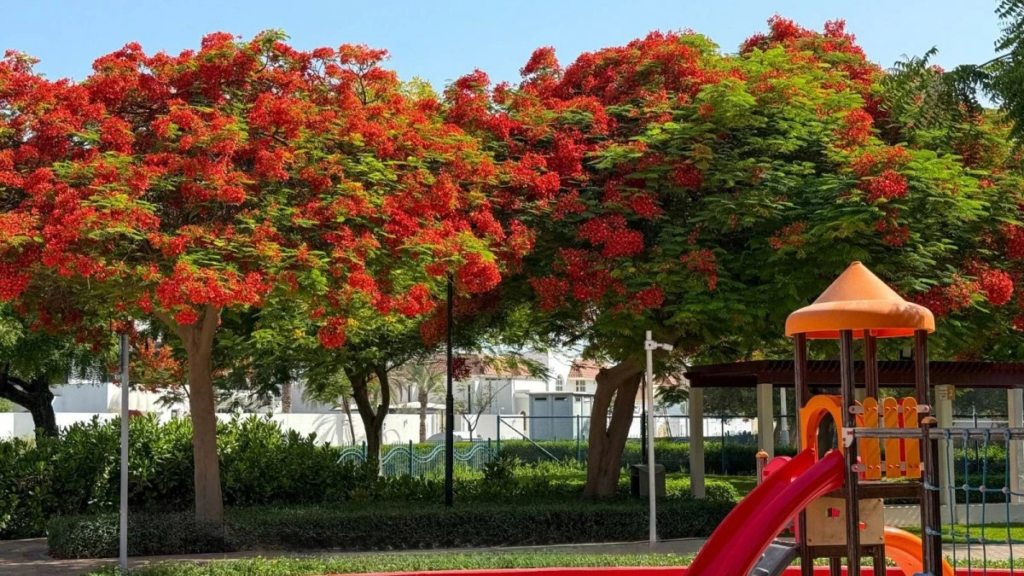
Dubai’s relationship with the Flame Tree is not accidental. Over the past two decades, the emirate has invested heavily in beautification and sustainability initiatives, introducing millions of trees and plants into public spaces. The Flame Tree became a preferred choice because it combines visual appeal with practical benefits such as shade, resilience, and relatively low maintenance.
The tree’s blooming season, which usually begins in May and lasts until July, coincides with some of Dubai’s hottest months. While many plants struggle in extreme heat, the Flame Tree reaches its peak visual beauty during this period, adding bright colors to an otherwise sun-scorched urban landscape. This contrast has made it especially beloved among residents and photographers.
Its growing cultural importance became even more evident in 2026 when Dubai Crown Prince Hamdan bin Mohammed bin Rashid Al Maktoum directed authorities to expand Flame Tree planting across streets, homes, parks, and recreational spaces throughout the emirate. In official statements, he described the tree as something that “brings life” to Dubai during the summer season.
Dubai Municipality also announced plans to distribute Flame Tree seedlings to residents who wished to plant them at home or on farms. The initiative reflected the government’s broader environmental goals, including improving air quality, increasing green cover, and enhancing public wellbeing.
Beyond official landscaping projects, the Flame Tree has become deeply embedded in Dubai’s visual culture. Social media platforms fill with photographs of the blooming trees every summer, particularly around landmarks such as the Dubai Frame, Jumeirah neighborhoods, and tree-lined residential communities. Some local media outlets have even described the blooming period as “Flame Tree season,” highlighting how strongly the tree is now associated with Dubai’s identity.
The tree also holds significance across South Asia, where it is commonly known as Gulmohar. In countries such as Pakistan and India, Gulmohar trees are often linked with nostalgia, summer vacations, and university campuses. This cultural familiarity may partly explain why many expatriates in the UAE feel emotionally connected to the tree.
However, maintaining Flame Trees in desert environments requires careful planning. The species needs sufficient irrigation during early growth stages and can develop wide root systems. Gardening communities online often discuss challenges related to pruning, watering, and disease management for Royal Poinciana trees in hot climates.
Despite these challenges, the tree continues to flourish across Dubai, where it now represents more than simple landscaping. It reflects the emirate’s attempt to combine urban development with environmental aesthetics. In a city known for skyscrapers, luxury developments, and futuristic architecture, the Flame Tree offers a softer and more natural symbol of place.
What makes the story especially remarkable is that a tree native to Madagascar has managed to become emotionally tied to another region thousands of kilometers away. Today, many residents and visitors instantly associate the Flame Tree’s fiery blossoms with Dubai summers, proving that symbols of identity are not always born locally, sometimes they are adopted, nurtured, and transformed over time.
As Dubai continues expanding its green initiatives and public spaces, the Flame Tree’s presence is likely to grow even further. From roadside avenues to residential gardens, the brilliant orange canopy has become more than just seasonal scenery. It is now part of Dubai’s visual signature, a natural icon rooted in Madagascar but fully embraced by the UAE.