A nation of under 11 million keeps producing women who rule the game.
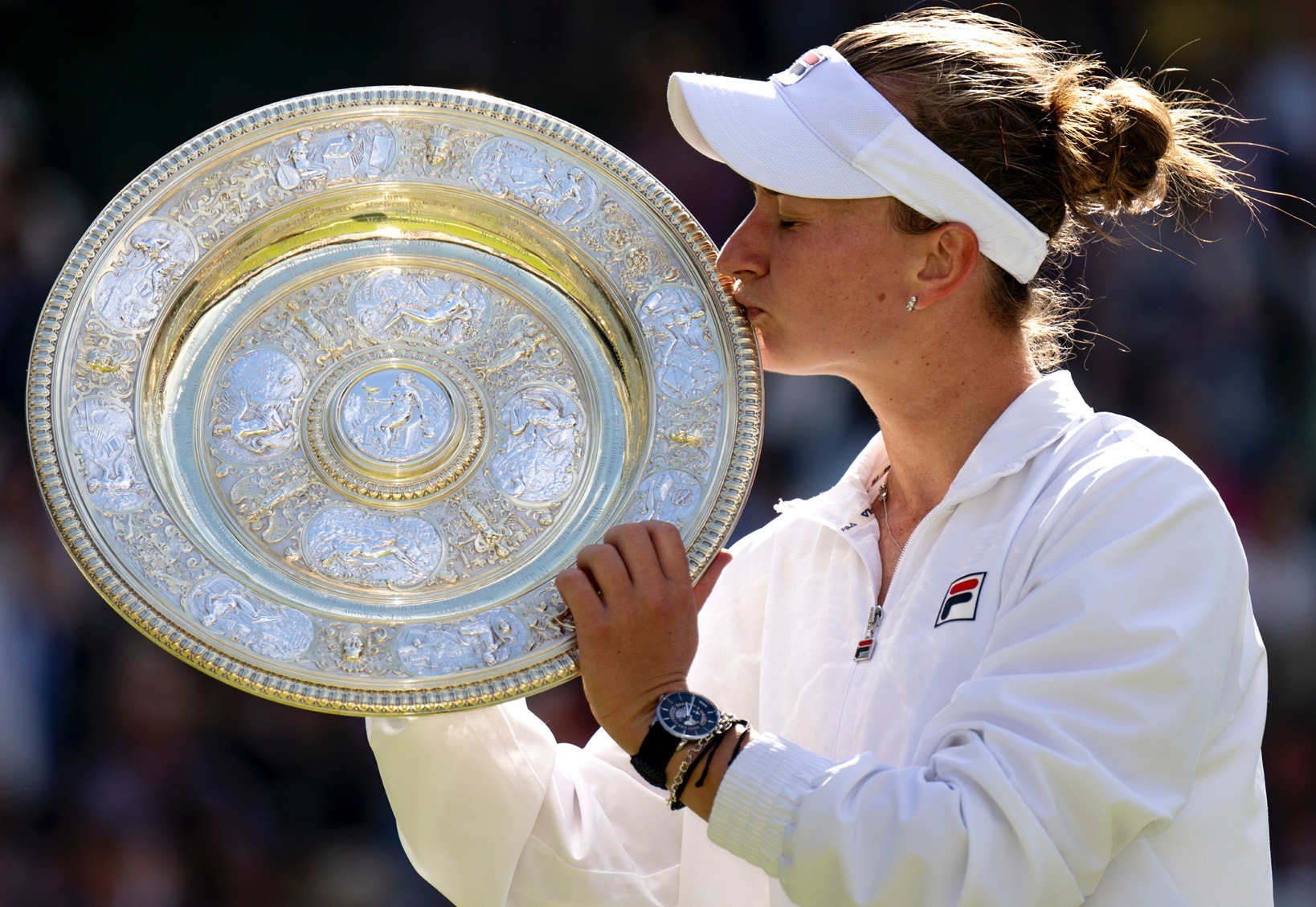
When Linda Noskova beat Karolina Muchova to win Wimbledon in July 2026, the moment made history. It was the first all-Czech women’s singles final the tournament had ever seen, and it handed the country a Wimbledon champion for the third time in four years.
For a nation of fewer than 11 million people, that kind of dominance in women’s tennis is astonishing. The story runs through a handful of players who each carried the torch forward.
Martina Navratilova set the standard
Every account of Czech tennis starts with Martina Navratilova. Born in Prague, she won nine Wimbledon singles titles, a record that still stands, though she represented the United States after defecting from Czechoslovakia in 1975. Speaking to the BBC, Navratilova pointed to the grassroots system behind the country’s success. She noted that clubs sit in nearly every town, with even small places holding several clay courts, and that players compete constantly. Czech juniors play full sets in singles and doubles rather than just hitting balls, she said, which is why they develop a complete game where even baseliners can volley.
Petra Kvitova carried the modern era
The next great link was Petra Kvitova, who won two Wimbledon titles and reached a career high near the top of the game. She became the model for a generation of Czech girls who grew up believing a Grand Slam was within reach. Her influence circled back in 2026, when she watched from the Royal Box as Noskova became the youngest Wimbledon champion since Kvitova herself lifted her first title in 2011.
Marketa Vondrousova and Barbora Krejcikova kept winning
The pipeline never slowed. Marketa Vondrousova made history in 2023 as the first unseeded woman to win Wimbledon, then Barbora Krejcikova followed in 2024 with her own Wimbledon crown. Reflecting on the run, Vondrousova described the secret behind Czech success as a mix of modest tennis clubs spread across the country, a strong stable of coaches, and national pride that feeds on itself. She and Muchova, she pointed out, came from the same club.
Karolina Muchova reached the final of her life
Muchova had long been one of the most stylish players on tour, and 2026 delivered her breakthrough at Wimbledon. She reached the final by saving a match point to beat Coco Gauff in a dramatic semifinal. In the final itself she produced the match’s defining stretch, saving five championship points and reeling off five straight games to steal the second set and force a decider. The comeback drew the loudest ovation of the afternoon before she fell just short.
Linda Noskova became the new champion
The title went to Noskova, still just 21. She won 6-2, 5-7, 6-3, sealing it on her sixth championship point after weathering Muchova’s fightback. The victory made her the youngest Wimbledon women’s champion in 15 years and lifted her to a career high of world number seven. As a junior she won the 2021 French Open girls’ title, and in 2024 she upset then world number one Iga Swiatek at the Australian Open. Noskova and Kvitova are now the only Czech players to win their Grand Slam final debut at Wimbledon.
Why the Czech system keeps producing champions
Behind the names sits a structure built to develop talent, described by journalist Karel Knap of Radio Prague International, who said tennis has a deep tradition in the country dating to Czechoslovakia. Because so many great players came before, tennis became a natural first choice for girls in particular. The system rewards young talent at every stage:
– Clubs exist in nearly every town and village, making it easy and affordable to start.
– Players can climb a clear ladder, from a small local club to national centers in Prague or Prostejov.
– The federation supports juniors financially and runs a large number of tournaments.
– Many coaches are former pro-tour veterans passing expertise to the next generation.
The depth shows in the rankings, where Czech women regularly fill multiple spots in the WTA top 50, including Noskova, Muchova, Krejcikova, Katerina Siniakova, and Marie Bouzkova. Noskova told Reuters the pattern felt almost inevitable, since Czech players share a common upbringing while each bringing distinct strengths, and grass rewards the variety in their games. From Navratilova to Noskova, that chain of role models keeps pulling the next champion through.