



High-functioning anxiety describes people who appear successful and in control while struggling with constant worry underneath.
Some people seem to have it all together. They hit every deadline, show up early, over-prepare, and rarely let anything slip. Colleagues call them driven and dependable. What few people see is the constant inner churn of worry, self-doubt, and pressure that powers all of it. This pattern is often called high-functioning anxiety, and it is easy to miss precisely because it looks like success.
The term does not appear in the DSM-5, the manual clinicians use to diagnose mental health conditions. It is not a formal diagnosis. Instead, it describes a familiar pattern in which anxiety fuels high performance on the outside while causing real distress on the inside. Many clinicians treat it as a subset of generalized anxiety disorder, sharing many of the same features without always meeting the full diagnostic criteria.
Common High-Functioning Anxiety Symptoms to Recognize
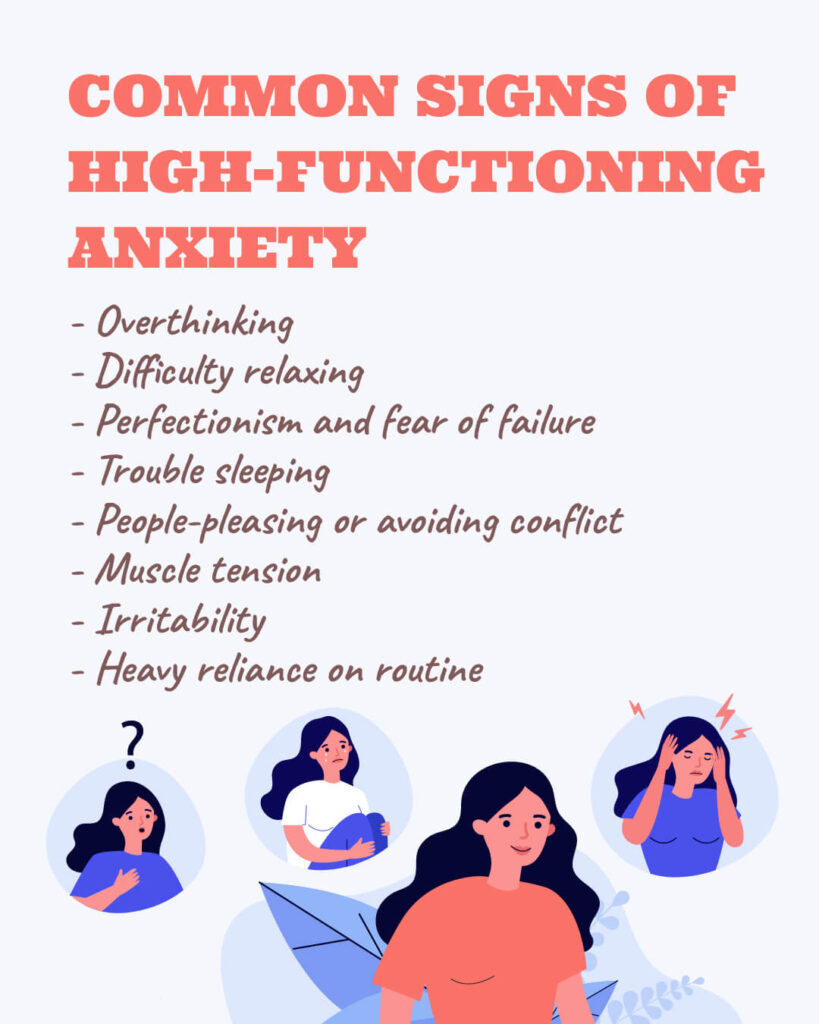
The signs of high-functioning anxiety are often mistaken for personality traits. Someone might be described as a perfectionist, a Type A worker, or simply ambitious, when the driving force underneath is fear of failure or disappointing others.
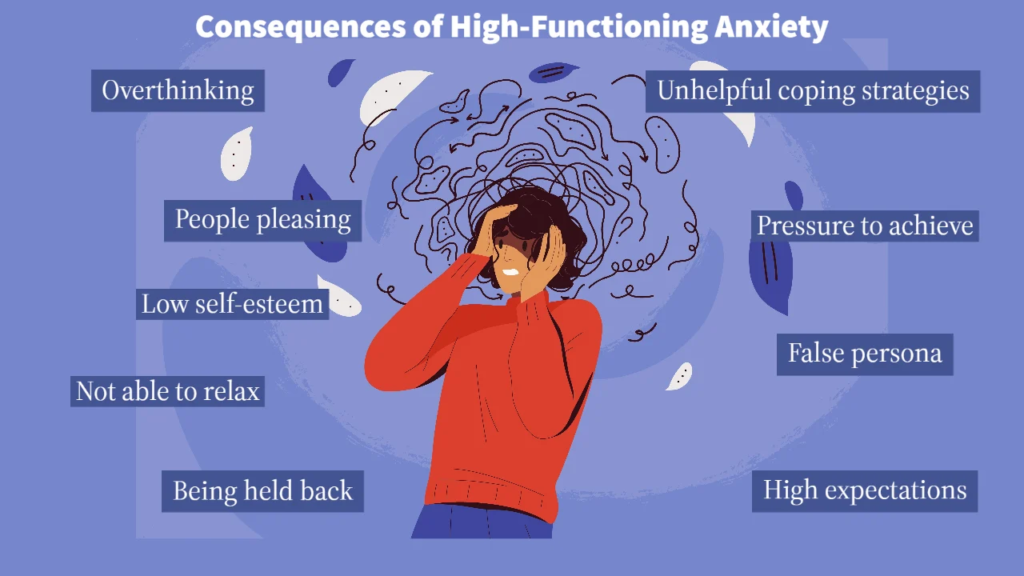
Common emotional and mental signs include persistent worry even when things are going well, overthinking small decisions, and mentally rehearsing conversations before they happen or replaying them afterward. Many people report racing thoughts at night, a to-do list that never feels finished, and an ongoing sense that they should be doing more. Self-criticism tends to run high, and small setbacks can feel much larger than they are.
There are physical signs too. According to the Mayo Clinic Health System, people with high-functioning anxiety often experience muscle tension, headaches, stomach issues, and disrupted sleep. These are frequently dismissed as ordinary stress rather than linked to anxiety. Over time, the constant drive can lead to burnout, exhaustion, and irritability.
Certain behaviors also stand out. People with this pattern tend to stay busy to outrun anxious thoughts, struggle to say no, and take on too much out of fear of letting others down. Many find it hard to delegate or trust others with tasks, and some swing between procrastination and last-minute rushes to finish work they are more than capable of doing.
How to Manage High-Functioning Anxiety Day to Day
The encouraging part is that this pattern responds well to support. Awareness is the first step. Many people never label what they feel as anxiety at all, describing themselves as wired that way, so recognizing the pattern makes it easier to address.
Several everyday strategies can ease the load. Mindfulness practices such as meditation, deep breathing, and progressive muscle relaxation help calm racing thoughts and keep attention in the present rather than fixed on the future. Regular movement and exercise are consistently linked to lower stress. Prioritizing steady, consistent sleep matters, as does being honest about caffeine, since using it to push through anxiety-driven fatigue can feed the cycle and make worry worse.
Setting boundaries is another key piece. Learning to say no, delegating more, and resisting the pull of perfectionism can lighten the pressure that builds up over time. It also helps to schedule genuine rest rather than productive rest, meaning downtime with no purpose beyond enjoyment. Connecting with trusted people and letting them know how you actually feel can offer perspective and relief, breaking the habit of hiding the struggle behind a capable exterior.
When to Seek Professional Support for Anxiety
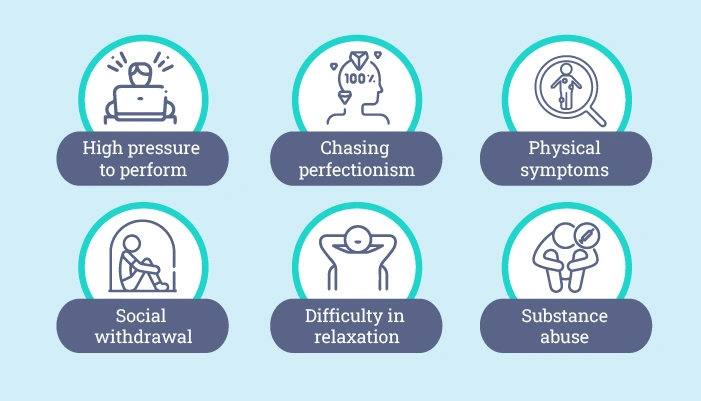
Self-help strategies go a long way, but there are times when reaching out to a professional makes sense. Signs worth paying attention to include physical symptoms that do not ease or get worse, ongoing trouble sleeping, difficulty making even small decisions, strained relationships, and coping strategies that no longer work the way they used to.
Therapy is often effective for this pattern. Cognitive behavioral therapy helps people identify and reframe the perfectionist and all-or-nothing thinking that tends to sit at the center of high-functioning anxiety. Other approaches, including acceptance and commitment therapy and mindfulness-based methods, help build flexibility and reduce the need for constant control. A licensed professional can help rule out other causes and tailor a plan to the individual.
High-functioning anxiety is a real pattern with real costs, even when it does not match the common image of anxiety as something that stops a person in their tracks. The drive it produces comes at a price, and for many people that price has been paid quietly for years. With the right tools and support, it is possible to loosen anxiety’s grip without giving up the things that genuinely matter.
This is a sensitive topic. If any of this resonates on a personal level, I can help point you toward the right support and resources.