


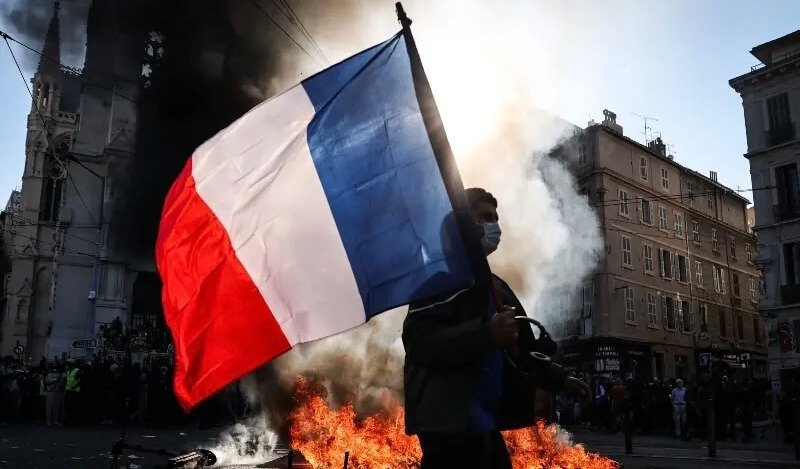
French Prime Minister Sébastien Lecornu has called on regional authorities to introduce localised, partial curfews following a weekend of violent protests, looting and attacks on public buildings across France. The measures aim to restore public order and prevent further damage as authorities face criticism over their handling of the unrest.
Lecornu announced the proposal on Monday after an emergency meeting with senior government officials. He said the restrictions should remain limited to specific areas rather than apply to entire cities. He also said the government could consider declaring a state of emergency if the situation required it, although he viewed partial curfews as the more appropriate response at this stage.
The violence followed weeks of student-led demonstrations and nationwide protests over the cost of living and public services. On Saturday, October 17, demonstrations escalated into clashes with police in several cities, including Paris, Marseille and Lyon. Shops were damaged and looted, vehicles were set on fire, and public buildings were targeted.
In Limoges, a town hall was severely damaged by fire. Other incidents included attacks on municipal buildings and commercial premises. The unrest continued into Sunday, when further clashes and looting were reported in parts of the country.
According to figures reported by French authorities, approximately 2,400 people were arrested over the weekend. Nearly 1,000 police officers, gendarmes and firefighters were reported injured, while thousands of businesses were affected by vandalism and looting.
Interior Minister Laurent Nuñez acknowledged that police had lost control of the situation in some locations and admitted that authorities had failed to anticipate the scale of the violence adequately.
The response has drawn criticism from mayors of major cities, who have questioned whether security forces were sufficiently prepared for the demonstrations. Local leaders have also called for explanations regarding the extent of the damage to businesses and public infrastructure.
President Emmanuel Macron rejected Nuñez’s resignation after the minister offered to step down amid criticism of the security response. Macron said continuity in the command of security forces was necessary during the crisis and called for transparency regarding failures in planning and intelligence.
The government has also announced additional law-enforcement measures. In the Paris region, nearly 200 investigators were assigned to examine CCTV footage, shop security recordings and videos circulating on social media to identify suspected participants in the violence. Authorities said the operation would support further investigations and legal action.
The demonstrations have taken place amid growing public dissatisfaction over living costs, education and public services. Student protests began several weeks before the latest wave of violence, with concerns about school conditions forming part of the movement.
The protests later expanded to include broader economic grievances. However, the violence and looting were not representative of all demonstrators, and authorities have distinguished between peaceful protesters and individuals accused of vandalism or other criminal offences.
The unrest has also revived comparisons with France’s Yellow Vest movement, which began in 2018 over fuel prices and developed into wider protests against economic inequality and government policies. The country also experienced major riots in 2023 following the fatal police shooting of a teenager during a traffic stop.
The proposed restrictions are intended to give local authorities additional means of preventing further violence. The specific areas affected and the precise terms of the curfews were still being determined on Monday, pending consultations with local officials.
Lecornu has ruled out placing all of Paris under curfew, emphasising that restrictions should be targeted. Authorities are also considering additional policing measures and restrictions on certain public gatherings where necessary.
The government faces the challenge of restoring order while addressing the grievances that contributed to the demonstrations. With further protests being discussed by organisers, the coming days will be important in determining whether the security measures can prevent renewed violence.
The situation remains fluid, and the effectiveness of the proposed curfews will depend on their implementation and developments on the ground.