


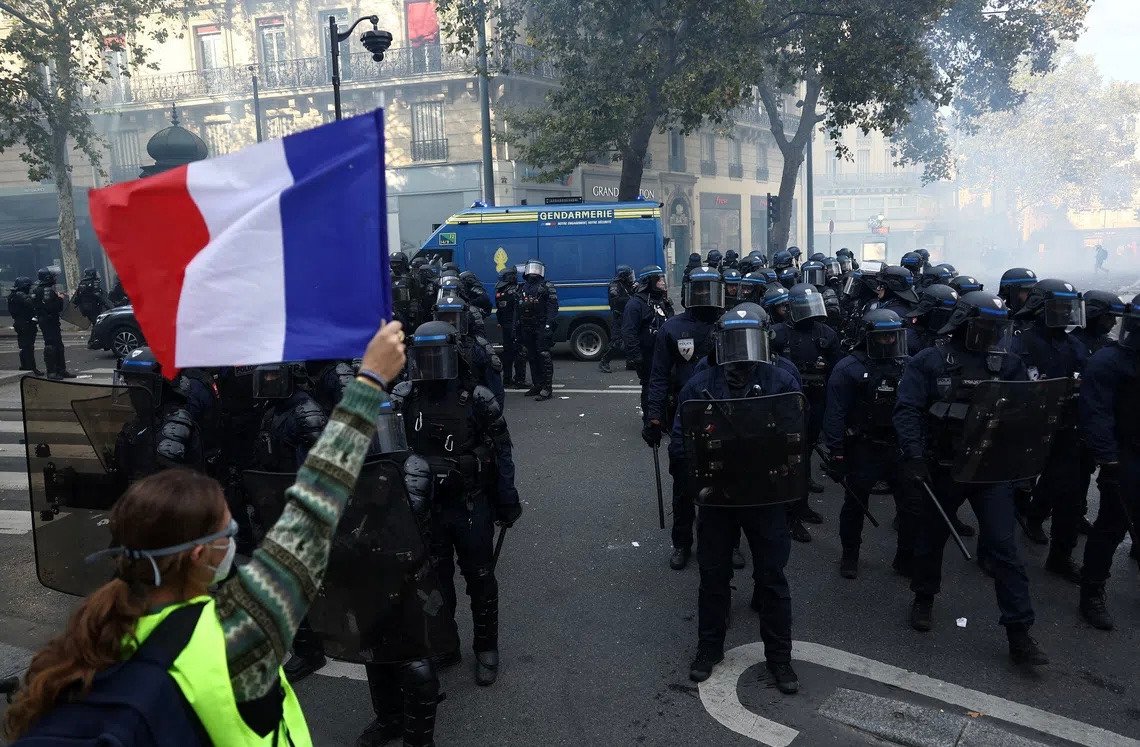
France is preparing for another wave of demonstrations as the Yellow Vests movement calls for mass disobedience amid growing public frustration over rising living costs, wages and public services. The protests are taking place on November 7, 2026, as trade unions and student groups continue mobilising against economic pressures and government policies.
Authorities have deployed approximately 70,000 police officers and security personnel across France to manage demonstrations and prevent violence. The latest protests come less than six months before the country’s 2027 presidential election, increasing political pressure on President Emmanuel Macron’s government.
The Yellow Vests movement, known in France as Gilets Jaunes, announced a separate demonstration at Place de la Concorde in central Paris on Saturday.
The gathering was planned near the French parliament and presidential palace despite authorities prohibiting demonstrations in the area.
Benjamin Ball, a member of the movement’s coordinating committee, said activists were calling for “mass disobedience.”
The movement initially emerged in 2018 in response to proposed fuel tax increases. Demonstrations subsequently expanded to include concerns about economic inequality, taxation and the rising cost of living.
On November 7, student groups and trade unions organised a separate authorised march in Paris against living costs and in support of young people.
The demonstrations follow weeks of nationwide strikes and protests involving workers, students, farmers and public-sector employees.
France’s unrest is part of a wider wave of demonstrations across Europe, where economic insecurity, housing affordability and concerns about public services have contributed to growing public dissatisfaction.
Germany, Italy, Spain, Portugal, Belgium and other countries have experienced demonstrations involving students, workers and young activists.
In Germany, youth-led protests took place in 34 cities on October 31. Demonstrators called for greater investment in education, housing and climate protection while opposing proposals to reintroduce compulsory military service.
The protests also reflected concerns about rising living costs and the difficulties young people face securing affordable housing and employment.
In Italy, tens of thousands of students, workers and demonstrators participated in a nationwide general strike on October 30.
Organised by the grassroots union USB, the 24-hour strike included demonstrations in more than 40 cities. Participants demanded higher wages, stronger public services and action on living costs while opposing increased military spending.
Protests also occurred in Spain, Portugal and Belgium, where demonstrators raised concerns about housing affordability, education and economic insecurity.
According to European Union statistics cited in recent reporting, youth unemployment stood at 15.4% in August 2026, compared with an overall unemployment rate of 6.1%.
These economic pressures have contributed to wider concerns about opportunities and financial security among younger Europeans.
In France, the November demonstrations have brought together groups with different demands.
Trade unions are calling for higher wages, increases in the minimum wage, tax reforms and improved working conditions.
Student organisations are demanding better educational facilities, additional teachers and improvements to overcrowded classrooms.
The Interior Ministry reported 642 arrests during nationwide demonstrations on November 5, when workers and students participated in protests and strike activities.
Although most demonstrations have remained peaceful, clashes with police, vandalism and looting have occurred during previous protests.
Authorities have increased security measures following serious unrest on October 17, when demonstrations escalated into violence in several cities.
The police response has also faced criticism over allegations of excessive force against demonstrators.
Prime Minister Sebastien Lecornu is scheduled to meet representatives of trade unions and employer organisations on November 9 to discuss wages and purchasing power.
The government faces financial constraints as France attempts to reduce its public debt and control its budget deficit.
Macron, who began his second presidential term in 2022, cannot seek another consecutive term under France’s constitutional limits.
The protests are therefore taking place as political parties prepare for the 2027 presidential election.
Further demonstrations and industrial action are expected as unions continue pressing the government to address their demands.
The November 7 protests highlight growing dissatisfaction over economic conditions in France and reflect broader concerns across Europe about living costs, housing, employment and public services.
With demonstrations continuing in several countries, economic insecurity and government responses remain central issues in Europe’s political debate.