


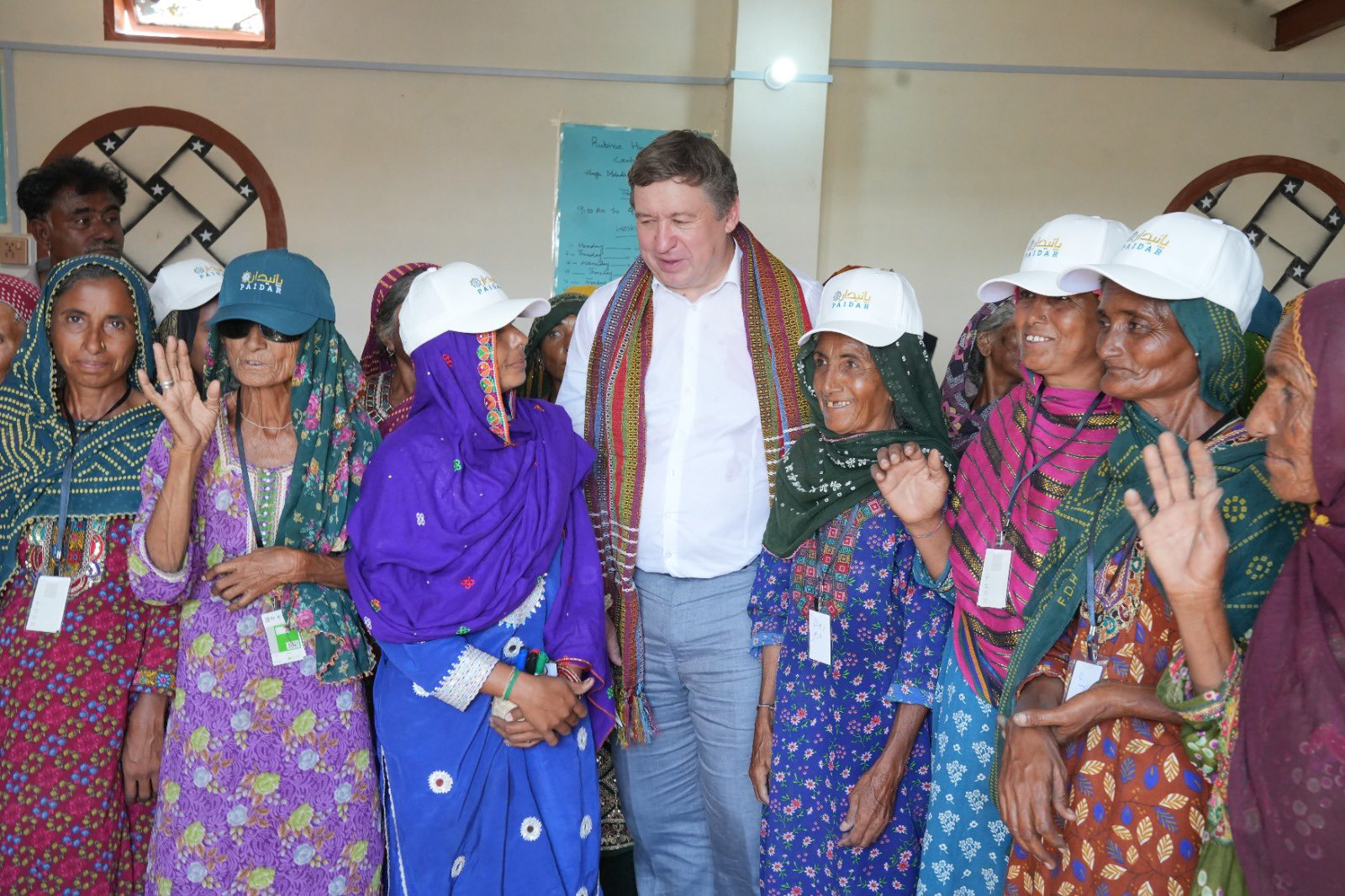
During a visit to Thatta in Pakistan’s Sindh province, EU Ambassador Raimundas Karoblis toured two of the region’s most celebrated heritage landmarks and met local changemakers working to develop the area.
European Union Ambassador to Pakistan Raimundas Karoblis has visited the historic city of Thatta in Sindh, where he and the EU team explored the UNESCO World Heritage Site of Makli Necropolis and the Shah Jahan Mosque.
During the visit, the delegation also met local changemakers driving progress in rural Sindh. Sharing highlights from the trip on social media, the EU Delegation to Pakistan described Thatta as “a region rich in heritage, talent and ambition.”
Karoblis took up his post as the EU’s Ambassador to Pakistan in October 2025. His visit to Thatta comes as the EU continues to engage with communities and cultural institutions across Sindh, including discussions with the Arts Council of Pakistan Karachi on the EU’s participation in the upcoming World Culture Festival Karachi 2026.
Located about 100 kilometers east of Karachi, Thatta was once a thriving capital and center of learning, and its monuments remain among the finest examples of Islamic architecture in South Asia.
Makli Necropolis, a UNESCO World Heritage Site in Pakistan
Makli Necropolis is one of the largest funerary sites in the world. Spread across about 10 square kilometers on a plateau near Thatta, it is home to an estimated half a million tombs and graves dating from the 14th to the 18th centuries.
The site was inscribed on the UNESCO World Heritage List in 1981 as the Historical Monuments at Makli, Thatta. Thatta served as the capital of three successive dynasties before coming under the rule of the Mughal emperors, and Makli became the resting place of rulers, nobles, scholars and saints.
Among its most notable monuments are the tombs of Jam Nizamuddin II, who ruled from 1461 to 1509, and Isa Khan Tarkhan the Younger. Built in brick and stone, many of the tombs feature intricate carvings and glazed tile work, reflecting a distinctive local style that blends regional and Mughal architectural traditions.
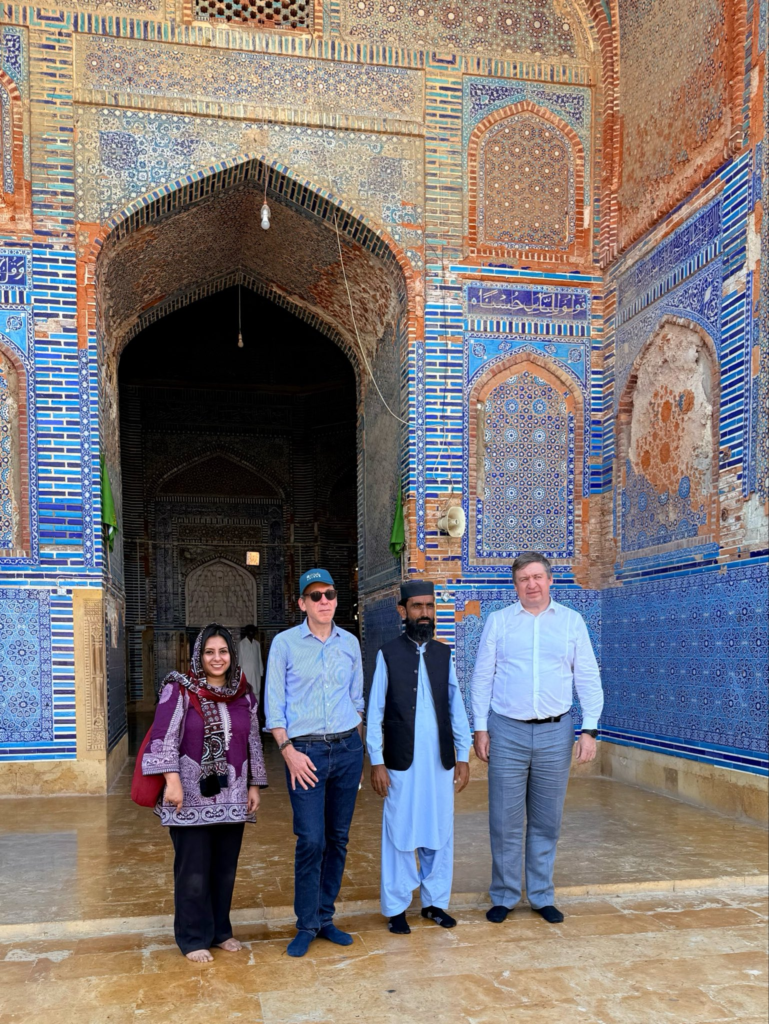
Shah Jahan Mosque, Thatta’s Mughal Landmark
The Shah Jahan Mosque, also known as the Jamia Masjid of Thatta, was built between 1644 and 1647 during the reign of Mughal Emperor Shah Jahan, who gifted it to the city. According to historical accounts, the emperor was moved by the hospitality the people of Sindh had shown him during an earlier period of his life.
The mosque is known for its 93 domes, the most of any structure in Pakistan, and for having no minarets. Its interiors are celebrated for some of the most elaborate tile work in South Asia, with patterns in cobalt blue, turquoise, violet and white, along with calligraphic panels.
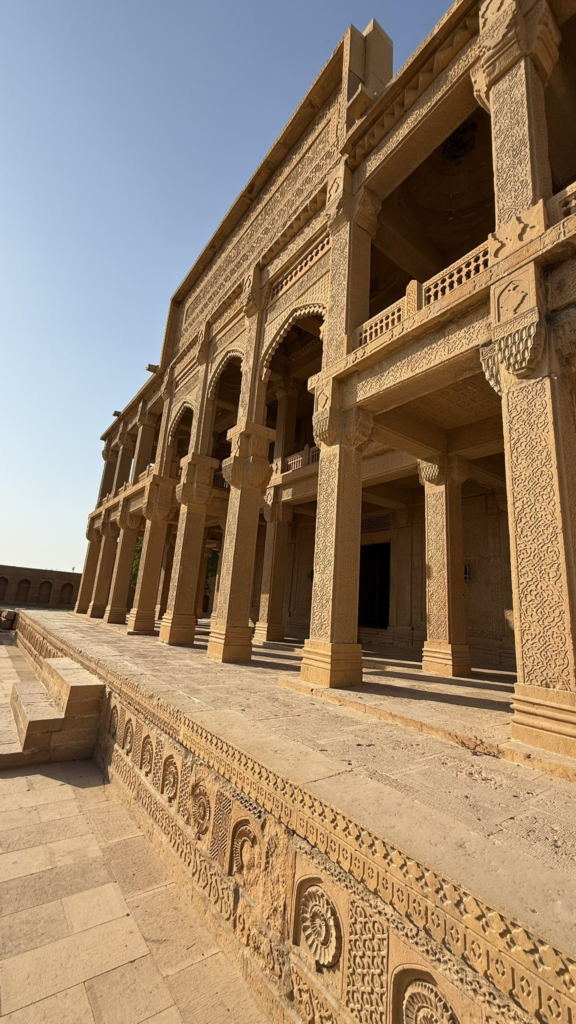
The mosque is also admired for its acoustics and due to the design of its domes, prayers recited in the main hall can be heard throughout the building.
The Shah Jahan Mosque was added to UNESCO’s Tentative List for World Heritage status in 1993. The EU Delegation said the visit to Thatta was part of a wider series of engagements in the region, with further highlights from the trip being shared on its official channels.