



Greater flamingos are returning to Punjab’s wetlands in growing numbers, with new sightings stretching from the Salt Range to the province’s south.
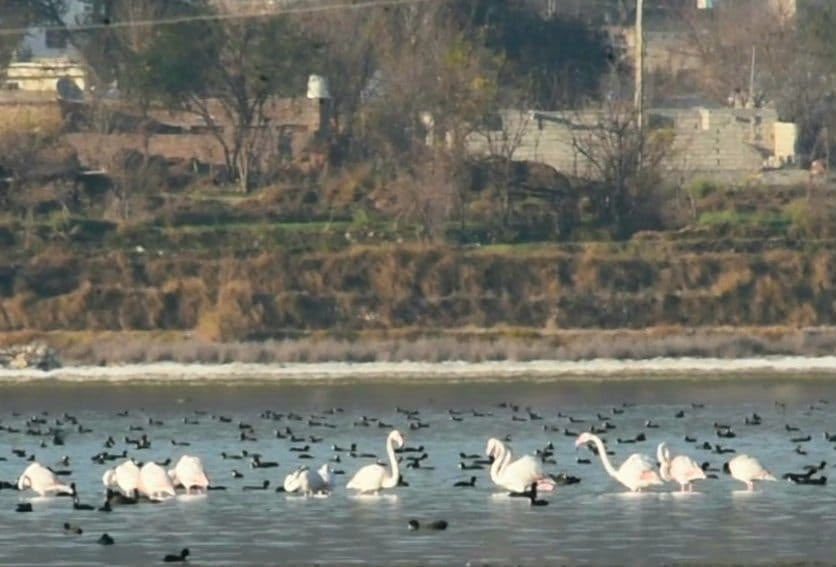
PAKISTAN – Flamingos are making a striking comeback in Punjab. At Uchali Lake in the Salt Range, the number of migratory and resident flamingos has risen from just 10 to more than 60 this season, and the birds are now spreading into Muzaffargarh in the south of the province.
Punjab Chief Minister Maryam Nawaz Sharif shared the news on social media, calling it “a spectacular flamingo revival in Punjab.” She credited the increase to statutory reforms, habitat restoration and strict protection measures, and praised the Punjab Wildlife and Parks Department for its work in protecting natural habitats.
The rise at Uchali follows a series of encouraging sightings across the province this year. In late May, a flock of eight flamingos settled at Rakh Khanpur Sanctuary in Muzaffargarh, marking the return of the birds to South Punjab after nearly four decades.
Flamingos were also recorded at Chhapar Wala Dhund in the Dera Ghazi Khan region, and a survey in July counted 43 greater flamingos, including juveniles, at the Rangla wetland complex.
Uchali Lake and the Uchhali Wetlands Complex
Uchali Lake sits in the Soon Valley of the Salt Range in Khushab District. It is part of the Uchhali Wetlands Complex, which also includes Khabikki and Jahlar lakes. The three lakes range from slightly to highly salty, creating conditions that attract a wide variety of waterbirds.
The complex covers 1,243 hectares and was designated a Ramsar Wetland of International Importance on March 22, 1996. It is the only site in Pakistan known to support wintering white-headed ducks, and greater flamingos have long visited as migrants.
Pakistan lies along the Indus Flyway, one of the world’s major migratory bird routes. Each winter, thousands of birds travel from Central Asia and Siberia to the country’s lakes and wetlands, making sites like Uchhali important resting and feeding grounds.
The greater flamingo is the largest of the world’s flamingo species and is known for its pale pink feathers and long, curved bill. The birds feed by filtering small organisms from shallow, salty water, which makes brackish lakes like Uchali a natural fit.
Flamingo Conservation and Wetland Restoration in Punjab
Wildlife officials have linked the recent sightings to stronger conservation efforts. In South Punjab, wildlife rangers are carrying out patrols and running awareness campaigns with local communities, and the birds are under close monitoring.
“This is clear evidence that the ecological health of these wetlands is improving,” said Sheikh Muhammad Zahid, Additional Chief Wildlife Ranger for South Punjab, when the flamingos first appeared at Rakh Khanpur.
The presence of juveniles at some sites has led researchers to suggest the birds may be breeding locally, though further monitoring is needed to confirm this.
The wetlands still face challenges, including falling water levels, rising salinity, water diversion for irrigation, agricultural expansion, grazing and illegal hunting. Experts note that long-term assessment will be needed to confirm whether the increase marks a lasting recovery or a seasonal shift.
As the winter migration season begins, wildlife teams will continue to track flamingo numbers across Punjab’s wetlands in the months ahead.