Millie Bobby Brown: The Girl Who Beat Hollywood
Millie Bobby Brown is more than Eleven. From family bankruptcy and partial deafness to getting rejected by Game of Thrones, she didn't just survive Hollywood—she bought it. This is the untold story of how the ultimate Gen Z icon turned "no" into an empire.
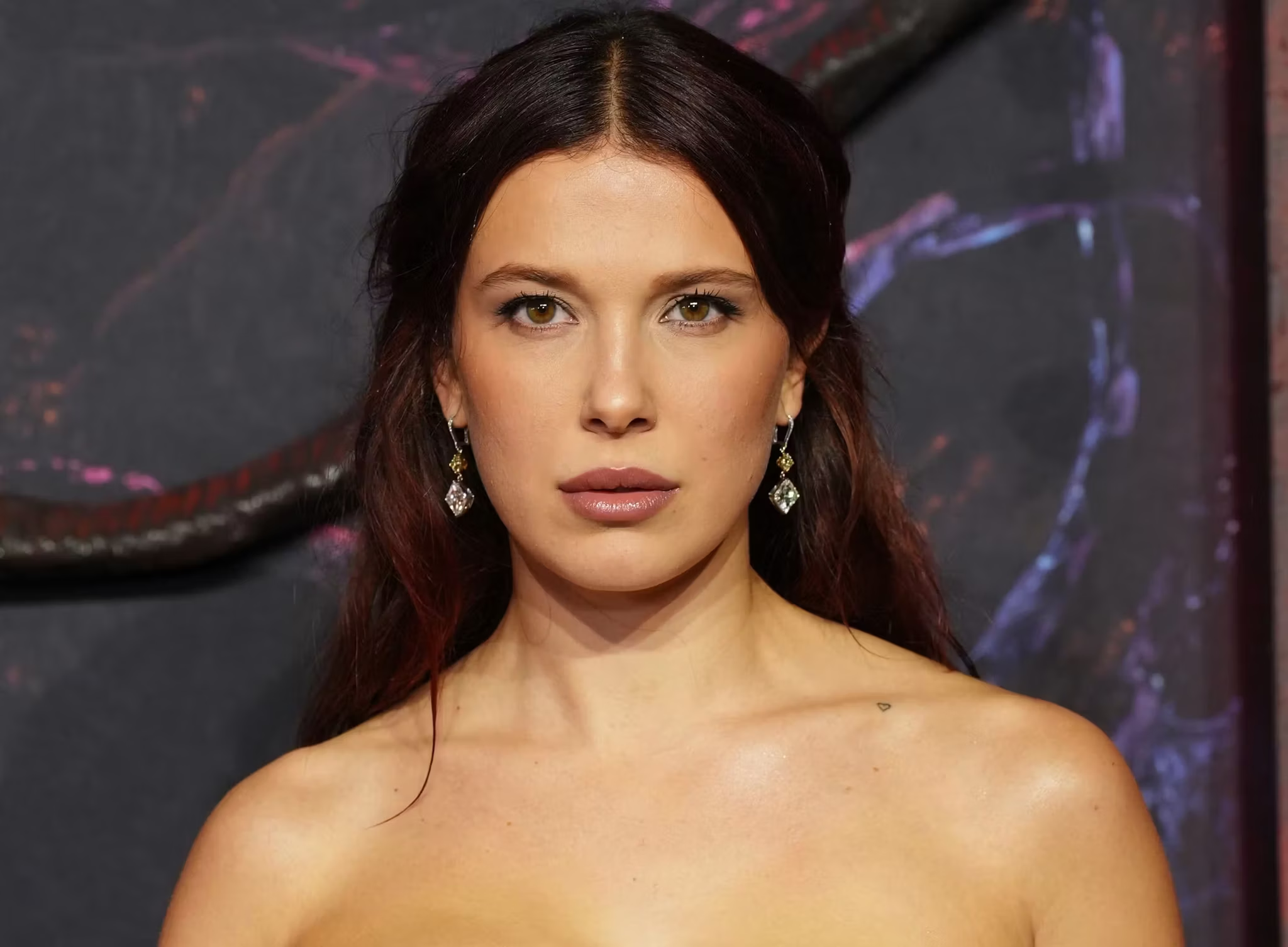
“Friends don’t lie.” But they sure do hustle.
That three-word rule didn't just save Hawkins. It defined a pop culture movement. If you have spent any time on the internet lately you know the power of Eleven. Stranger Things gave us the ultimate 80s nostalgia trip. It gave us waffles and walkie-talkies and a squad we all wished we had. But the girl behind the telekinetic stare is even more fascinating than the Upside Down. While the world sees the glitz and the red carpets the real story is much grittier. Before she was the highest-paid actress under twenty, Millie Bobby Brown was hearing "no" more than anyone should. Her rise to the top wasn't luck. It was a masterclass in turning perceived weaknesses into an empire.
We see the viral moments and the massive social media following. It is easy to assume she was simply chosen by the universe to be a star. That narrative ignores the struggle. It ignores the fact that her success came from a place of absolute desperation.
The story of Millie Bobby Brown is not about talent finding a way. It is about a girl who kicked down the door after everyone locked it.
Bankruptcy To Hollywood Power
Most fans do not realize how close Millie came to never making it at all. The stakes for her family were dangerously high. Her parents believed in her potential so deeply that they sold their home in Orlando to move the family to Los Angeles. It was a massive gamble. They went all in on the hope that Hollywood would see what they saw.
Hollywood did not see it. The gamble failed.
The family burned through their savings trying to keep the dream alive. The industry was cold and indifferent. The money eventually ran out completely. They could no longer afford to live in the United States. They had to pack up their lives and move back to the UK to live with an aunt in Bournemouth. They were living in borrowed space with no money and shattered confidence.
The rejection that almost ended her career happened during this low point. Millie auditioned for Game of Thrones. She wanted the role of Lyanna Mormont. She knew she had the intensity to play a young leader. The casting directors passed. Millie told Jimmy Fallon that this specific rejection was devastating. It hurt more than the others. She considered quitting acting forever because the pain of constant failure was becoming too much to handle.
Deafness And Hollywood Rejection
The industry struggled to understand her. Casting directors constantly gave her the same feedback. They told her she was "too intense." They told her she was "too mature" for her age. They wanted children who were simple and bubbly. Millie possessed a raw emotional depth that unnerved adults. She did not fit the commercial mold.
She also navigated a physical challenge that she rarely discussed in the beginning. Millie was born with partial hearing loss in one ear. Over time that hearing faded completely. She is fully deaf in one ear. She cannot hear herself perform on set. She cannot rely on auditory cues from other actors. She has to rely entirely on instinct and timing.
This supposed weakness became her defining strength. When she auditioned for a project called Montauk the Duffer Brothers saw something different. They did not want bubbly. They wanted the intensity that everyone else rejected. They needed a character who could convey trauma and power without speaking. They asked her to shave her head. She did it. She channeled her frustration and her unique ability to emote into the character of Eleven. The traits that made her unemployable for commercials made her a global icon for Netflix.
Florence by Mills: Business Equity
Most child stars are happy to sign a licensing deal and cash a check. Millie had a different vision. She understood that real power comes from equity. She launched Florence by Mills as a clean beauty brand for Gen Z. She saw a gap in the market because she did not want anti-aging products or heavy makeup. She wanted clean skincare for her generation.
It began as a partnership but she made a boss move in 2020. Her family acquired a majority stake in the company. This is a rare maneuver in the celebrity world. She bought out the investors to ensure she controlled the brand. She wanted to make decisions about the products and the messaging. She did not want to be a face on a box. She wanted to be the owner of the company. She built a business that stands on its own regardless of her acting roles.
PCMA Productions: The Youngest Producer
She applied this same mindset to her film career. She founded PCMA Productions to develop her own projects. She produced Enola Holmes at sixteen years old. This made her one of the youngest producers in Hollywood history. She used this company to hire her family. Her father and her sister work with her. She took the people who sacrificed everything for her and integrated them into her success.
She creates her own work now. She is adapting her novel Nineteen Steps into a feature film. She is starring in the massive sci-fi epic The Electric State for the Russo Brothers in 2025. She is producing Enola Holmes 3. She stopped waiting for the phone to ring and started building the phone.
Stranger Things: The Gen Z Phenomenon
The recent finale of Stranger Things marked the end of an era. The internet is still recovering from the emotional weight of that goodbye. We need to recognize the scale of what this show accomplished.
Every generation has that one saga that defines their youth. Gen X had Star Wars. Millennials grew up with Harry Potter, Lord of the Rings and the chaos of Game of Thrones. Gen Z has Stranger Things. But this show did something rare. It didn't just stay in its lane. It captured the 80s vibe that Gen X lived through and nailed that nostalgic "kids on bikes" friendship that hits Millennials right in the feels. It bridged every gap while keeping Gen Z completely hooked. The finale left millions of fans crying for hours because it felt like we were closing the door on our own childhoods. The salute goes to Millie. She carried that franchise on her back.
Millie turned a silent girl in a hospital gown into the most powerful character on television. She proved that the girl who was "too intense" was actually just powerful enough to change the world.