Are Ramadan Dramas Really Losing Their Touch?
What has been a constant feature of Ramadan in Pakistan for more than a decade, besides fasting? You...
Feb 26, 2026
What has been a constant feature of Ramadan in Pakistan for more than a decade, besides fasting? You wouldn’t be wrong to say Ramadan dramas — because that’s the truth. For the last decade, Pakistani TV producers have shifted gears ahead of the holy month and come up with “Ramadan dramas,” a term used for content that is less toxic, less preachy, and more family-oriented. That way, the whole family can relive the PTV experience of watching plays together for 30 days after iftar.
Why do Ramadan dramas evoke the PTV experience, you might ask? During the 1980s and 1990s, when there were fewer TV channels, families would gather around the lone television set at home and watch whatever drama was being telecast. They bonded over each character, laughed and cried together, and built lasting memories around those shows. Over the past decade, Ramadan dramas have recreated that experience for modern-day viewers around the globe who, despite having countless entertainment options, still want to enjoy something together as a family.
The limited-episode format of these dramas ensures a fast-paced narrative, with no unnecessary scenes or extended arcs to drag the plot. Most importantly, viewers know exactly when the story will conclude. Add to that, themes of harmony and solidarity — dipped in humor, romance, and warmth — and you have a winning formula.
When did the Ramadan Drama Fever Start?
The drama that kickstarted the Ramadan phenomenon was Chand Pe Dastak, which aired on HUM TV in 2010. Written by Mustafa Afridi and directed by Saife Hassan, it aired throughout Ramadan and was so well received that a sequel, Phir Chand Pe Dastak, was commissioned in 2011.
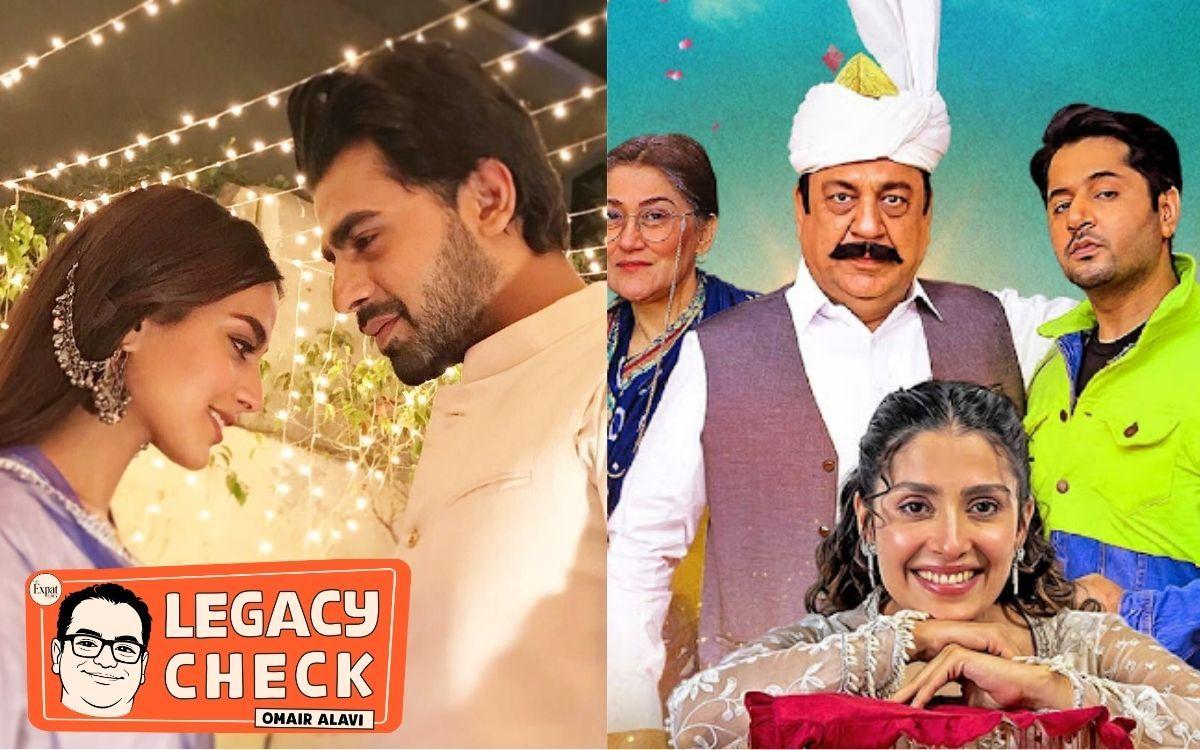
Afterward, different channels experimented with Ramadan dramas, producing plays such as Dhol Bajnay Laga (2014), Sawaab (2015), and Dekho Chand Aaya (2016). However, the formula was perfected in 2018 when Suno Chanda aired. Written by Saima Akram Chaudhry and directed by Aehsun Talish, the play became a phenomenon thanks to the electric chemistry between Farhan Saeed and Iqra Aziz in the lead roles. The supporting cast was equally memorable, with each actor delivering performances that are still fondly remembered eight years later.
The second season of Suno Chanda aired a year later with largely the same cast and crew. Besides reviving the “PTV experience,” it also provided a template that other writers and directors began to follow. From 2020 onward, there was a surge of Ramadan dramas, including Tanaa Banaa, Chupke Chupke, Ishq Jalebi, Chand Tara, Hum Tum, Chaudhry and Sons, Paristan, Heer Da Hero, and Tere Aanay Se, among others. One of the most successful entries, Fairy Tale, proved so popular during Ramadan 2023 that its sequel aired later that year with the same cast.
Ramadan dramas also expanded to OTT platforms, with Big Bang Entertainment’s Family Business streaming on the Tamasha app three years ago. Unlike traditional Ramadan serials, it did not air daily; instead, two episodes were released weekly. A similar format is being followed this year by Fasana Mart Ka on Green Entertainment, which airs only on weekends.
Alongside these light-hearted offerings, there have also been more preachy productions such as Makafat, Sirat-e-Mustaqeem, Umm-e-Ayesha, and Nasihat. However, they have largely been overshadowed by lighter fare that invites families to watch together. Whether on live television or YouTube, these dramas are viewed and discussed not only in Pakistan but wherever Urdu is spoken and understood.
Is Ramadan Drama Still a Thing in 2026?
Over the past two years, viewership of Ramadan dramas has declined significantly. They appear to have been overtaken by Ramadan game shows like Jeeto Pakistan League or transmissions such as Shan-e-Ramadan on ARY, along with similar programming on other channels. Despite star-studded casts, dramas like Ishq Di Chashni, Aas Paas, My Dear Cinderella, Dil Pe Dastak, Very Filmy, Tere Mere Sapne, Ishqaway, Rafta Rafta, and Dil Wali Gali Mein came and went — a disappointing outcome considering they seemed to tick all the right boxes.
This year, apart from Fasana Mart Ka, there are dramas like Geo Entertainment’s Khush Naseebi, HUM TV’s Dekh Zara Pyar Se and Tum Ladke Bhi Na, PTV's Bas Ek Tum Hi and Express Entertainment’s Chhup Chhup Kay. However, apart from Tum Ladke Bhi Na, they are not receiving the same level of attention as their predecessors. It wouldn’t be incorrect to say that what began as an experiment in 2010 with Chand Pe Dastak, and later blossomed into a successful format, is now fighting for survival.
To understand this shift in audience interest, we spoke to the makers who were either instrumental in launching the trend or behind the success of the most popular Ramadan plays.
Saima Akram Chaudhry’s name is synonymous with some of the most beloved Ramadan dramas, including Suno Chanda, Ishq Jalebi, Hum Tum, Chupke Chupke, and Chaudhry and Sons. This year, Dekh Zara Pyar Se marks her return to the genre.
Speaking to The Expat Story, she candidly addressed the gradual decline in the genre’s impact, indirectly placing responsibility on those at the helm.
“The Ramadan dramas of today talk about everything except Ramadan, which is my biggest concern,” she said. “When I wrote my first Ramadan serial in 2018, I envisioned a family drama connected to the holy month — something the entire family could watch together. Its purpose was to bring families closer and highlight family values. I also wanted to capture the hustle and bustle of Ramadan, Eid-ul-Fitr, and the petty squabbles that naturally arise during the month — all presented in a light-hearted way.”
She added that the trend has changed significantly in recent years, prompting her to take a two-year break.
“Despite Suno Chanda being a TV drama, some viewers complained that you can’t show someone lying while fasting or portray romance between a young couple. But in my opinion, drama requires exaggeration. It’s storytelling. I portrayed ordinary people — and in real life, we are fasting, we are flawed, and we exaggerate. Those characters reflected everyday life.”
According to her, channel policies also began to shift.
“At one point, I was told we wouldn’t talk about Ramadan in the next drama. I wrote a family story instead, but there was confusion about its direction. Meanwhile, other channels leaned toward loud, over-the-top storytelling. I stepped away and didn’t write for two years.”
She also revealed that creative boundaries tightened.
“I was told the tone shouldn’t be too light, so I had to write a more emotional story. I wrote it with love. But if you’re airing a serial in Ramadan, it should be about Ramadan. It should reflect the beauty of our family values. Unfortunately, writers don’t always have control and have to work within the policies and guidelines of channels and production houses.”
Director Danish Nawaz may have shifted his focus to more serious dramas, but his work on Chupke Chupke, Hum Tum, and Chand Tara remains among the most celebrated Ramadan productions. Speaking to The Expat Story, he shared his thoughts on how the genre can regain audience trust.
“The Ramadan serials I directed had nothing directly to do with the holy month. They were light-hearted dramas that happened to air during Ramadan. Because they ran for 30 consecutive days, families would gather daily to watch and enjoy them together.”
He acknowledged the decline in viewership.
“If Ramadan drama viewership is decreasing, then we need to reflect on that. We must evolve and try something different. How long can audiences enjoy the same formula?”
Writer Mustafa Afridi, often credited with kickstarting the Ramadan drama trend, also weighed in. He pointed out that a rigid framework has taken over the genre.
“A template has developed, and that’s not healthy. The structure dictates that there must be comedy and laughter — and as a result, all dramas begin to look the same.”
He criticized the repetition of familiar tropes.
“Marriages, cousins, love stories — everything feels recycled. Most dramas look like replicas of each other.”
However, he praised one recent example. “Faseeh Bari’s Tum Ladke Bhi Na stands out. It offers something new. It talks about Gen Z, and it’s beautifully written.”
Afridi emphasized that a Ramadan drama should be defined by its story, not just its label.
“It shouldn’t simply carry the tag of a ‘Ramadan drama.’ Because it airs daily for 30 days, it must have a strong hook rooted in everyday life. The audience should feel that Ramadan is part of their routine — and that the drama is part of their home during those 30 days.”
He stressed the importance of authenticity.
“There should be happiness — but genuine happiness. The comedy should feel organic, not forced. These days, much of it feels artificial. Perhaps declining ratings are the result of recycling the same ideas year after year. It’s the same kind of story. Nothing new is emerging.”