Five Reasons Why Tere Pyar Mein Still Resonates 26 Years Later
Long before cross-border collaborations became controversial, Tere Pyar Mein brought Indian and Pakistani talent together, and created a classic that refuses to fade.
Feb 14, 2026
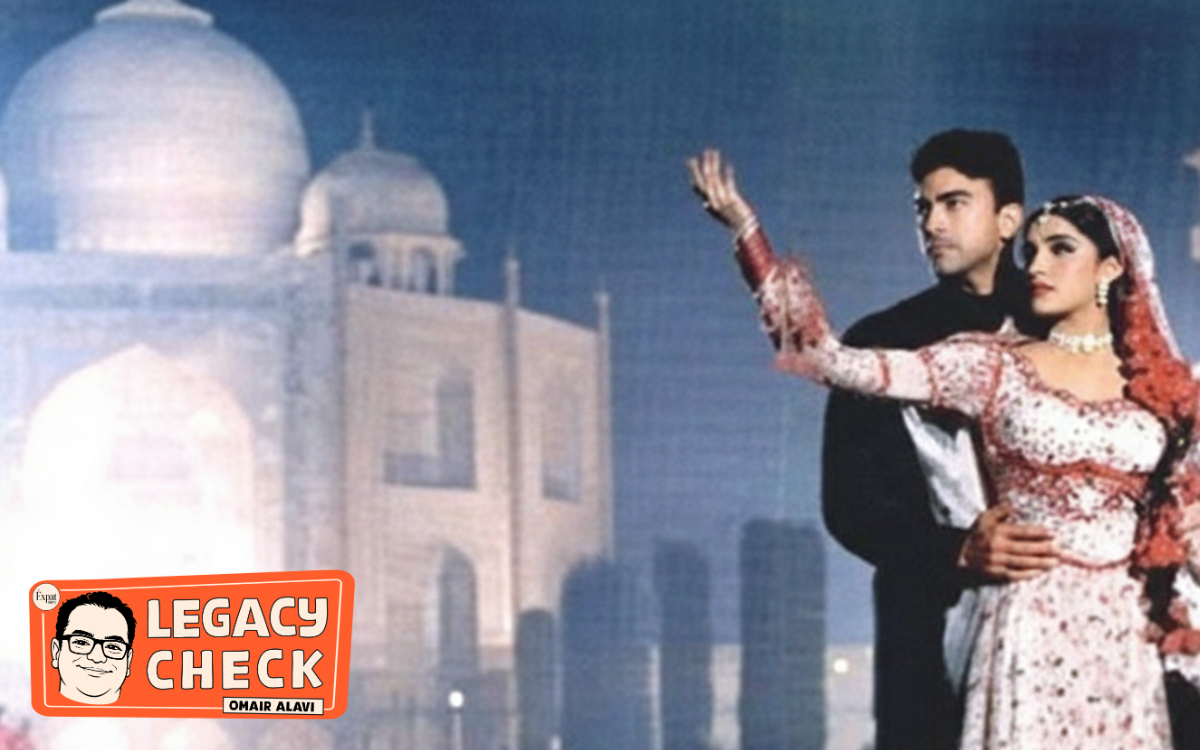
Before there was Veer-Zaara, before there was Main Hoon Na in Bollywood, Pakistan’s film industry initiated a quest for friendship with India in 2000 with Tere Pyar Mein, which remains an unforgettable spectacle even 26 years later. At a time when Indo-Pak relations are at their worst, such a film needs to be revisited and reevaluated — revisited to understand that the two neighboring countries have a lot in common, and reevaluated to realize that hate is not the answer to everything.
What made Tere Pyar Mein one of the best films produced in Pakistan this millennium is that it was made without any agenda, and both sides — Indian and Pakistani — were treated respectfully. Barring a few dialogues to keep the audience on this side of the Wagah border engaged, it can easily be termed one of those films that should have made it to Indian Punjab long before The Legend of Maula Jatt staked its claim a couple of years ago.
There are many reasons why Tere Pyar Mein continues to occupy a distinct place in conversations about Pakistani cinema’s transitional years. At a time when the industry was navigating uncertainty and reinvention, the film brought together star power, cross-border artistic collaboration, and a polished visual sensibility. Its continued relevance stems not just from nostalgia, but from the craft and personalities behind it — both on screen and behind the camera. Who were those people, and why did their collaboration result in a gem? Let’s find out.
1. Shaan Shahid’s enduring star presence
If a list were ever compiled of the most influential actors produced in Pakistan, Shaan Shahid’s name would be up there with the very best. He has carried the weight of both Urdu and Punjabi cinema on his shoulders since 1990 and continues to do so. However, when Tere Pyar Mein was released, he was also on a path of rediscovery, which helped the film in a big way.
Ever since Syed Noor’s Ghoonghat, in which Shaan Shahid played an antagonist, the actor changed gears and experimented a lot — both in front of the camera and behind it — resulting in two films: Guns and Roses: Ik Junoon and Mujhe Chaand Chahye in 1999 and 2000. It was that experience he brought to the sets of Tere Pyar Mein, which, when combined with the director’s vision, resulted in a brilliant performance.
Not only does he balance romantic intensity with emotional restraint, but his chemistry with the lead actress, Zara Sheikh, also sets the screen on fire. His ability to command attention and appeal to multiple generations ensures the film remains watchable even for contemporary audiences encountering it for the first time. He may have played an advertising executive in the film, but in fact, he was its biggest draw, and his presence helped secure an important place for it in Pakistan’s film history.
2. Zara Sheikh’s striking impact
Every girl who knows how to act — or thinks she does — wants to make an impact in her very first project, and Zara Sheikh was no different. However, what made her succeed, besides her striking good looks and charisma, was her ability to carry those qualities onscreen. In what was literally her first film, she ensured that the audience didn’t stray from her presence, even young boys who had never been star-struck while watching a Pakistani film.
Styled by fashion photographer Khawar Riaz, she appears with a polished elegance that complements her performance’s emotional accessibility. Before Shaan Shahid’s entry after the first half-hour, it was Zara, as Preeti, who captivated the audience through her expressive vulnerability and sheer cinematic glamour, becoming one of the film’s most lasting images. The choreography of the songs by the then-emerging Hassan Shehryar Yasin further amplifies her presence, blending fashion, movement, and performance into sequences that remain visually distinctive years later.
3. A screenplay shaped by neutrality
Sajjad Gul’s name was synonymous with quality filmmaking during the 1990s and 2000s, and since Tere Pyar Mein was his production, he had to ensure it appealed to both Indian and Pakistani audiences. Filming scenes at Sikh holy sites in Pakistan and giving viewers a tour of Lahore was a masterstroke that greatly benefited the film. Sadly, it wasn’t released in other countries, mainly because of the state of Pakistani films at the time.
He was also the one who discovered model Zara Sheikh and presented her as an Indian Sikh who visits Lahore with her father, who was born in the city, and then falls in love with the man who now resides in her ancestral house. The effective dialogues, penned by Rasheed Sajjad and Mazhar Anjum from a story by Raja Riaz Khan — who played Preeti’s father and looked excellent as a Sikh from Indian Punjab — still feel believable.
One must also credit the film’s longevity and neutrality to actor-turned-writer Sherry Malik’s screenplay, who went on to pen the dialogues of Yeh Dil Aapka Huwa a couple of years later. Set against the charged backdrop of Indo-Pak tensions, this balanced approach allows the film to age more gracefully than many of its predecessors and successors.
4. A soundtrack that crossed borders
Amjad Bobby was not just a music composer; he single-handedly kept Pakistani film songs in demand during the mid-90s until his death 10 years later. From his chartbusters in Mushkil and Ghoonghat to Chief Saab and Inteha, and from soundtracks featuring Bollywood playback singers in Ghar Kab Aao Gay, Yeh Dil Aap Ka Huwa, and Koi Tujh Sa Kahan, he hardly ever disappointed. Tere Pyar Mein was one of those films that crafted a sonic landscape embracing cross-border artistic voices.
Notably, playback credits were presented under the names Ayesha Khan, Zara, and Sunny Khan — representing vocal contributions from Kavita Krishnamurthy, Jaspinder Narula, Hema Sardesai, and Sonu Nigam — with lyrics by Riaz ur Rehman Saghar and Aqeel Ruby. This blending of musical talent highlighted cinema’s ability to bridge divides through shared artistic expression and showed the world that Bollywood and Lollywood weren’t very different from each other.
Even today, the soundtrack — especially the songs “Haath Se Haath Kya Gaya” and “Kal Thi Mohabbat” — remains etched in listeners’ memories and functions as a cultural touchpoint that evokes the era while retaining melodic appeal. After all, watching Shaan Shahid perform to Sonu Nigam’s melodious voice and Zara Sheikh looking radiant still brings back the good old days.
5. Execution shaped by confident craftsmanship
At the time of Tere Pyar Mein's release, Hassan Askari's name alone would have been enough to make audiences watch the film, since he was not only a great filmmaker but also a thoughtful one. His input is visible in every aspect of the film — from romantic scenes and action sequences to those addressing Indo-Pak relations. After all, he was working with some of the best technicians in the country, whose collective creative effort helped the film stand apart.
Not only did Akif Malik’s cinematography lend the film visual texture and polish, but M. Arshad’s background score also elevated the narrative. Hassan Askari used his vast experience to pace the film, and the interconnected scenes prove his mastery of the craft. The result is a production that aspired to a contemporary cinematic language — an ambition that contributes to its staying power when revisited today.
Even after more than 25 years, Tere Pyar Mein persists not merely because of memory or sentiment, but because of the interplay between strong performances, collaborative storytelling, music that crossed borders, and thoughtful technical craft. Twenty-six years on, it stands as both a romantic drama and a reflection of a cinematic moment when Pakistani film sought a new identity and scale — and in doing so, created something that continues to resonate.