

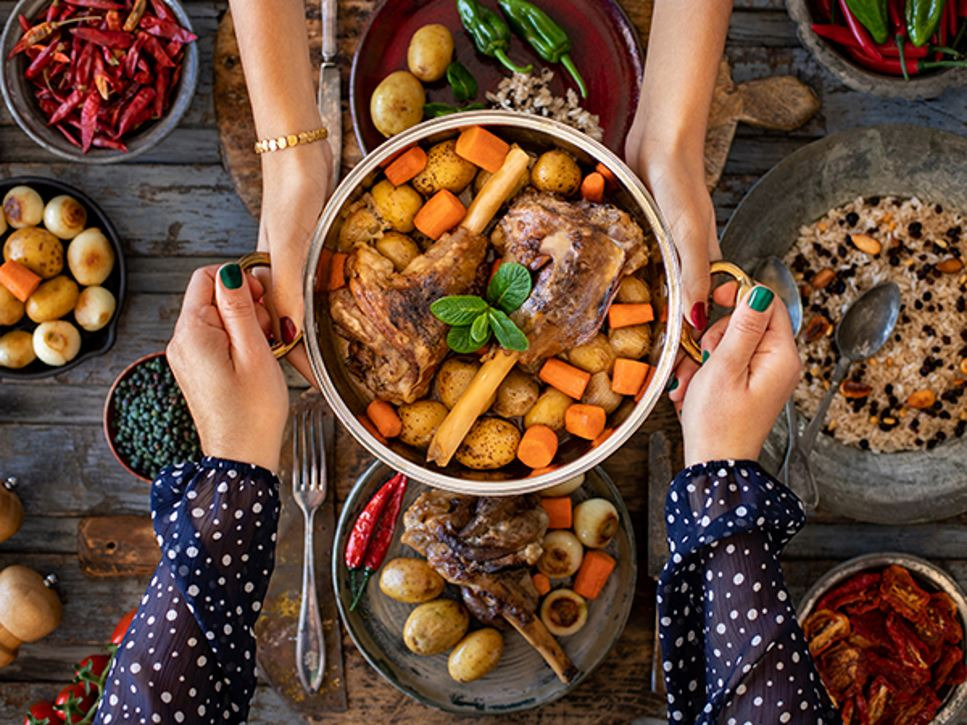
From Saudi kabsa to Emirati ouzi, eight meat dishes Muslim families cook to celebrate Eid ul Adha.
Eat. Meat. Repeat.
After the morning prayers and the sacrifice, that is more or less what Eid ul Adha looks like. Muslims everywhere celebrate the same festival. It marks Prophet Ibrahim’s willingness to sacrifice, and the meat from each animal gets split three ways: family, friends, and people who need it. That part does not change. What changes is what ends up on the table. Almost every culture has its own Eid dish, and most are built around meat.
Here are eight worth knowing!
1. Lamb Kabsa (Saudi Arabia)
Kabsa is Saudi Arabia’s national dish, and it turns up at almost every big occasion, Eid included. It is spiced rice cooked with meat. What makes it kabsa is loomi, dried limes that give the rice a sour, slightly smoky edge. It is served on one large platter and eaten by hand. Cooking it is usually a family job, with everyone pitching in on the rice and the spice mix.
Ingredients (Serves 6)
- 1.5 kg bone-in lamb, cut into pieces
- 4 tbsp ghee or oil
- 2 onions, chopped, and 4 garlic cloves, crushed
- 2 grated tomatoes and 2 tbsp tomato paste
- 3 dried limes (loomi), pierced
- 1 cinnamon stick, 4 cardamom pods, 4 cloves, 2 bay leaves
- 1 tbsp kabsa spice mix
- 3 cups basmati rice, soaked
- Toasted almonds, pine nuts, and raisins to garnish
Method
- Heat the ghee and cook the onions until soft. Add the garlic, then the lamb, and brown until the color changes.
- Stir in the whole spices, kabsa spice mix, grated tomatoes, and tomato paste. Cook until the ghee starts to separate from the sauce.
- Pour in enough hot water to cover the meat well. Simmer until the lamb is tender, around 1 hour 20 minutes.
- Lift out the meat and cook the soaked rice in the same broth until fluffy.
- Plate the rice, set the lamb on top, and scatter with toasted nuts and raisins. Serve with salad and yogurt.
2. Ouzi (United Arab Emirates)
Ouzi, also spelled khuzi or ghuzi, is the national dish of the UAE. It is a whole leg or shoulder of lamb, slow-roasted until it falls off the bone, served on spiced rice with nuts and dried fruit on top. It comes from Bedouin cooking and shows up whenever there is something to celebrate: weddings, National Day, and Eid. It takes a few hours, but most of that is the oven doing the work.
Ingredients (Serves 6)
- 1 leg or shoulder of lamb, about 2.25 kg
- 4 tbsp ghee or oil
- 2 tsp each ground coriander and cumin, plus 1 tsp cinnamon
- 4 cardamom pods, 3 cloves, 2 dried limes
- Pinch of saffron and a splash of rose water
- 3 cups basmati rice, soaked
- Toasted almonds, cashews, pine nuts, and raisins to garnish
Method
- Rub the lamb all over with the ground spices and a little ghee. Marinate for a few hours or overnight.
- Wrap the lamb tightly in foil and slow-roast at 180 degrees Celsius for 2 to 3 hours, until it pulls away from the bone.
- Take the foil off for the last 10 minutes and broil the top for color.
- Cook the soaked rice with the whole spices and saffron until fluffy.
- Pile the rice on a large platter, set the lamb on top, and finish with toasted nuts and raisins. Crispy potatoes on the side are a common touch.
3. Mutton Karahi (Pakistan)
In Pakistan, especially in Khyber Pakhtunkhwa, mutton karahi is the first thing many families cook on Eid. The meat is fresh from the qurbani, and karahi keeps it simple. The most authentic versions, from Peshawar and the tribal areas, skip onions completely. Just meat, tomatoes, ginger, garlic, green chilies, and a lot of black pepper. Lahori butt karahi and Peshawari charsi karahi have made it famous well beyond Pakistan.
Ingredients (Serves 4 to 5)
- 1 kg bone-in mutton or goat, cut into pieces
- 1/2 cup ghee or oil
- 3 tbsp ginger garlic paste
- 750 g ripe tomatoes, chopped
- 6 to 8 green chilies, slit
- 1 tbsp cumin seeds and 1 tbsp crushed coriander seeds
- 1 to 2 tbsp coarsely crushed black pepper
- 1 inch ginger, julienned, for garnish
- Fresh coriander and salt to taste
Method
- Heat the ghee in a karahi or wok. Add the ginger garlic paste and cook for a minute.
- Add the mutton and sear on high heat until it changes color and the raw smell goes, about 5 to 7 minutes.
- Add the tomatoes, cumin, crushed coriander, and salt. Cover and cook on low heat until tender, around 45 minutes to an hour. Add a little hot water if it dries out.
- Once tender, turn the heat up and stir until the gravy clings to the meat.
- Finish with crushed black pepper, slit green chilies, julienned ginger, and fresh coriander. Serve hot with naan.
4. Mansaf (Jordan)
Mansaf is Jordan’s national dish and the meal Jordanians bring out for guests they want to honor. It is a Bedouin dish, and the flavor comes from jameed, a hard, dried yogurt made from sheep or goat milk. The yogurt gives the sauce its sharp, salty tang. Traditionally, everyone eats from one platter, shaping bites of lamb, rice, and bread by hand.
Ingredients (Serves 6)
- 1.5 kg bone-in lamb (shoulder or leg), cut into pieces
- 1 large onion, 2 bay leaves, 4 cardamom pods
- 2 to 3 jameed balls, soaked, or liquid jameed
- 3 cups basmati rice
- 3 tbsp ghee and 1 tsp turmeric
- Large thin flatbread (shrak or markook)
- Toasted almonds or pine nuts and parsley to garnish
Method
- Sear the lamb briefly to cut the gaminess, then simmer with the onion, bay leaves, and cardamom for about 1.5 hours until tender. Strain and keep the broth.
- Soak the jameed in boiling water for a few hours, then blend until smooth. Mix it with the strained broth and simmer gently for 10 minutes, stirring the whole time so it does not curdle.
- Cook the rice in ghee with turmeric until fluffy.
- Lay the flatbread on a large platter. Spread the rice over it, arrange the lamb on top, and pour the jameed sauce over everything.
- Garnish with toasted nuts and parsley. Keep extra sauce on the side.
5. Fattah (Egypt)
Egyptians call Eid ul Adha the big Eid, and fattah is the dish tied to its first day. It is layered: crispy fried or toasted bread on the bottom, rice in the middle, boiled meat on top, and a sharp garlic and tomato sauce poured over the lot. The Egyptian version skips yogurt, which is what separates it from the Levantine fatteh. It shows up at weddings and new-baby celebrations too, but Eid is its main season.
Ingredients (Serves 6)
- 1.2 kg beef or lamb, tougher cuts like shank or chuck
- 1 onion, 4 bay leaves, 6 cardamom pods, 4 cloves
- 3 cups Egyptian or short-grain rice
- 4 to 5 baladi or pita breads, cut into pieces
- 6 garlic cloves, minced
- 3 tbsp vinegar and 2 cups tomato passata
- Ghee and salt to taste
Method
- Boil the meat with the onion, bay leaves, cardamom, and cloves until fork-tender, about an hour. Keep the broth.
- Toast or fry the bread pieces until crisp and golden.
- Cook the rice in a little ghee, using meat broth as the liquid.
- For the sauce, fry the garlic in ghee until golden, add the vinegar, then the tomato passata and a ladle of broth. Simmer until thick.
- Layer the bread, then rice, then meat in a large dish. Pour the hot garlic tomato sauce over the top and drizzle with ghee. Serve right away while the bread is still crunchy.
6. Lamb Tagine With Prunes (Morocco)
Moroccan cooking likes a sweet and savory mix, and this tagine is a good example. Lamb is slow-cooked in a spiced onion sauce, then topped with prunes that have been cooked down with honey and cinnamon, plus toasted almonds and sesame seeds. It is a standard at weddings and Eid. There is also a close relative, mrouzia, a spiced honey tagine Moroccans make in the days right after Eid to use up the meat.
Ingredients (Serves 5)
- 1.2 kg lamb shoulder, cut into pieces
- 2 onions, grated, plus 3 garlic cloves
- 1 tsp ginger, 2 cinnamon sticks, pinch of saffron
- 1 tsp ras el hanout or turmeric
- 3 tbsp oil or butter
- 250 g prunes, 3 tbsp honey, 1 tsp ground cinnamon
- Toasted almonds and sesame seeds to garnish
Method
- For more flavor, marinate the lamb with the grated onion, garlic, ginger, saffron, and ras el hanout for a few hours or overnight.
- Brown the lamb gently with the oil and cinnamon sticks. Add water to cover and simmer slowly for 1.5 to 2 hours until tender.
- In a separate pan, simmer the prunes with the honey and ground cinnamon until soft and caramelized.
- Uncover the lamb and reduce the sauce until it thickens.
- Plate the lamb, spoon the prunes over it, and scatter with toasted almonds and sesame seeds. Serve with Moroccan bread or couscous.
7. Beef Rendang (Indonesia)
Rendang started as a way to preserve tough meat. The Minangkabau people of West Sumatra would cook beef down slowly in coconut milk and spices until it was almost dry, and that is still the method. The beef simmers for hours until the liquid is gone and the meat turns dark and almost caramelized. It is a big deal for Eid, which Indonesians call Hari Raya, and CNN once named it the best food in the world. Malaysia and Singapore love it too.
Ingredients (Serves 5)
- 1 kg beef chuck, cut into chunks
- Spice paste: 8 shallots, 5 garlic cloves, 2 tbsp ginger, 2 tbsp galangal, 10 dried red chilies, 2 stalks lemongrass
- 1 can coconut milk
- 1 cinnamon stick, 3 cloves, 3 star anise, 3 cardamom pods
- 3 kaffir lime leaves
- 1/4 cup toasted grated coconut (kerisik)
- 1 tbsp palm sugar, 1 tsp tamarind paste, salt to taste
Method
- Blend the spice paste ingredients until fine.
- Fry the paste with the whole spices until it smells deep and aromatic.
- Add the beef and a pounded lemongrass stalk, stirring for a minute.
- Pour in the coconut milk, tamarind, and a little water. Simmer on low, stirring often, for two to three hours.
- When the sauce has reduced, stir in the kaffir lime leaves, kerisik, and palm sugar. Keep cooking until the rendang is dark, thick, and the oil separates. Serve with steamed rice.
8. Saç Kavurma (Turkey)
In Turkey, Eid ul Adha is Kurban Bayramı, and saç kavurma is often the first thing cooked once the meat is ready. The name just means sautéing. Cubes of lamb are fried hard over high heat in their own fat. The shepherd’s version, çoban kavurma, adds onion, tomato, and pepper. It is traditionally cooked on a saç, a curved iron griddle, but a wide heavy pan does the job.
Ingredients (Serves 4)
- 700 g lamb shoulder or neck, cut into small cubes
- 100 g lamb tail fat, or 2 tbsp butter
- 1 onion, sliced
- 2 to 3 Turkish green peppers, chopped
- 2 tomatoes, chopped
- 1 tsp cumin, 1 tsp paprika, black pepper and salt to taste
- A knob of butter to finish
Method
- Render the lamb fat in a hot pan until it turns liquid.
- Add the lamb cubes and sear hard over high heat in the fat until browned.
- Add the onion and cook until soft, then add the peppers and tomatoes.
- Season with cumin, paprika, black pepper, and salt. Cook until the meat is tender and the juices reduce.
- Stir in a knob of butter at the end. Serve straight from the pan with bread or rice.
So, which one are you going to try this Eid?