


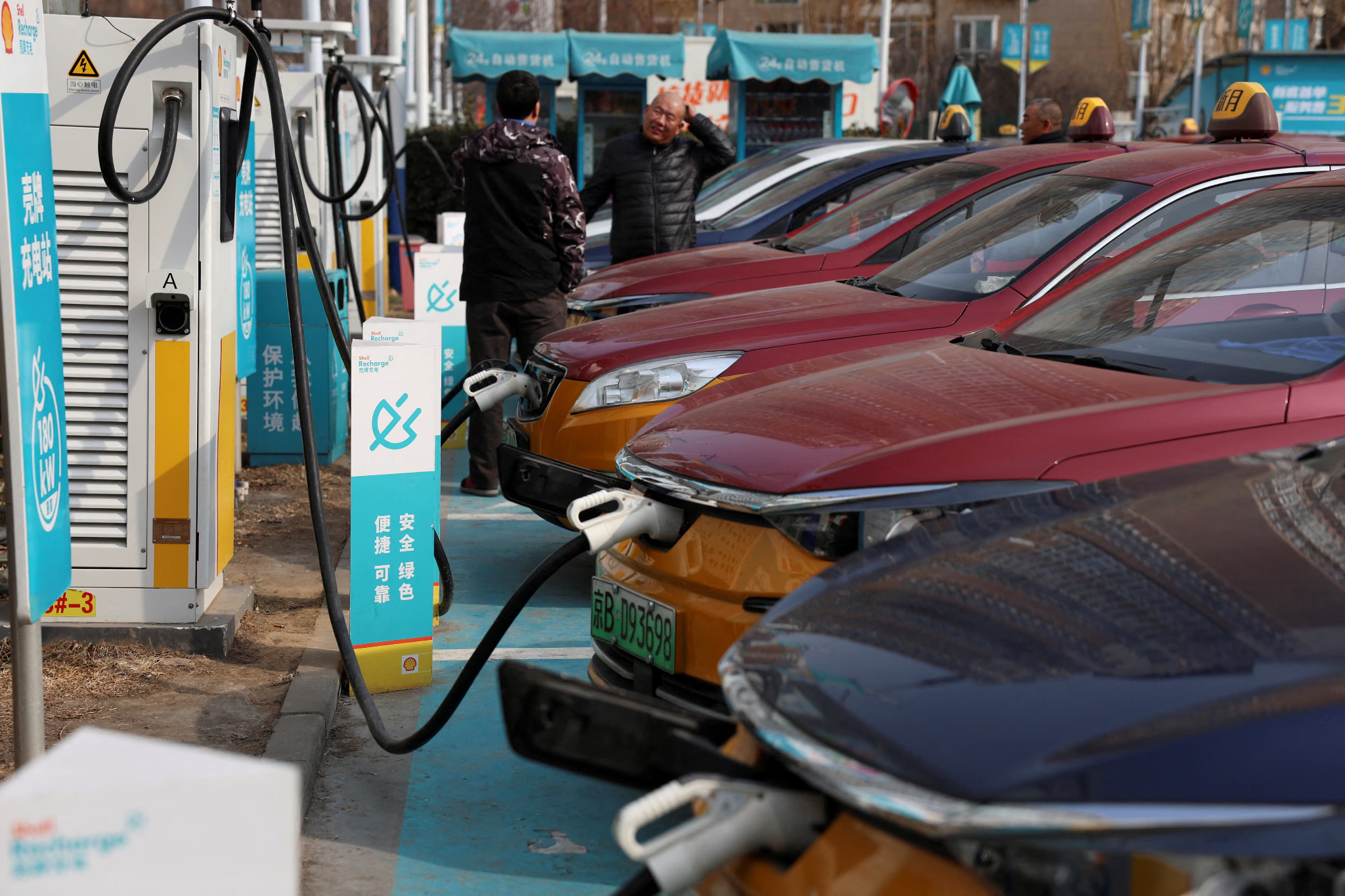
China’s growing fleet of electric taxis is proving to be more than just a step toward cleaner transportation. As disruptions around the Strait of Hormuz have pushed global oil prices higher, the country’s investment in electric vehicles (EVs) has helped reduce the impact of rising fuel costs on its transport sector. The Strait of Hormuz is one of the world’s most important oil shipping routes, carrying a significant share of global crude exports. Any disruption to traffic through the strait can affect international oil supplies and lead to higher fuel prices worldwide. As the world’s largest importer of crude oil, China has traditionally been vulnerable to these fluctuations.
Over the past decade, however, China has steadily expanded the use of electric vehicles, particularly in public transportation. Today, around half of the country’s 1.3 million taxis are electric, while cities such as Shenzhen have transitioned to nearly fully electric taxi fleets. The shift extends to ride-hailing services as well. According to Didi, China’s largest ride-hailing platform, around 8 million hybrid and electric vehicles operate on its network, with electric vehicles accounting for roughly 75% of the total distance travelled by drivers.
This widespread adoption of electric taxis has helped soften the effects of higher fuel prices. Since electric vehicles rely on electricity rather than petrol, their operating costs are less affected by fluctuations in global oil markets. As a result, many commuters have increasingly chosen electric taxis and ride-hailing services instead of driving petrol-powered private vehicles.
The trend is reflected in recent transport data. Taxi and ride-hailing trips increased by about 6% between March and May 2026 compared with the same period a year earlier, reaching 3.05 billion trips in May. At the same time, fares have remained relatively affordable due to the lower operating costs of electric vehicles and the growing number of ride-hailing drivers.
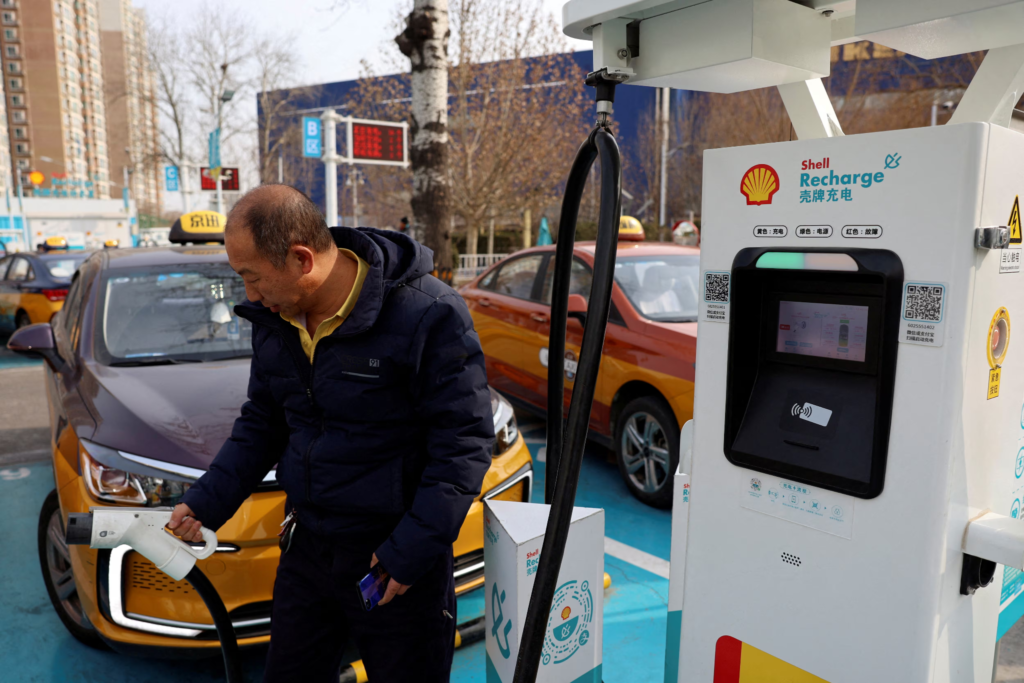
The shift towards electric transport is also changing China’s fuel consumption. Despite continued growth in road travel, gasoline demand fell by approximately 10% in May 2026 compared with the previous year, while diesel consumption declined by 14%. The figures suggest that the increasing use of electric vehicles is reducing demand for conventional transport fuels even as travel activity remains strong.
The impact is also visible in China’s crude oil imports. Following the recent Middle East conflict, imports fell from an average of about 11.5 million barrels per day over the past five years to roughly 8 million barrels per day after April 2026. June imports reached their lowest level in nearly a decade, reflecting lower transport fuel demand alongside continued electrification and changes in refining and stockpiling activity.
China’s transition to electric mobility is expected to continue. Greenpeace estimates that by 2035, around 90% of taxi and ride-hailing mileage in the country will be powered by electric vehicles. If that projection is realised, China’s transport sector will become even less dependent on imported oil, improving its resilience to future supply disruptions.
While China’s electric taxi network was not developed in response to the Strait of Hormuz disruptions, recent events have highlighted one of its broader benefits. The country’s long-term investment in electric transportation has helped reduce the impact of oil market volatility, demonstrating how widespread vehicle electrification can strengthen energy security while lowering reliance on imported fuel.