


Apple has filed a lawsuit against OpenAI and two former Apple employees, accusing them of misappropriating confidential trade secrets related to the company’s hardware development. The lawsuit marks one of the most significant legal disputes in the technology industry this year and underscores the increasingly fierce competition to lead the next generation of artificial intelligence-powered devices.
The complaint was filed in the U.S. District Court for the Northern District of California. Apple alleges that OpenAI and the former employees engaged in a coordinated effort to obtain proprietary information that could benefit OpenAI’s expanding consumer hardware business. The company claims that the confidential information included details about unreleased products, manufacturing processes, supplier relationships, and other closely guarded trade secrets developed over years of research and investment.
The two former Apple employees named in the lawsuit are Tang Tan and Chang Liu. Tan spent more than two decades at Apple and played a major role in the development of several flagship products before becoming OpenAI’s Chief Hardware Officer. Liu, another former Apple engineer, is also accused of retaining and accessing confidential company information after leaving Apple. According to the lawsuit, both individuals improperly handled Apple’s proprietary information during and after their departure from the company.
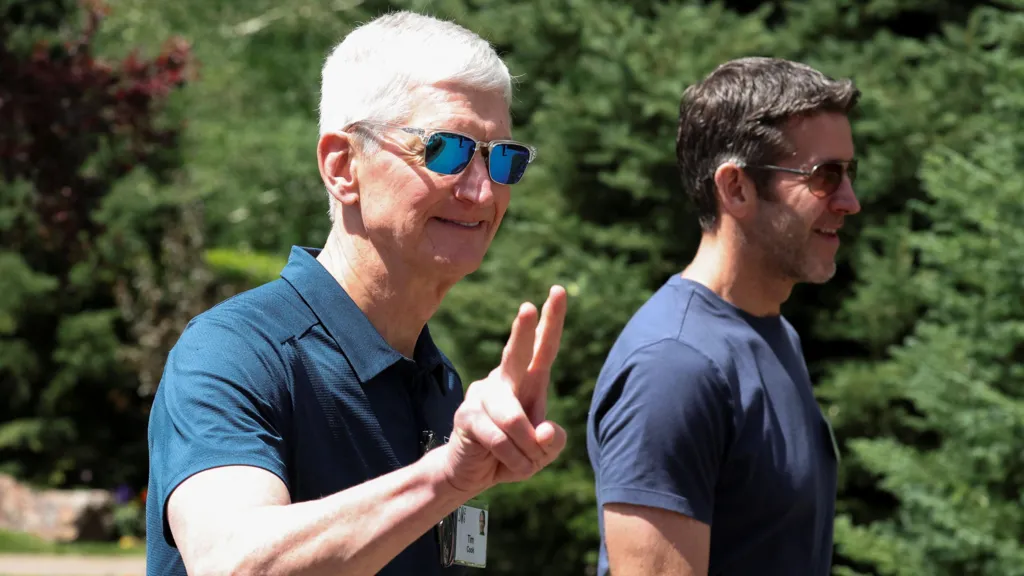
Apple alleges that Tang Tan encouraged current Apple employees to disclose confidential information and, in some instances, even asked candidates interviewing for positions at OpenAI to bring internal Apple materials or product components to discussions. The lawsuit also claims that Chang Liu continued accessing Apple’s internal systems after joining OpenAI due to what Apple describes as a security oversight, allowing him to obtain additional confidential documents. Apple argues that these actions were not isolated incidents but part of a broader effort to accelerate OpenAI’s hardware ambitions.
The legal action comes at a pivotal time for both companies. While Apple has been expanding its artificial intelligence capabilities across its ecosystem, OpenAI has rapidly moved beyond software into consumer hardware. That transition gained momentum after OpenAI acquired io Products, the AI hardware startup founded by former Apple design chief Jony Ive. The acquisition signaled OpenAI’s intention to build AI-native consumer devices that could eventually compete with traditional smartphones and other personal electronics.
Apple contends that OpenAI’s hardware program benefited from confidential information obtained through its former employees. The lawsuit characterizes the alleged misconduct as systematic rather than accidental and seeks financial damages as well as court orders preventing the continued use of Apple’s trade secrets. Apple is also asking the court to require the return or destruction of any confidential materials that were allegedly taken or copied.
OpenAI has strongly denied Apple’s allegations. The company has stated that it does not seek or use competitors’ trade secrets and intends to defend itself against the claims in court. OpenAI maintains that its hardware development is based on its own research and engineering efforts and disputes Apple’s characterization of the events described in the complaint. At this stage, the allegations remain unproven, and no court has determined whether any wrongdoing occurred.
The lawsuit is particularly notable because Apple and OpenAI were previously business partners. In 2024, Apple announced the integration of ChatGPT into its devices as part of its broader Apple Intelligence initiative. However, as OpenAI expanded into consumer hardware, the relationship evolved from collaboration to direct competition. Industry observers view the lawsuit as a reflection of the growing strategic importance of AI hardware, where intellectual property, engineering talent, and proprietary designs have become increasingly valuable assets.
The outcome of Apple’s lawsuit could have broader implications for the technology industry. A ruling in Apple’s favor could strengthen legal protections surrounding employee mobility and confidential corporate information while potentially affecting OpenAI’s hardware development plans. Conversely, if OpenAI successfully defends the case, it may reinforce the principle that companies can recruit talent from competitors without automatically inheriting liability for trade secret claims, provided confidential information is not improperly used. Regardless of the eventual outcome, the case highlights how competition in artificial intelligence is extending beyond software into hardware, where innovation, talent, and intellectual property are becoming central battlegrounds.
For now, the dispute remains in its early stages. Apple’s allegations have not been proven in court, and OpenAI continues to deny any misconduct. As the legal proceedings unfold, the case is expected to draw close attention from technology companies, legal experts, and investors alike, given its potential impact on the future of AI hardware development and the protection of intellectual property in one of the world’s fastest-growing industries.